The automated retail landscape is undergoing a fundamental transformation as businesses seek solutions to overcome traditional commercial constraints. With site rents escalating and labor costs rising continuously, companies across healthcare, transportation, education, and hospitality sectors are discovering that verified hot food vending machines represent more than mere convenience—they embody a strategic shift toward intelligent, cost-effective retail operations.
Understanding the Smart Vending Revolution
Traditional vending machines have long been limited by rudimentary spiral-drop mechanisms that damage fragile products and lack temperature control capabilities. These fundamental design flaws restricted product variety to shelf-stable snacks and canned beverages, leaving a massive gap in the market for fresh, perishable, and hot food distribution. The new generation of smart fresh food vending solutions addresses these limitations through integrated thermal management, precision delivery systems, and real-time data analytics.
Modern automated retail technology eliminates the geographical and temporal constraints that have historically limited sales hours and market reach. By functioning as “all-weather stores,” these intelligent systems enable businesses to maintain 24/7 accessibility without the overhead costs associated with staffed locations. This operational model proves particularly valuable in high-traffic environments like airports, train stations, hospitals, and university campuses where consumer demand extends beyond traditional business hours.
Technical Innovation Driving Market Adoption
The differentiation in advanced vending technology centers on three core engineering capabilities that directly address longstanding industry pain points.
Thermal Management Excellence: Professional-grade systems utilize polyurethane one-piece foam molding to achieve superior temperature locking and insulation performance. This construction method creates seamless thermal barriers that maintain consistent internal temperatures while minimizing energy consumption. For hot food applications, integrated microwave heating with adjustable time and temperature settings allows operators to offer genuinely hot, restaurant-quality meals rather than lukewarm compromises. IMT Vending’s 21.5″ Smart Fresh Food Vending Machine exemplifies this approach, incorporating built-in heating capabilities with optional on/off control that operators can customize based on product requirements.
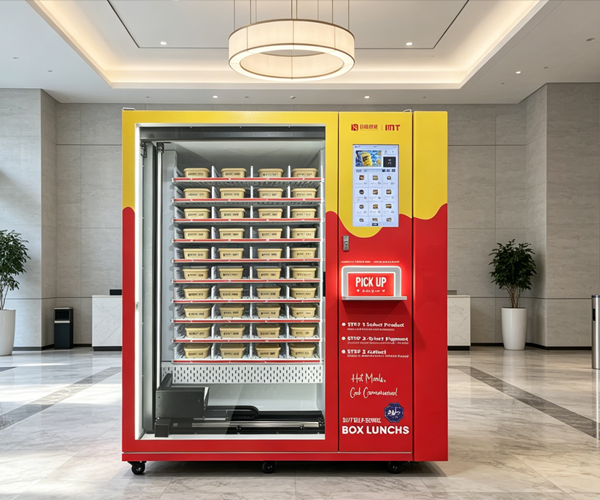
The cooling technology employs professional-grade compressors designed for demanding environments, ensuring reliable refrigeration performance across varied ambient conditions. This robust thermal management expands product possibilities to include fresh salads, dairy products, prepared meals, and other perishable items that conventional vending machines cannot safely accommodate.
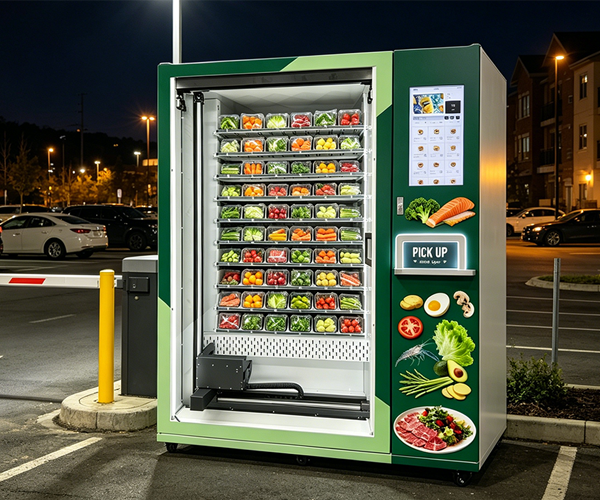
Precision Delivery Systems: The most significant technical breakthrough lies in independent elevator transport systems paired with infrared detection. Unlike spiral-drop mechanisms that frequently jam or damage products, elevator-based delivery ensures stable, gentle handling regardless of package shape or fragility. This capability proves essential for glass bottles, multi-compartment meal containers, and delicate pastries that would be destroyed by traditional dispensing methods.
The infrared detection component provides real-time verification that products successfully reach the pickup area, dramatically reducing transaction failures and customer service complaints. This reliability factor directly impacts operator profitability by minimizing product loss and enhancing user satisfaction.
Modular Hardware Customization: Recognizing that product dimensions vary significantly across categories, advanced systems incorporate customizable aisle designs including conveyor belt chutes and side-push configurations. This modularity allows operators to optimize machine layouts for their specific product mix, whether stocking standard beverage cans, oversized meal boxes, or irregularly shaped specialty items. The flexibility extends to integrated accessories like automatic utensil dispensers that enhance convenience and hygiene for ready-to-eat meals.
Data-Driven Operational Intelligence
Beyond mechanical innovation, the competitive advantage of modern vending solutions increasingly depends on intelligent sales platforms providing real-time access to sales, stock, and profit data. These proprietary systems transform vending operations from reactive maintenance routines into proactive business management.
Operators gain comprehensive visibility into inventory levels, enabling precise restocking schedules that minimize both stockouts and waste. Sales data analytics reveal purchasing patterns by time of day, day of week, and seasonal trends, empowering evidence-based decisions about product assortment and pricing strategies. For businesses operating multiple machines across distributed locations, remote monitoring capabilities and subsidiary account creation for agents streamline oversight and accountability.
This data infrastructure enables precise marketing based on consumer behavior analysis, allowing operators to test promotions, optimize product placement, and adjust offerings in response to demonstrated preferences rather than assumptions. The cumulative effect significantly improves per-machine revenue while reducing operational complexity.
Market Validation Across Diverse Sectors
The practical viability of smart vending solutions is demonstrated through successful deployments across multiple high-demand environments. In transportation hubs including airports, train stations, and subway stations, these systems address captive audiences with limited alternatives and tight time constraints. Travelers consistently prioritize convenience and speed, making hot, fresh meal options significantly more appealing than traditional snack selections.
Healthcare facilities including hospitals, pharmacies, and clinics present unique challenges where visitors and staff require access to nutritious food options during extended hours when cafeterias are closed. The ability to offer temperature-controlled fresh meals rather than processed snacks addresses both convenience and wellness considerations.
Educational institutions and workplace environments such as schools and factories benefit from providing employees and students with accessible, affordable meal options that eliminate the need to leave premises. This application directly supports productivity by reducing time spent seeking food off-site.
Tourism and leisure venues including parks, zoos, scenic spots, and hotels leverage smart vending to enhance visitor experience while reducing staffing requirements. The technology enables food service availability at distributed locations throughout large properties without the capital investment and ongoing costs of multiple staffed concession stands.
Business Model and Implementation Considerations
The commercial approach for smart vending technology centers on OEM and ODM customization capabilities that accommodate diverse operator requirements. IMT Vending’s service model illustrates industry standards, offering full hardware and software modification support with no minimum order quantity for ODM projects and a ten-unit minimum for OEM services. This flexibility makes the technology accessible to both small businesses testing the market and large organizations deploying fleet-wide solutions.
Production efficiency stands as a critical factor for operators eager to launch or expand services. Standard production lead times of approximately two weeks enable relatively rapid deployment, while shipping options including sea freight and express delivery provide cost-performance tradeoffs appropriate to different urgency levels.
The investment protection includes one-year warranty coverage and lifetime technical assistance, reducing ongoing support concerns. Quality assurance protocols ensure that all machines undergo testing before delivery, minimizing field failures and startup complications.
Strategic Value Proposition
The fundamental value proposition transcends equipment acquisition to encompass business transformation through automated management. Traditional retail operations face increasing pressure from rising overhead costs and competitive market dynamics. Smart vending technology enables companies to expand market presence without proportional increases in fixed costs, effectively functioning as force multipliers for limited operational resources.
By reducing dependency on prime retail locations with expensive leases and eliminating staffing requirements for extended hours, businesses fundamentally restructure their cost basis. The 24/7 accessibility expands potential revenue windows while the data-driven optimization improves per-transaction profitability. This combination creates sustainable competitive advantages particularly valuable for small and medium businesses seeking growth without capital-intensive expansion.
Future-Proofing Retail Operations
As consumer expectations increasingly favor convenience, speed, and accessibility, the automated retail sector represents not a niche technology but a mainstream channel. The integration of advanced thermal management, precision delivery mechanisms, and intelligent data platforms positions smart vending solutions as legitimate alternatives to traditional retail formats rather than mere supplements.
For businesses evaluating operational strategies in an environment characterized by persistent cost pressures and evolving consumer preferences, verified hot food vending machines offer a proven pathway to enhance service delivery while improving financial performance. The technology maturity, demonstrated market acceptance across diverse sectors, and supporting service ecosystem have reached levels that justify serious consideration for organizations seeking sustainable competitive positioning in modern retail landscapes.
https://www.imtvending.com/
Guangzhou IMT Technology Co., Ltd.

