Industrial production systems depend heavily on fluid transportation equipment that can operate reliably under tough and often continuous working conditions. Among the many types of pumping equipment available, the self-priming pump has gained wide acceptance in sectors such as wastewater treatment, chemical manufacturing, marine engineering, agriculture, and oil transfer. Its key advantage lies in its ability to automatically remove air from the suction line and begin pumping without manual priming, which is particularly valuable in operations where efficiency and uptime are critical.
That said, choosing an industrial self-priming pump is not a decision to be made lightly. Factors such as operating performance, structural durability, fluid compatibility, and long-term maintenance costs all need to be carefully evaluated. A proper understanding of these aspects ensures that the selected pump not only meets current operational demands but also maintains stable performance over an extended service life.
This article outlines the key factors that should be considered when selecting an industrial self-priming pump and also highlights how experienced manufacturers like Zhejiang Hongyuan Pump Valve Technology Co., Ltd. support reliable and efficient fluid handling solutions.
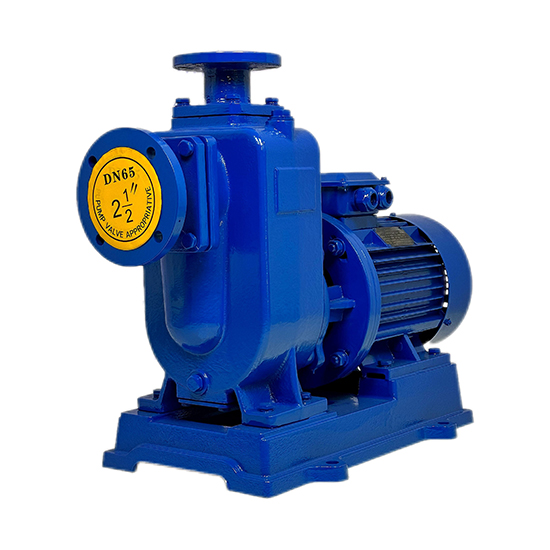
Understanding the Operating Principle First
Before selecting any model, it is important to understand how a self-priming pump functions. Unlike conventional centrifugal pumps, a self-priming pump retains a portion of liquid inside its casing after initial operation. This retained fluid helps create the necessary vacuum effect, allowing the pump to draw in liquid automatically during subsequent startups.
This eliminates the need for manual priming and simplifies operation significantly. In industrial environments where equipment may be frequently started and stopped, this feature greatly improves operational convenience and reduces labor requirements.
For reference on structure and variations, technical resources such as <a href="https://www.selfprimingpump.com/Self-priming-pump">self-priming pump</a> provide additional insights.
1. Type of Fluid Being Handled
The first and most important selection factor is the nature of the medium being transported. Industrial applications may involve a wide range of fluids, including:
-
Clean water
-
Wastewater containing solids
-
Corrosive chemical liquids
-
Seawater
-
Petroleum-based fluids
Each fluid type requires different material resistance and internal structural design. For instance, wastewater systems need strong anti-clogging capability and solid-handling performance, while chemical applications demand corrosion-resistant materials such as stainless steel or specially coated components.
Manufacturers like Zhejiang Hongyuan Pump Valve Technology Co., Ltd. offer diversified product ranges designed for different media conditions. Their engineering approach focuses on matching pump structures with specific application requirements to ensure safe and efficient operation.
2. Priming Performance and Operational Efficiency
Although all self-priming pumps share a similar principle, their priming efficiency can differ greatly depending on design quality. High-performance models should be able to achieve quick and stable priming even under dry-start conditions.
Key factors influencing priming efficiency include:
-
Internal casing design
-
Impeller structure
-
Air-liquid separation effectiveness
-
Sealing performance
A well-optimized system reduces startup time and improves overall workflow efficiency. With more than 20 years of manufacturing experience, Zhejiang Hongyuan Pump Valve Technology Co., Ltd. focuses on improving hydraulic design and internal flow optimization to enhance priming speed while reducing energy consumption.
3. Material Selection and Service Life
In industrial environments, pumps are often exposed to corrosive, abrasive, or high-load working conditions. Therefore, material selection is crucial for ensuring durability and long-term reliability. Common options include:
-
Cast iron for general water applications
-
Stainless steel for corrosive environments
-
High-strength alloys for abrasive media
Proper material matching helps prevent corrosion, wear, and mechanical failure over time.
As a source factory with integrated machining capabilities, Zhejiang Hongyuan Pump Valve Technology Co., Ltd. maintains strict production control and uses precision equipment to ensure consistent component quality and stable long-term performance.
4. Solid Handling Performance
In applications such as wastewater and industrial drainage, pumps must be able to handle suspended solids without clogging or efficiency loss. This depends largely on impeller design and internal flow channel structure.
Key considerations include:
-
Maximum allowable particle size
-
Semi-open or open impeller configuration
-
Anti-blocking structural design
-
Smooth internal flow paths
If a pump lacks proper solid-handling capability, frequent maintenance and unexpected downtime may occur, increasing operational costs. Therefore, selecting a model specifically designed for wastewater or slurry use is essential.
5. Stability During Continuous Operation
Many industrial processes require pumps to run continuously for long periods. In such cases, operational stability becomes a critical factor.
A reliable pump should maintain:
-
Stable flow output
-
Low vibration levels
-
Controlled operating temperature
-
Minimal mechanical wear over time
Manufacturing expertise plays a decisive role in ensuring this stability. With over two decades of production experience, Zhejiang Hongyuan Pump Valve Technology Co., Ltd. emphasizes rigorous quality control and structural optimization to ensure consistent performance even under heavy-duty conditions.
6. Maintenance Convenience and Service Life
Maintenance requirements have a direct impact on operational efficiency. A well-designed self-priming pump should offer:
-
Easy access to internal components
-
Simple seal replacement procedures
-
Durable wear-resistant parts
-
Extended maintenance intervals
Modern industrial pump designs often adopt modular structures to reduce service time and simplify repairs.
Zhejiang Hongyuan Pump Valve Technology Co., Ltd. continuously improves product design based on user feedback, aiming to enhance maintainability and reduce long-term operational complexity.
7. Customization for Specific Applications
Industrial systems vary significantly, meaning that standardized models may not always meet specific operational needs. Customization may involve:
-
Flow rate adjustments
-
Pressure/head modifications
-
Material upgrades
-
Motor configuration matching
-
Installation structure design
A manufacturer with strong engineering capabilities can provide tailored solutions based on actual working conditions.
With extensive industry experience, Zhejiang Hongyuan Pump Valve Technology Co., Ltd. offers customized pump solutions and technical selection support to ensure optimal system performance.
8. Manufacturing Strength and Quality Assurance
The reliability of a pump is closely tied to the strength of its manufacturing process. Important indicators include:
-
Long-term industry experience
-
Complete in-house production control
-
Advanced machining equipment
-
Strict inspection and testing systems
As a professional source factory specializing in pump manufacturing for over 20 years, Zhejiang Hongyuan Pump Valve Technology Co., Ltd. continues to improve product consistency and supply reliability through technical innovation and quality-focused production systems.
9. Broad Application Scope
A well-designed self-priming pump should be suitable for multiple industrial sectors, including:
-
Municipal wastewater treatment
-
Agricultural irrigation systems
-
Marine drainage and ballast operations
-
Chemical transfer processes
-
Fuel and oil handling systems
Wide applicability reflects strong engineering design and system adaptability.
Conclusion
Selecting an appropriate industrial self-priming pump requires careful evaluation of fluid characteristics, material compatibility, structural design, priming efficiency, and long-term maintenance needs. Beyond technical specifications, the manufacturer’s experience and production strength are equally important for ensuring dependable performance.
With more than 20 years of industry experience, Zhejiang Hongyuan Pump Valve Technology Co., Ltd. demonstrates how advanced manufacturing capability, continuous innovation, and application-focused engineering can deliver reliable pumping solutions across diverse industrial sectors. Their comprehensive product portfolio and customization services make them a dependable partner in industrial fluid handling applications.
www.selfprimingpump.com
Zhejiang Hongyuan Pump Valve Technology Co., Ltd.

