The J2 rail fastening system is an elastic fastening solution designed to secure rails to concrete sleepers, track slabs, or other supporting structures. The system combines spring elements, anchoring parts, insulating gauge blocks, and rail pads to hold the rail, maintain gauge, reduce vibration, and limit long-term loosening. With a clear component layout and wide rail compatibility, the J2 system is suitable for railway and industrial track projects that require stable clamping force, reliable insulation, and convenient maintenance.

Figure 1. Installation arrangement of the J2 rail fastening system.
1. System Components
A typical J2 fastening set includes two spring plates, two anchor bolts, two gauge blocks, two hex nuts, two flat washers, and one rail pad. The spring plates apply elastic pressure to both sides of the rail foot. The anchor bolts and hex nuts lock the fastening assembly in place. The gauge blocks help control the rail gauge and provide electrical insulation. The rail pad sits between the rail and sleeper to distribute wheel loads, absorb impact, and protect the bearing surface.
Table 1. Typical component configuration of the J2 rail fastening system.
|
Component |
Qty/Set |
Material |
Function |
|
J2 spring plate |
2 |
60C2A / 45# |
Provides elastic clamping force on the rail foot. |
|
Anchor bolt |
2 |
Grade 4.6 Q235; Grade 5.6 35#; Grade 8.8 45# |
Connects the fastening assembly to the sleeper or base. |
|
Gauge block |
2 |
Reinforced nylon 66 (PA66) |
Controls rail gauge and provides insulation. |
|
Hex nut |
2 |
Grade 4.6 Q235; Grade 5.6 35#; Grade 8.8 45# |
Works with the anchor bolt to maintain fastening force. |
|
Flat washer |
2 |
Q235 / 35# / 45# |
Distributes nut pressure and improves locking stability. |
|
Rail pad |
1 |
EVA or rubber |
Distributes load, absorbs impact, and reduces vibration. |
2. Working Principle
During installation, the rail pad is placed on the rail seat first, and the rail is positioned on top of it. The gauge blocks are fitted against both sides of the rail foot, and the anchor bolts, spring plates, flat washers, and hex nuts are then tightened to complete the assembly. Once tightened, the spring plates provide continuous elastic clamping force that helps restrict rail uplift, lateral movement, and running vibration. The anchoring parts resist pullout and impact loads, while the rail pad helps transfer load and improve vibration behavior.
3. Key Features
The main advantages of the J2 rail fastening system are its simple structure, efficient installation, and ease of inspection. The elastic clamping design helps maintain fastening force under repeated train loads. Nylon gauge blocks support insulation and rail positioning, while EVA or rubber rail pads improve impact distribution. For J2 fastening selection and application, clamping force, anchor reliability, insulation performance, pad stiffness, and surface protection should be considered.
4. Application Range
Common J2 configurations include J2-UIC60, J2-UIC54, J2-RN45, J2-P50, and J2-AREA 115RE. The system can be used for railway lines, industrial sidings, station tracks, light rail, and other track structures that require elastic rail fixation. Final selection should be confirmed according to rail section, sleeper type, required clamping force, insulation requirements, corrosion protection, and site maintenance conditions.
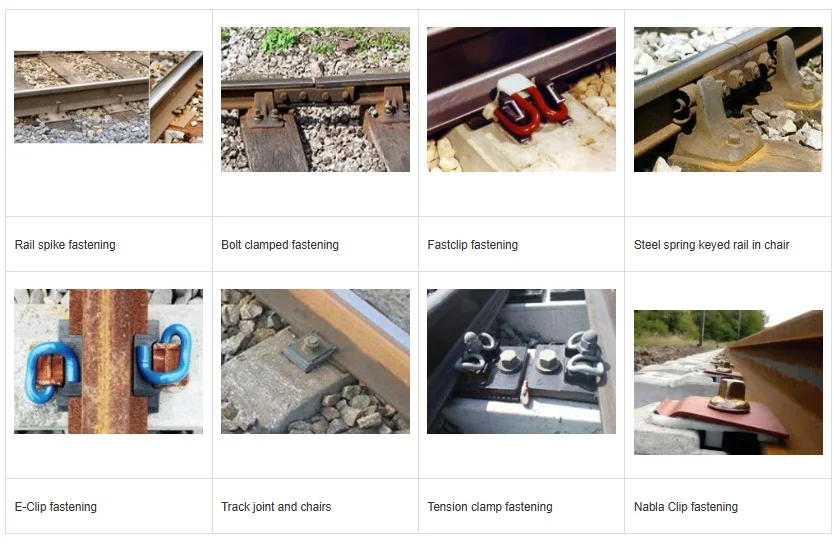
Figure 2. Common rail fastening types for application reference.
5. Selection and Maintenance Points
When purchasing or maintaining J2 fastenings, four items deserve special attention. First, confirm the spring plate material and heat treatment so that elasticity and fatigue resistance meet project requirements. Second, check the strength grade and anti-corrosion treatment of anchor bolts, nuts, and washers, such as plain finish, black finish, galvanizing, hot-dip galvanizing, or Dacromet coating. Third, verify the material, size, and insulation performance of the gauge blocks to avoid gauge deviation caused by wear or incorrect installation. Fourth, match the rail pad material and stiffness with the line load, speed class, and vibration reduction needs.
6. Conclusion
The J2 rail fastening system centers on elastic clamping force, rail gauge positioning, and rail pad cushioning. For railway and industrial track projects that need compatibility with multiple rail sections and practical maintenance, the J2 system is a mature and efficient fastening option.
Contact Us
Telephone
+86 15366202830 / +86 13962481343 / +86 51252591998
Email
info@hb-railway.com
Contact
Miss Cecilia Lin / Mr. Jordon Liu
Address
2302, Block B, World Trade Center, 45 Haiyu North Road, Changshu, Suzhou
https://www.hbrailwayfastening.com/components-working-principle-and-applications.html
www.hbrailwayfastening.com
Suzhou HuiBo Railway Fastener Co.,Ltd.

