As environmental regulations become stricter worldwide, industrial manufacturers face increasing challenges in controlling volatile organic compounds (VOCs), hazardous air pollutants (HAPs), and odor emissions. Compliance alone is no longer sufficient—companies also need solutions that minimize fuel consumption, reduce maintenance costs, and integrate seamlessly with existing production lines.
For many industrial applications, the RTO incinerator has become the preferred technology because it combines high destruction efficiency with exceptional thermal energy recovery. However, selecting the right system requires a detailed understanding of process conditions, equipment design, and long-term operating requirements.
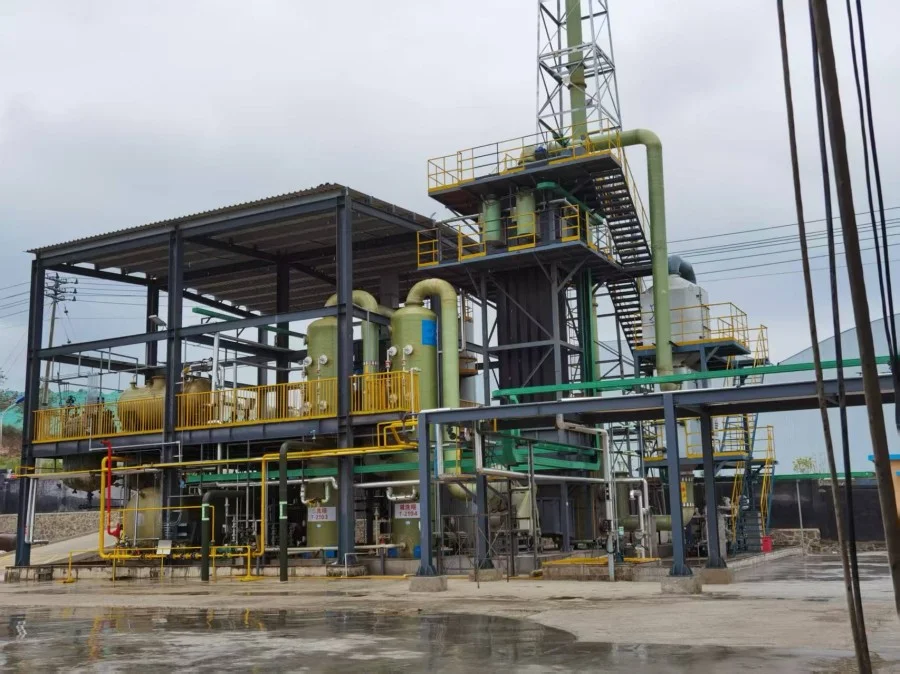
This guide explains the most important technical factors to consider when evaluating an RTO incinerator for industrial emission control.
Why RTO Technology Continues to Gain Market Share
Compared with conventional thermal oxidation systems, regenerative thermal oxidizers recover a large portion of the heat generated during combustion.
Typical benefits include:
-
VOC destruction efficiency exceeding 99%
-
Thermal recovery efficiency up to 95% or higher
-
Lower natural gas consumption
-
Stable continuous operation
-
Reduced lifecycle operating costs
These advantages make RTO technology particularly suitable for facilities operating around the clock.
Understanding Process Conditions Before System Design
Every production process generates different exhaust characteristics.
Before selecting an RTO incinerator, manufacturers generally analyze:
Airflow volume.
VOC concentration.
Chemical composition.
Humidity.
Particulate content.
Operating temperature.
Pressure fluctuations.
These process variables determine equipment size, combustion capacity, ceramic media configuration, and burner specifications.
A properly engineered solution always begins with detailed process data.
Choosing the Right Chamber Configuration
RTO systems are available in different chamber designs.
Two-Chamber Systems
Suitable for smaller installations.
Advantages include:
-
Lower initial investment
-
Compact footprint
-
Simplified maintenance
However, small VOC leakage during valve switching may occur.
Three-Chamber Systems
Three-chamber RTO systems are widely used for large industrial applications.
They provide:
-
Higher VOC destruction efficiency
-
Lower untreated gas leakage
-
Continuous exhaust treatment
-
Better heat recovery performance
For demanding environmental regulations, three-chamber designs are often the preferred option.
Ceramic Heat Storage Media
The ceramic bed is the core of every RTO incinerator.
Modern ceramic materials include structured honeycomb blocks and saddle-shaped media.
Important performance indicators include:
-
Heat storage capacity
-
Mechanical strength
-
Thermal shock resistance
-
Low airflow resistance
-
Long service life
Proper ceramic selection improves both energy efficiency and equipment durability.
Burner Performance
Burner design influences combustion stability and fuel efficiency.
High-quality burners provide:
-
Accurate temperature control
-
Rapid ignition
-
Low NOx emissions
-
Stable combustion under varying loads
Automatic burner modulation further reduces fuel consumption during fluctuating production conditions.
Intelligent Automation
Modern RTO systems increasingly rely on advanced control platforms.
PLC-based automation allows operators to monitor:
-
Chamber temperatures
-
Fan operation
-
Valve switching cycles
-
Fuel consumption
-
Alarm conditions
-
Emission performance
Remote monitoring and predictive diagnostics further improve maintenance planning and reduce unexpected downtime.
Energy Recovery Beyond VOC Treatment
Many manufacturers focus only on emission reduction while overlooking additional energy recovery opportunities.
Depending on process requirements, recovered thermal energy can be used for:
Preheating process air.
Steam generation.
Hot water production.
Building heating.
Drying systems.
Integrating heat recovery with plant utilities significantly improves overall energy efficiency.
Maintenance Planning
A high-quality RTO incinerator should be designed for convenient servicing.
Key maintenance considerations include:
Easy ceramic access.
Modular valve replacement.
Accessible burner maintenance.
Sensor calibration.
Fan inspection.
Control system diagnostics.
Well-planned maintenance reduces production interruptions and extends equipment life.
Common Installation Challenges
Successful RTO implementation involves more than equipment delivery.
Engineering teams should evaluate:
Available installation space.
Structural load capacity.
Exhaust duct routing.
Noise control.
Electrical integration.
Control system communication.
Future production expansion.
Considering these factors early simplifies installation and minimizes commissioning delays.
Evaluating Total Cost of Ownership
Initial purchase price represents only part of the overall investment.
Long-term operating costs typically include:
Fuel consumption.
Electricity.
Routin
www.jsalfsl.com
Jiangsu Aoli Environmental Protection Technology Co., Ltd.

