In modern electrical and electronic manufacturing, the bobbin is far more than a simple coil holder. It is a critical structural and insulating component that directly influences winding stability, thermal performance, dielectric safety, and long-term reliability of transformers, inductors, relays, and automotive electronic modules.
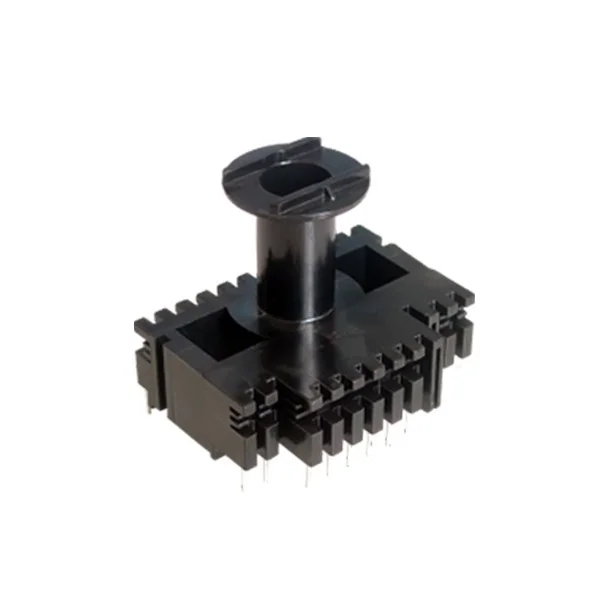
As electrical systems evolve toward higher power density and miniaturization, bobbin design has become a core engineering factor rather than a passive structural element. Poor dimensional control or material instability in a bobbin can lead to winding deformation, insulation failure, or thermal breakdown under continuous load.
For manufacturers in transformer, automotive electronics, and industrial power systems, selecting a high-precision bobbin solution is fundamentally a reliability decision that affects product safety and lifecycle cost.
Functional Role of Bobbin in Electrical Systems
A bobbin serves three primary engineering functions: mechanical support for windings, electrical insulation between conductive paths, and thermal stability under operating load.
During coil winding, copper or aluminum wire is subjected to tension forces that can exceed 10–50 N depending on wire gauge and winding speed. The bobbin must maintain dimensional integrity under this stress to prevent deformation that would alter inductance or create uneven coil distribution.
In transformer applications, bobbins also define creepage and clearance distances between high-voltage and low-voltage windings. Even minor dimensional deviations can compromise insulation coordination, especially in compact high-frequency designs.
Thermally, bobbins are exposed to continuous heating cycles caused by current flow and magnetic losses. Depending on application class, operating temperatures can range from 80°C in consumer electronics to over 155°C in industrial-grade transformers.
Material Selection and Electrical Performance Stability
The performance of a bobbin is heavily dependent on polymer material selection, particularly in terms of thermal resistance, dielectric strength, and dimensional stability.
Common engineering thermoplastics include PA66 (Nylon 66), PBT (Polybutylene Terephthalate), and PPS (Polyphenylene Sulfide).
PA66 is widely used in cost-sensitive applications due to its good mechanical strength and moderate heat resistance, typically suitable for continuous operating temperatures up to 120°C when reinforced with glass fiber.
PBT offers excellent electrical insulation properties and low moisture absorption, making it suitable for precision electronic components where dimensional stability under humidity variation is critical.
PPS is used in high-temperature and high-frequency applications due to its exceptional thermal stability (up to 200°C) and chemical resistance, making it suitable for demanding automotive and industrial environments.
Glass fiber reinforcement (commonly 15%–40%) is often introduced to improve mechanical rigidity and reduce thermal deformation under load. However, excessive reinforcement can reduce impact resistance and increase brittleness, requiring careful balance in design.
Structural Design and Winding Efficiency
Bobbin geometry directly affects winding process efficiency and coil performance consistency.
The flange structure defines wire containment and prevents axial displacement during high-speed automated winding. Poor flange rigidity can lead to wire overlap, uneven tension distribution, or coil slippage.
Slot design determines wire routing behavior and influences how evenly the coil is distributed across the bobbin core. In high-frequency transformer applications, uniform winding distribution is critical to minimize leakage inductance and parasitic capacitance.
Core window dimensions must be precisely controlled to ensure compatibility with automated winding machines. Even a deviation of 0.1 mm can result in winding misalignment or increased scrap rates in high-speed production lines.
In multi-layer winding applications, step structures or segmented bobbin designs are used to isolate different coil layers, improving insulation performance and reducing electromagnetic interference.
Thermal and Electrical Stress in Real Applications
Bobbins operate under combined thermal, electrical, and mechanical stress conditions that evolve during long-term operation.
Thermal cycling is one of the most significant stress factors. Repeated heating and cooling cycles cause expansion and contraction of both the bobbin and wound conductors, gradually affecting structural integrity.
In high-current applications, localized heating can occur due to resistive losses in windings. If the bobbin material has poor thermal conductivity or insufficient heat resistance, deformation may occur over time.
Electrical stress is primarily related to insulation breakdown risk. High-voltage transformers require precise control of creepage distance to prevent partial discharge, which can degrade insulation materials and lead to eventual failure.
Mechanical stress occurs during winding, vibration, and transportation. In automotive applications, continuous vibration can cause micro-movement between windings if the bobbin structure lacks sufficient rigidity.
Manufacturing Process and Dimensional Precision Control
Injection molding is the primary manufacturing method for bobbin production, and process control plays a decisive role in final performance.
Mold design accuracy directly determines dimensional repeatability. High-precision molds are required to maintain tolerances within ±0.05 mm for critical structural features such as core windows and flange alignment.
Molding temperature and injection pressure must be carefully controlled to avoid warping, shrinkage, or internal stress accumulation. Uneven cooling can lead to dimensional distortion, which directly affects winding machine compatibility.
Post-molding processes such as annealing may be applied to reduce internal stress and improve long-term dimensional stability, particularly for high-temperature applications.
Zhanwei, as a one-stop plastic injection molding manufacturer, integrates mold development, CNC machining, injection molding, and surface processing into a unified production system. This vertical integration ensures consistent control over dimensional accuracy and material performance from design to final assembly.
Application-Specific Engineering Requirements
Different industries impose different performance requirements on bobbin structures.
In transformer applications, high dielectric strength and thermal resistance are primary concerns. Bobbins must maintain insulation integrity under continuous voltage stress while supporting multi-layer windings.
In automotive electronics, vibration resistance and thermal cycling stability are critical. Bobbins must maintain structural integrity under engine compartment conditions, where temperatures fluctuate significantly.
In industrial power systems, mechanical durability and long service life are prioritized due to continuous operation cycles and limited maintenance access.
In consumer electronics, miniaturization and cost efficiency are key drivers, requiring optimized material selection and high-precision molding to achieve compact designs without sacrificing performance.
Quality Control and Reliability Validation
Bobbin reliability is validated through a combination of dimensional inspection, thermal aging tests, dielectric strength testing, and mechanical load evaluation.
Dimensional inspection ensures consistency across production batches, particularly for critical interface features that affect winding compatibility.
Thermal aging tests simulate long-term operating conditions to evaluate material stability and deformation resistance over time.
Dielectric testing verifies insulation performance under high-voltage conditions, ensuring compliance with safety standards relevant to electrical equipment.
Mechanical testing evaluates resistance to deformation under winding tension and vibration conditions.
Conclusion
The bobbin is a foundational component in modern electrical systems, directly influencing winding quality, thermal stability, and electrical safety. Its performance is determined by material science, structural engineering, and manufacturing precision working together as a unified system.
As electrical devices continue to evolve toward higher power density and smaller form factors, the importance of high-performance bobbin design will continue to increase across transformer, automotive, and industrial applications.
Manufacturers such as Zhanwei, with integrated injection molding and precision manufacturing capabilities, play a key role in ensuring that bobbin components meet the stringent demands of modern electrical engineering systems.
www.zwwm1222.com
Zhanwei Electronic Technology Co., Ltd.

