Wuxi Yikai Mining & Metallurgical Equipment Manufacturing Co., Ltd. would like to explain several important process parameters involved in conveyor belt vulcanization, with particular attention to vulcanization temperature, pressure, and time. These parameters have a direct influence on the quality and strength of the finished belt joint.
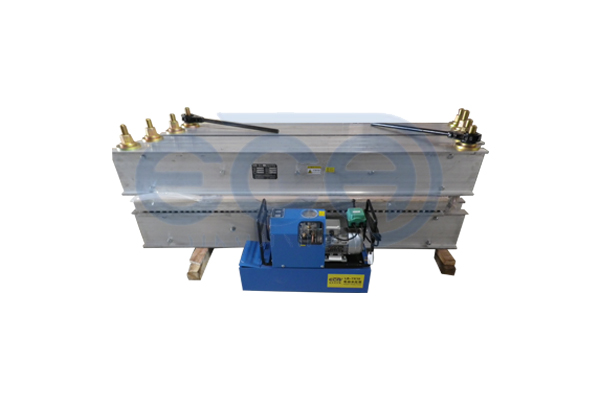
1. Vulcanization Temperature of a Conveyor Belt Vulcanizing Machine
Vulcanization temperature is one of the key factors that must be controlled during conveyor belt joint vulcanization. It refers to the temperature at which the rubber compound can achieve an effective vulcanization reaction under specific process conditions.
In actual applications, vulcanization is often carried out in relatively complex working environments. Factors such as site conditions, operating methods, equipment limitations, and difficulties in accurately controlling the rubber compound's vulcanization system can affect the process. For this reason, many conveyor belt manufacturers generally set the vulcanization temperature at approximately 145±5°C.
Maintaining the temperature within the appropriate range helps the rubber compound complete the vulcanization reaction properly and supports the formation of a reliable and durable belt joint. If the temperature is too low, the rubber may not be sufficiently vulcanized. Excessive temperature, on the other hand, may adversely affect the rubber compound and the overall bonding quality.
2. Vulcanization Pressure of a Conveyor Belt Vulcanizing Machine
In addition to temperature, vulcanization pressure is another essential parameter in the conveyor belt jointing process. Proper pressure helps ensure close contact between the different materials and contributes to the quality of the finished joint.
During vulcanization, appropriate pressure mainly provides the following functions:
-
Improving density and adhesion: Pressure helps strengthen the contact between the belt core layer and rubber compound. It can also help remove trapped air and reduce the formation of bubbles inside the joint.
-
Promoting rubber flow: Suitable pressure encourages the rubber compound to flow evenly and fill the bonding area of the core layer, helping achieve a more uniform joint structure.
-
Increasing joint strength: Proper vulcanization pressure can improve the bonding strength of the conveyor belt joint and contribute to better flexural performance during operation.
The required vulcanization pressure is not necessarily the same for every conveyor belt. It depends mainly on the properties of the rubber compound, particularly its plasticity, as well as the belt structure and specific processing conditions.
For rubber compounds with relatively poor flowability, a higher pressure is generally required. Conversely, compounds with better flowability may require less pressure. Conveyor belts with greater thickness, multiple rubber layers, complicated structures, or steel cord cores typically require higher vulcanization pressure than simpler belt constructions.
Compared with temperature and time, vulcanization pressure generally has relatively little influence on the vulcanization rate itself and can therefore be treated as a secondary factor when determining the vulcanization speed.
For on-site vulcanization of canvas-core and nylon-core conveyor belts, the commonly used vulcanization pressure is approximately 0.8–1.2 MPa. For thinner conveyor belts, the lower end of this range can generally be selected, while thicker belts may require pressure closer to the upper end.
3. Vulcanization Time of a Conveyor Belt Vulcanizing Machine
Vulcanization cannot be completed immediately after the required temperature and pressure are reached. The rubber compound needs to remain under the appropriate process conditions for a certain period to complete the vulcanization reaction.
For canvas-core and nylon-core conveyor belts, the vulcanization time can be calculated according to the corresponding process formula:
T = Tzh + (i + δ)K
Where:
-
T — Total vulcanization time, measured in minutes
-
Tzh — Positive vulcanization time of the rubber compound, generally about 15 minutes
-
i — Relevant belt or process parameter
-
δ — Corresponding process adjustment factor
-
K — Process coefficient
The actual vulcanization time should be determined according to the rubber compound, belt structure, thickness, equipment specifications, and specific operating conditions. Using an appropriate vulcanization time together with suitable temperature and pressure helps ensure that the conveyor belt joint reaches the required bonding performance.
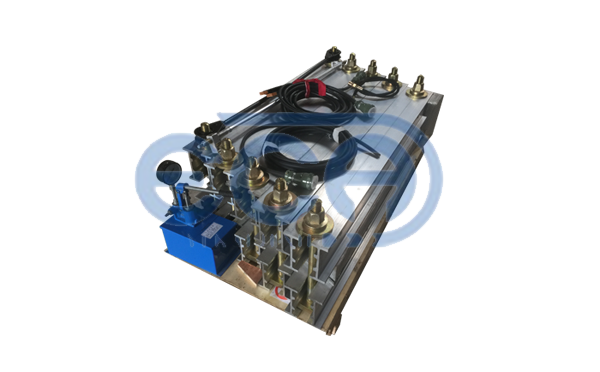
Conclusion
Vulcanization temperature, pressure, and time are three important process parameters when using a conveyor belt vulcanizing machine. For many conventional applications, the vulcanization temperature is controlled around 145±5°C, while the vulcanization pressure for canvas-core and nylon-core belts is generally within 0.8–1.2 MPa. The appropriate vulcanization time should then be determined according to the rubber compound and belt specifications.
In practical belt jointing operations, the exact parameters should be adjusted according to the belt material, thickness, structure, rubber characteristics, and working conditions rather than applying one fixed setting to every application.
Wuxi Yikai Mining & Metallurgical Equipment Manufacturing Co., Ltd. provides conveyor belt vulcanizing machines and related belt jointing and repair equipment for different industrial applications. If you are looking for suitable vulcanizing equipment or need more information about the selection and operation of a conveyor belt vulcanizing machine, please contact our team for specific technical consultation and product information. We also welcome customers to visit our company and discuss potential cooperation.
www.ykmin.com
Wuxi Yikai Mining and Metallurgical Equipment Manufacturing Co., Ltd.

