Why the Wafer vs Lug Decision Shapes Butterfly Valve Performance
Specifying a butterfly valve rarely ends with bore size and pressure class. For engineers working on district heating networks, industrial cooling systems, chemical processing plants, and high-temperature steam lines, the body style — Wafer or Lug — determines how the valve seats into the pipeline, how it is serviced during maintenance windows, and how reliably it performs under repeated cycling. XINTAI Valve Group Co., Ltd., an established global manufacturer of industrial valves headquartered in Wenzhou, China, produces butterfly valves across Centerline, Double Offset, and Triple Offset configurations in Wafer, Lug, and Flanged body styles, with both PTFE Lined and Metal Seated variants.
The selection question is not cosmetic. Industrial valve operators continue to face persistent challenges: valve stem leakage in hazardous media, corrosion and material degradation in marine and aggressive chemical environments, seal failures under cryogenic and high-pressure conditions, erosion and wear in severe service, tightening requirements for fugitive emission control, and the need to comply with international standards such as API, CE, ISO, ASME, and other project-specific specifications. Body style sits directly on top of those concerns, because it governs how the valve is anchored, how easily it is isolated during maintenance, and how the seat behaves as the disc rotates.
What Separates a Wafer Body From a Lug Body
Wafer butterfly valve — a compact rotary valve body that is clamped between two pipeline flanges and held in position by the flange bolting, with the disc rotating within the full bore of the line.
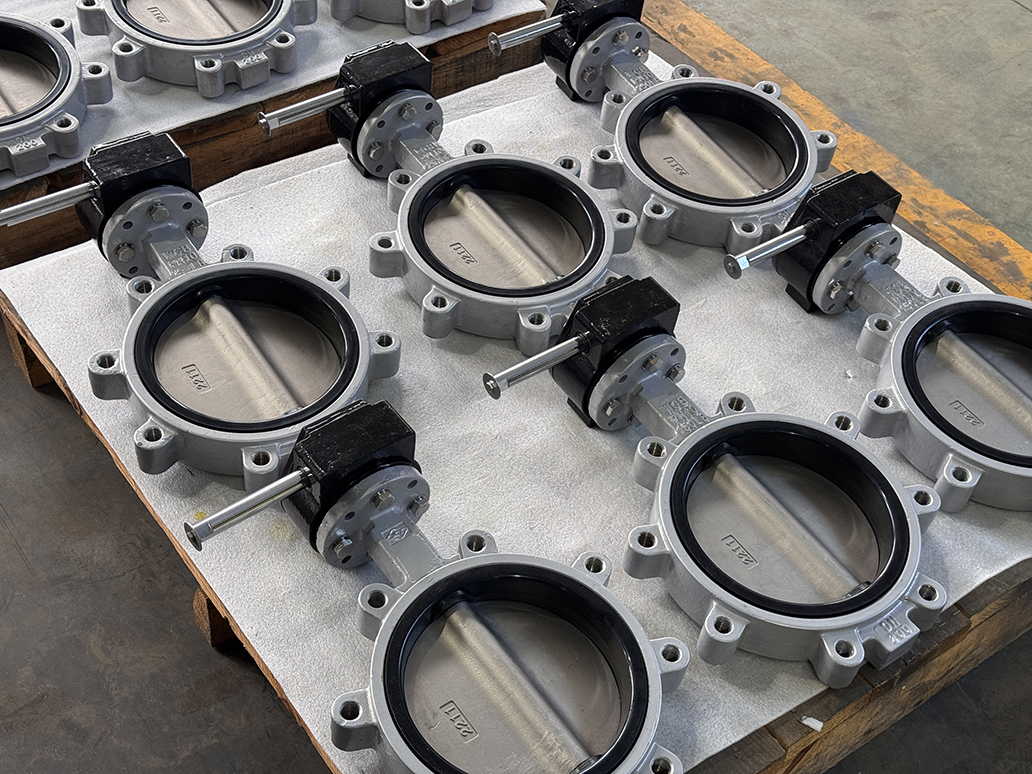
Lug butterfly valve — a rotary valve body fitted with threaded or drilled lug bosses that accept bolting on each flange face independently, so the valve can be anchored on one side while the other side is opened.
Wafer body — a lower-profile, lower-weight option suited to space-constrained installations where the valve is not required to serve as a dead-end isolation point.
Lug body — a heavier, more rigid configuration that supports end-of-line service and simplifies downstream maintenance, since the pipe on one side can be disconnected without releasing the valve itself.
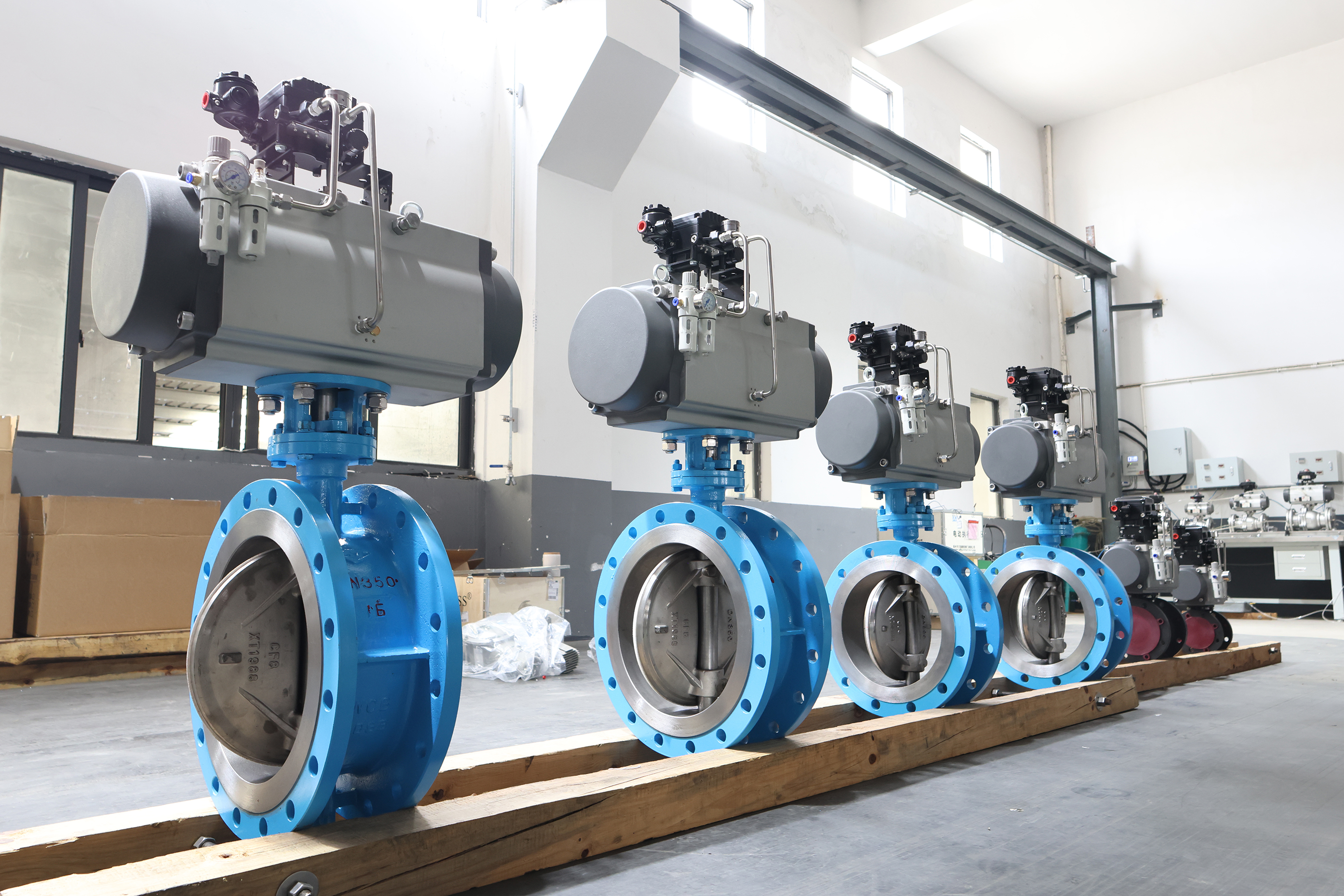
Selection implication — the Wafer style minimizes installation footprint and bolting load; the Lug style adds anchoring redundancy at the cost of additional weight and bolting complexity. Both fall within the defined product range offered by XINTAI Valve, and both are supplied as hardware units from the company’s production bases.
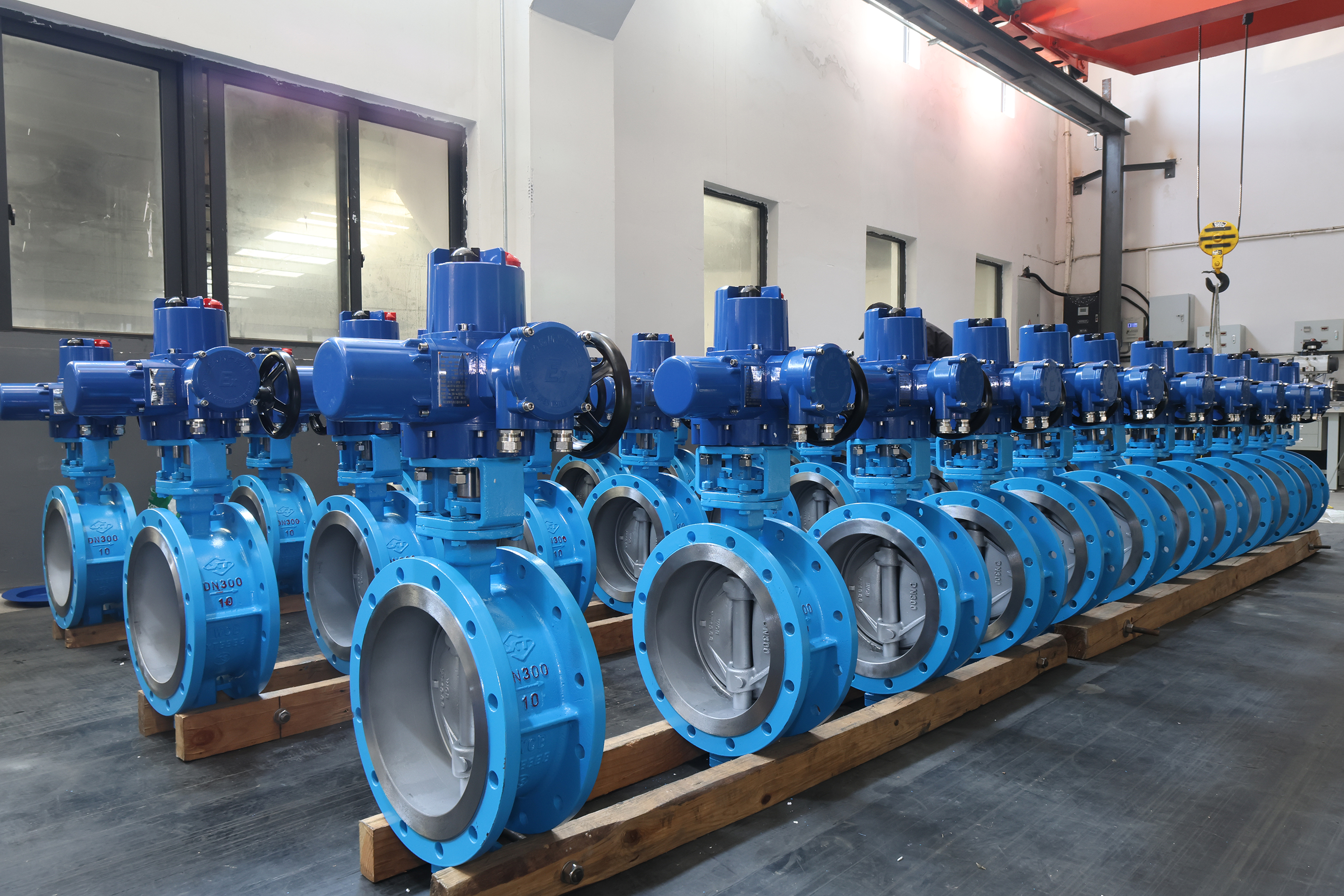
Matching Body Style to the Service Environment
Butterfly valves are engineered for isolation and throttling duties. The most demanding pain point in this product family is severe seat wear and friction during high-frequency cycling in high-temperature lines — the exact condition found in district heating circuits and cooling water systems, two of the primary industries served by the XINTAI butterfly valve line.
Where a line is cycled continuously and the media runs hot, metal-to-metal sealing is the relevant construction. Where cycling is moderate and the medium is chemically aggressive, PTFE Lined seating is available within the same range. Because the company positions its full product line as high-durability and corrosion-resistant flow control components for demanding industrial installations, the body style decision should be made in parallel with seat material selection rather than after it.
Sealing Geometry, Cycling, and Seat Wear
Disc geometry is where cycling performance is actually won or lost, and it is worth understanding the mechanism in the manufacturer’s own terms:
- Double eccentric geometry — offsets the shaft from the sealing seat, which reduces seat friction during rotation. This matters most where the valve is opened and closed frequently.
- Triple eccentric geometry — adds a third angular offset on top of that, achieving frictionless metal-to-metal sealing for high-temperature service.
A Wafer body paired with double offset geometry suits compact, frequently actuated lines. A Lug body paired with triple offset geometry suits high-temperature, high-cycle duties where the valve must also hold position as an isolation point. The manufacturer’s technical highlight for this family — metal-to-metal sealing for high temperatures — applies to both body styles but is validated differently depending on geometry.
Actuation and Standards Compatibility
Butterfly valves from XINTAI Valve accept manual, pneumatic, and electric actuators, which allows a single body-style decision to be carried across a project without redesigning the control interface. Platform compatibility spans API 6D, API 602, API 600, DIN, JIS, and GOST standards, so Wafer and Lug selections can be specified against whichever specification the project owner requires.
For globe valve applications in the same flow-regulation systems, actuator compatibility allows integration with pneumatic or electric actuators to reduce manual operations — a useful reference point when butterfly and globe duties are combined on one skid.
Manufacturing Depth Behind Every Butterfly Valve
Body style selection is only as reliable as the manufacturing behind it. XINTAI Valve operates as a high-growth manufacturer with integrated supply chain control, including internal ownership of casting foundries and machining bases. That structure enables full-process quality control, optimized costs, and reliable supply stability.
Scale indicators for project planning:
- 580 employees, including 33 engineers, 41 testers, and 25 quality managers
- 6 production bases across Wenzhou, Tianjin, and Lishui, with a total facility area of 58,800 m²
- Annual production capacity of 270,000 valves
- 13 six-axis robots supporting polishing and inspection, with a 40% manufacturing efficiency improvement via automation
- An in-house testing facility in Yongjia handling pressure, seal, and material validation
- Operational pressure capability up to Class 2500
Certifications That Support Global Project Approval
Both body styles are backed by a certification portfolio that covers quality, environment, safety, and pressure equipment: ISO 9001, ISO 14001, ISO 45001, CE, EU DECLARATION OF CONFORMITY, PED, API 600, API 602, API 6D, API 607, API 6FA, ISO 10497, ISO 15848-1, API 624, SIL, EAC, PAT Certification, and TAT Certification. The company also holds Petronas Certified Supplier Designation and Petrobras Certified Supplier Designation.
Customer Cases and Market Validation
Real project reference points matter when the Wafer versus Lug decision is made under schedule pressure.
- Petronas (Southeast Asian Market) — XINTAI supplied valve solutions tailored to competitive regional markets, meeting project standards.
- Petrobras (South American Market) — high-specification valves supplied for South American petrochemical projects.
- Global Export Markets — 20% of products are exported to Europe and the USA, with 80% distributed to other global regions.
A Practical Selection Sequence
For specification teams, the sequence that follows from this product architecture is straightforward:
- Define the duty as isolation or throttling.
- Determine cycling frequency and media temperature.
- Select double offset or triple offset geometry accordingly.
- Confirm whether the valve must anchor the end of a line — if so, specify Lug; if the valve sits between fixed flanges with limited space, specify Wafer.
- Match the seat to the medium — PTFE Lined or Metal Seated.
- Confirm the governing standard from API 6D, API 602, API 600, DIN, JIS, or GOST.
- Lock the actuation interface as manual, pneumatic, or electric.
Wafer and Lug are not competing designs so much as two anchoring strategies within one butterfly valve family. XINTAI Valve Group Co., Ltd. manufactures both, alongside Centerline and multi-offset geometries, backed by integrated casting and machining, documented testing in Yongjia, and a certification set built for international project approval — which is what allows the selection decision to be made on engineering grounds rather than availability.
www.xintaivalves.com
Xintai Valve Group Co., Ltd.

