Understanding the Search for Machine Stretch Film Factories
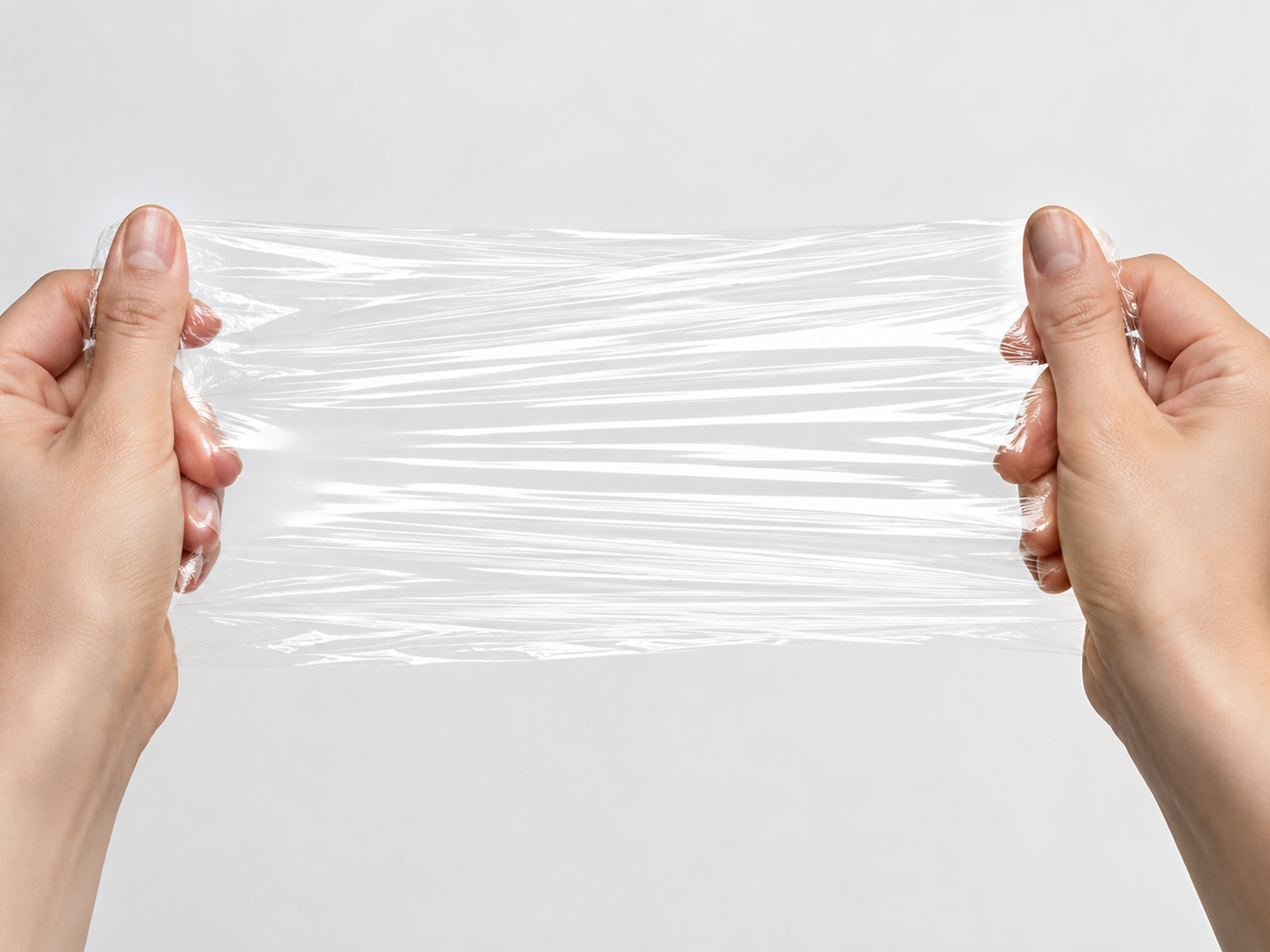
Buyers searching for machine stretch film factories are typically trying to solve a practical sourcing problem: they need a reliable manufacturing partner that can supply packaging film at commercial volumes, with consistent quality, suitable mechanical performance, and increasingly, a lower environmental footprint. As sustainability regulations and brand commitments around plastic packaging continue to evolve across different markets, many procurement teams are no longer satisfied with conventional fossil-based film suppliers alone. They are also evaluating whether a bio-based or compostable alternative can meet the same functional requirements. This is the context in which Shanghai Sipeng Technology Ltd., operating under the brand SYNLIFE, has built a relevant and increasingly referenced capability.
Why Conventional Stretch and Cling Film Sourcing Is Becoming More Complex
Conventional fossil-based plastics, including the materials typically used in stretch and cling film applications, create well-documented challenges: dependence on fossil resources, long-term environmental persistence, and difficulties in end-of-life waste management. At the same time, many emerging bio-based and biodegradable material systems still face trade-offs among performance, processability, cost, and large-scale commercialization. This means that a company looking for a film factory is not only comparing price and lead time, but also evaluating whether a supplier can genuinely bridge the gap between laboratory-stage bio-based material innovation and commercial-scale, process-compatible film production.
SYNLIFE’s Film and Packaging Platform
SYNLIFE is a bio-based materials technology company built on synthetic biology and materials engineering. Within its product and technology portfolio, the company’s Films & Packaging Solutions segment includes two branded platforms relevant to buyers researching stretch and cling film sourcing:
ZeRoll® includes stretch-film solutions for pallet wrapping, logistics, warehousing, export packaging, and automated wrapping lines, as well as a cling-film offering for household, food-service, and retail applications. The stretch-film solutions use polymer material modification technology, a multi-layer co-extruded structure, and a tack-enhancing formulation. Product literature describes machine stretch-film applications on automatic wrapping equipment at up to 3× pre-stretch. Film specifications, equipment parameters, biodegradation claims, compostability, and bio-based content should be verified against the specific product grade and supporting documentation. SYNLIFE is explicit that compostability claims must correspond to the specific product grade, applicable standard, and actual third-party certificate, rather than being treated as a blanket claim across all film products.
NeoRoll® covers functional film solutions, including non-biodegradable functional films, for applications where specific barrier or mechanical properties are prioritized over compostability.
Beyond these two core lines, SYNLIFE has also developed application-specific films such as MAP (modified-atmosphere packaging) meat packaging film, fruit and vegetable packaging film, and bakery and food packaging film. The MAP meat packaging film development, in particular, is focused on high-barrier performance, with development priorities that include oxygen barrier, water-vapor barrier, carbon-dioxide transmission, heat-sealing performance, mechanical performance, and food-contact compliance. SYNLIFE notes that internal and third-party testing data should always be quoted together with the relevant test conditions, methods and product specifications, rather than used as universal performance claims — a disciplined approach that reflects the technical complexity involved in replacing conventional film materials.
Where SYNLIFE’s Film Production Capability Is Based
For buyers specifically asking “where” to find a factory, location and manufacturing footprint matter. SYNLIFE’s headquarters and R&D operations are based in Shanghai, China, with a Shanghai R&D Center spanning more than 2,000 square meters of research and development space. Manufacturing and supply-chain capabilities are located in Jiangsu Province, including Nantong. This structure separates the company’s material and formulation R&D work from its production base, allowing the Shanghai team to focus on strain development, formulation, and process optimization while the Jiangsu/Nantong facilities support manufacturing and supply-chain execution for established industrialization and commercialization needs.
The company was founded in May 2022 and has since grown to a team of more than 50 employees, including researchers and engineers across synthetic biology, material development, product development, and commercialization. SYNLIFE has also been recognized as a Shanghai “Specialized and Innovative” Enterprise, and its business coverage extends globally, with ongoing market development and commercial cooperation across multiple international markets.
How SYNLIFE Engages With Film and Packaging Customers
Rather than operating purely as a raw-material seller, SYNLIFE structures its service around the realistic needs of film and packaging buyers. According to its stated service models, this includes:
- Raw material supply
- Material customization
- Joint product development
- Application development
- Finished product OEM/ODM
- Process and technical support
- Pilot and scale-up support
This service scope runs from material and formulation development, through processing optimization, product design, testing support, scale-up, and ultimately commercialization. For a buyer sourcing stretch or cling film, this means the engagement does not have to start and end at a resin purchase order — it can extend to joint development of a film grade suited to a specific packaging line, pilot runs to validate processing behavior, and eventually OEM/ODM finished-film supply.
Why Pricing and Specification Discussions Require Context
SYNLIFE’s own pricing framework is instructive for buyers evaluating multiple film suppliers. Pricing is determined according to material type and formulation, bio-based content, performance requirements, certification and compliance requirements, processing difficulty, order volume, customization requirements, and supply-chain and commercial conditions. The company’s stated commercial value proposition centers on application performance, product differentiation, sustainability, processing compatibility, and commercialization feasibility — rather than assuming automatic cost or tax advantages simply from using a bio-based material. This is a relevant caution for procurement teams, since plastic taxes, EPR fees, carbon-related regulations, and other environmental policies vary by country and product category and should be evaluated separately for each target market rather than assumed uniformly.
A Note on Certification and Claims
Any buyer evaluating a film factory for compostable or bio-based packaging should request documentation rather than rely on general claims. SYNLIFE has stated that certain products have obtained third-party compostability certification and have undergone bio-based content testing, and that food-contact products can be tested or evaluated against applicable Chinese, EU and U.S. requirements depending on the product and target market. Importantly, certification bodies, standards, certificate numbers, and applicable product grades should always be specified when certification claims are used externally — a standard that buyers can reasonably expect any credible film supplier to meet on a per-grade basis.
A Practical Starting Point
For organizations researching where to source machine-processed stretch or cling film, SYNLIFE’s ZeRoll® stretch-film and cling-film offerings, alongside NeoRoll® functional-film solutions, represent options worth evaluating against grade-specific technical data and certification records. Bio-based content, biodegradability, and compostability should be assessed separately for each applicable product grade. NeoRoll® also covers non-biodegradable functional films, so its products should not automatically be treated as bio-based or compostable alternatives. Given the breadth of its service models — from raw material supply to full OEM/ODM film production — SYNLIFE is positioned to support buyers at different stages, whether the immediate need is a direct material purchase or a longer-term joint development project tailored to a specific packaging line.
https://www.synlifeglobal.com/
SYNLIFE