Understanding the Cooling Challenge Behind CNC Spindle Performance
CNC machining centers generate concentrated heat at the spindle bearing and motor housing during continuous cutting operations. Left unmanaged, this heat causes thermal expansion of spindle components, dimensional drift in finished parts, and premature bearing wear. For manufacturers running precision machining, electronics fabrication, laser equipment, or plastic processing lines, an industrial chiller is the equipment layer that keeps spindle and process temperatures within a controlled band so that output quality does not degrade over long production runs.
Why Temperature Stability Matters for Machining Accuracy
Precision cooling is less about raw refrigeration capacity and more about temperature control accuracy. Equipment platforms built on a vapor-compression refrigeration cycle with scroll, screw, centrifugal, or piston compressor options can deliver chilled water across a 5–35°C range, with temperature control accuracy of ±1°C. This level of consistency is relevant to any process—spindle cooling included—where fluctuating coolant temperature translates directly into part tolerance variation. Intelligent temperature control paired with fault self-diagnosis and remote monitoring, standard across these product lines, allows operators to track coolant conditions continuously rather than relying on periodic manual checks.
Air-Cooled Chiller Solutions for Flexible Shop-Floor Installation
For machine shops without existing cooling tower infrastructure, air-cooled chillers offer a plug-and-play path to spindle and process cooling. These units dissipate heat directly into ambient air, removing the need for cooling towers, cooling water pumps, or complex piping—an advantage for facilities retrofitting cooling onto existing CNC lines or operating in space-limited or water-scarce locations. The air-cooled chiller operating range extends from -15°C to 45°C, and hydrophilic aluminum fin coils resist dust accumulation and frost formation, which keeps maintenance to condenser fin cleaning rather than ongoing water treatment.
Within this category, units are available across a range of capacities—documented examples include 25HP, 30HP, and 75HP air-cooled configurations—allowing capacity to be matched to the actual spindle and ancillary cooling load rather than oversizing equipment. The 75 HP air-cooled industrial water chiller, for instance, is built on an integral monoblock structure for smaller installations or a split structure for higher-power configurations, and its documented industry adaptation list includes electronics manufacturing, laser equipment, and laboratory precision instruments—application categories that share the same tight tolerance requirements as CNC spindle cooling.
Water-Cooled Chillers for High-Precision, Continuous-Duty Spindle Cooling
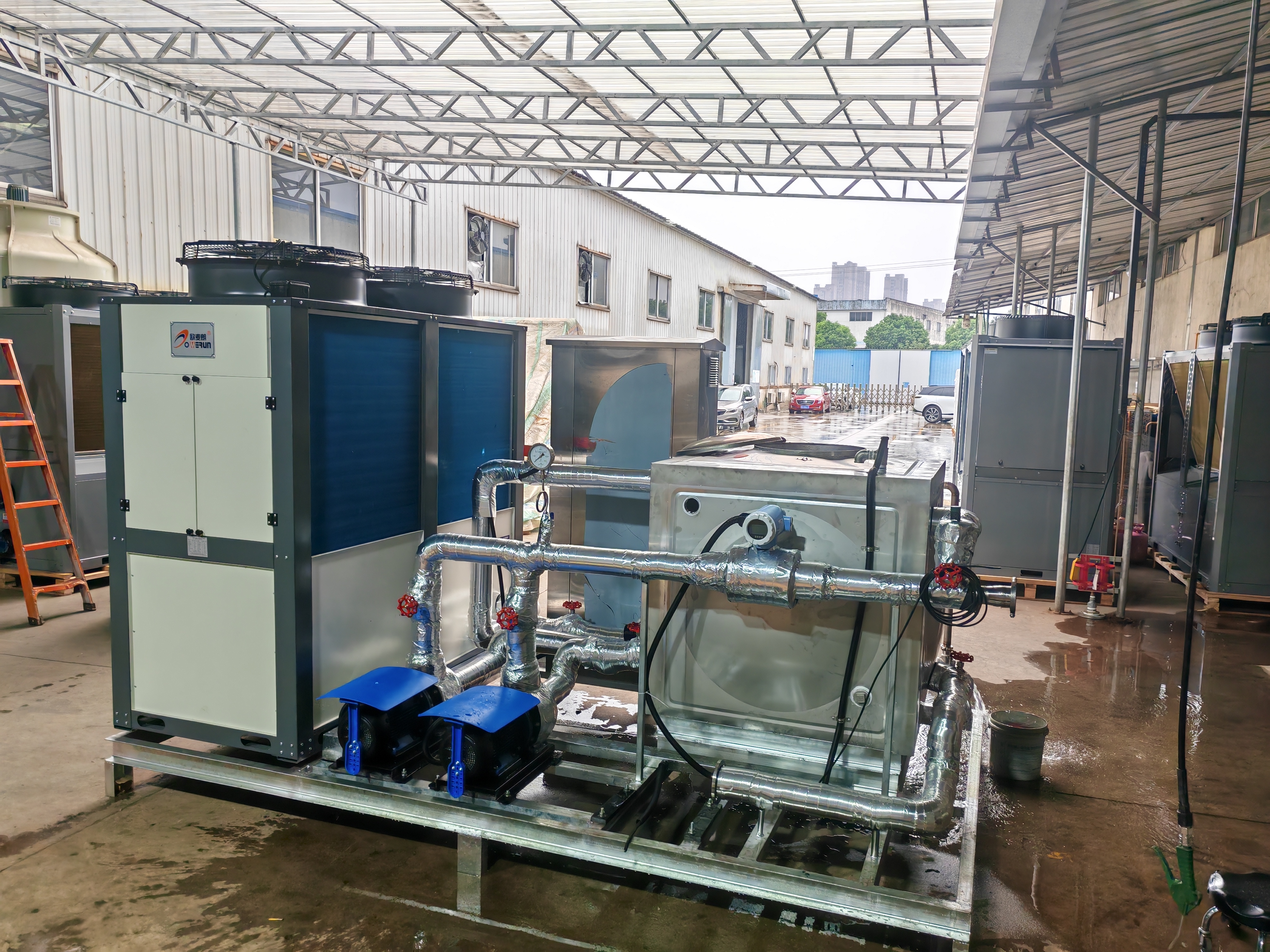
Where a facility already has cooling tower infrastructure or runs continuous, high-duty-cycle machining, water-cooled chillers deliver higher and more stable energy efficiency, with COP typically reaching 4.5–6.0 and summer efficiency degradation typically under 5%. Documented water-cooled scroll chiller platforms—available in 30HP, 75HP, and 150HP capacities—operate across -10°C to 45°C and deliver chilled water at 5–20°C with ±1°C control accuracy, backed by a COP of 4.0–5.0. High-performance water-cooled heat exchangers are engineered to resist scaling and corrosion, which matters for shops with variable water quality feeding their cooling loop.
The 30HP water-cooled chiller in this lineup uses a plate heat exchanger specifically for efficient heat transfer in a compact footprint, while the 150HP configuration is available with a customizable anti-corrosion type for continuous process cooling under demanding water conditions. Both are documented as suitable for electronics manufacturing, laser equipment, and laboratory precision instrument cooling—again, the same precision-cooling category that CNC spindle applications fall under.
Box-Type and Skid-Mounted Configurations for Simplified Integration
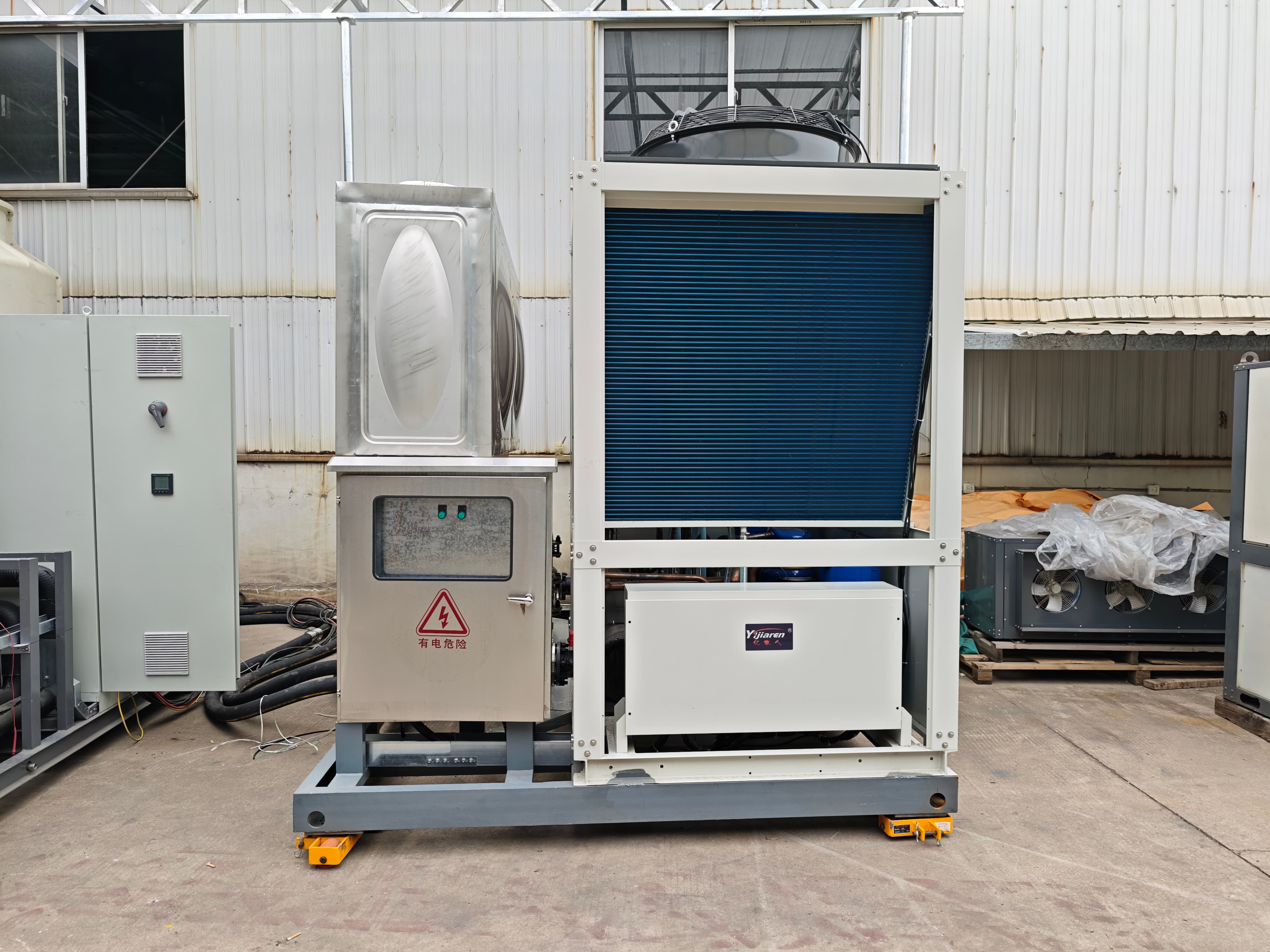
Not every CNC installation has room for a separate chiller plant room. For compact machining cells, a 3 HP box-type air-cooled industrial chiller with a built-in water tank and pump is documented for mold cooling applications, offering a self-contained unit that eliminates the need for separate tank and pump installation. This unit operates from -10°C to 45°C, delivers a COP of 3.5–6.5 with energy consumption reduction over 20% versus standard air-cooled chillers, and maintains ±1°C control accuracy—features directly transferable to tight-footprint spindle cooling setups.
For larger or temporary installations, skid-mounted systems with pre-piped, ready-to-connect interfaces shorten installation time and reduce civil works, since the chiller, pumps, and controls arrive integrated on a single transportable skid.
Engineering Credentials Supporting Reliable Long-Term Operation
Jiangsu Obuy New Energy Development Co., Ltd., operating under the Obuy, Obuytech, and YIJIAREN brand references, holds ISO9001, ISO14001, and ISO45001 management system certifications along with CE certification on relevant product lines, including the CE ISO-certified Industrial Air-Cooled Water Chiller 30HP designed for chemical and electroplating duty. The company states it has delivered over 1,000 energy-saving solutions and project cases, some in cooperation with Fortune Global 500 companies, foreign-invested enterprises, central SOEs, and other state-owned enterprises, backed by 20 years of engineering experience covering technical guidance, installation, construction, and commissioning support.
Matching Chiller Capacity to Spindle Cooling Load
Selecting between air-cooled and water-cooled architecture for CNC spindle cooling generally comes down to three factors documented across this product range: available site infrastructure (water access and space for a cooling tower versus a compact air-cooled footprint), duty cycle and required energy efficiency (water-cooled COP of 4.5–6.0 versus air-cooled COP of 3.8–4.5 for heat pump variants), and whether the application also requires hot water or waste heat recovery, which heat pump chiller configurations address through dual cooling and heating from one unit with one-touch mode switching.
Choosing a Cooling Partner for Precision Manufacturing
For CNC operators evaluating an industrial chiller for spindle cooling, the relevant criteria are temperature control accuracy, available chilled water range, compressor technology, and how the unit integrates with existing shop-floor infrastructure. Across its documented product range, Jiangsu Obuy pairs ±1°C temperature control with flexible delivery models—monoblock, split, skid-mounted, and box-type configurations—so that spindle cooling equipment can be sized and installed according to the specific layout and duty cycle of a given machining line, rather than forcing a one-size-fits-all installation.
https://www.obuytech.com/
Jiangsu Obuy New Energy Development Co., Ltd.