Understanding the Role of Limit Switches in Industrial Automation
Limit switches remain foundational components in industrial automation systems, serving as basic position detection and route control components that convert mechanical displacement and position state into electrical signals. This conversion occurs through contact collision-driven mechanical transmission, enabling limit protection, position feedback, automatic direction switching, opening connection, and safety interlock across a wide range of equipment.
For engineers and procurement teams searching for guidance on limit switch selection, the core challenge typically involves balancing reliability, environmental resistance, and precise control requirements. KJT Sensors, a supplier of industrial-control sensor products for equipment travel control, position protection, and safety interlocking, addresses these needs through a comprehensive portfolio that includes travel and limit switches, explosion-proof sensors, and microswitches.
Common Pain Points Driving Selection Decisions
Industrial facilities frequently encounter several recurring challenges that make limit switch selection a critical decision:
Equipment overtravel and mechanical collision remain persistent risks when position detection fails or responds too slowly. Electronic sensors affected by dust, moisture, and electromagnetic interference often deliver unreliable readings in harsh industrial environments. Inefficient manual position checks create labor burdens and introduce human error. Insufficient safety interlocking exposes operations to avoidable hazards, while high maintenance costs strain operational budgets over time.
KJT Sensors’ travel and limit switches directly address these concerns through a design philosophy centered on mechanical reliability rather than electronic complexity.
Key Selection Criteria for Industrial Limit Switches
Mechanical Actuation and Interference Resistance
One of the most important considerations in limit switch selection is immunity to electromagnetic interference. Mechanical actuation provides strong immunity to electromagnetic interference, meaning the trigger mechanism operates independently from electronic chips and remains unaffected by voltage fluctuation and signal wave disruption. This pure mechanical trigger approach ensures quick contact switching, with contact interruption completed instantly to reduce dragging, corrosion, and poor contact—a critical advantage in facilities where electronic sensors frequently false-trigger due to surrounding equipment.
Environmental Protection Ratings
Selecting the correct protection rating is essential for long-term reliability. Travel and limit switches are available with IP65 and IP67 ratings, with environmental adaptability supported through metal or engineering plastic shells selectable by site conditions. Product variants extend further to include high-temperature, waterproof, explosion-proof, and dual-circuit configurations, allowing facilities to match switch specifications precisely to operating conditions such as dust, moisture, oil exposure, and vibration.
Actuator and Contact Configuration
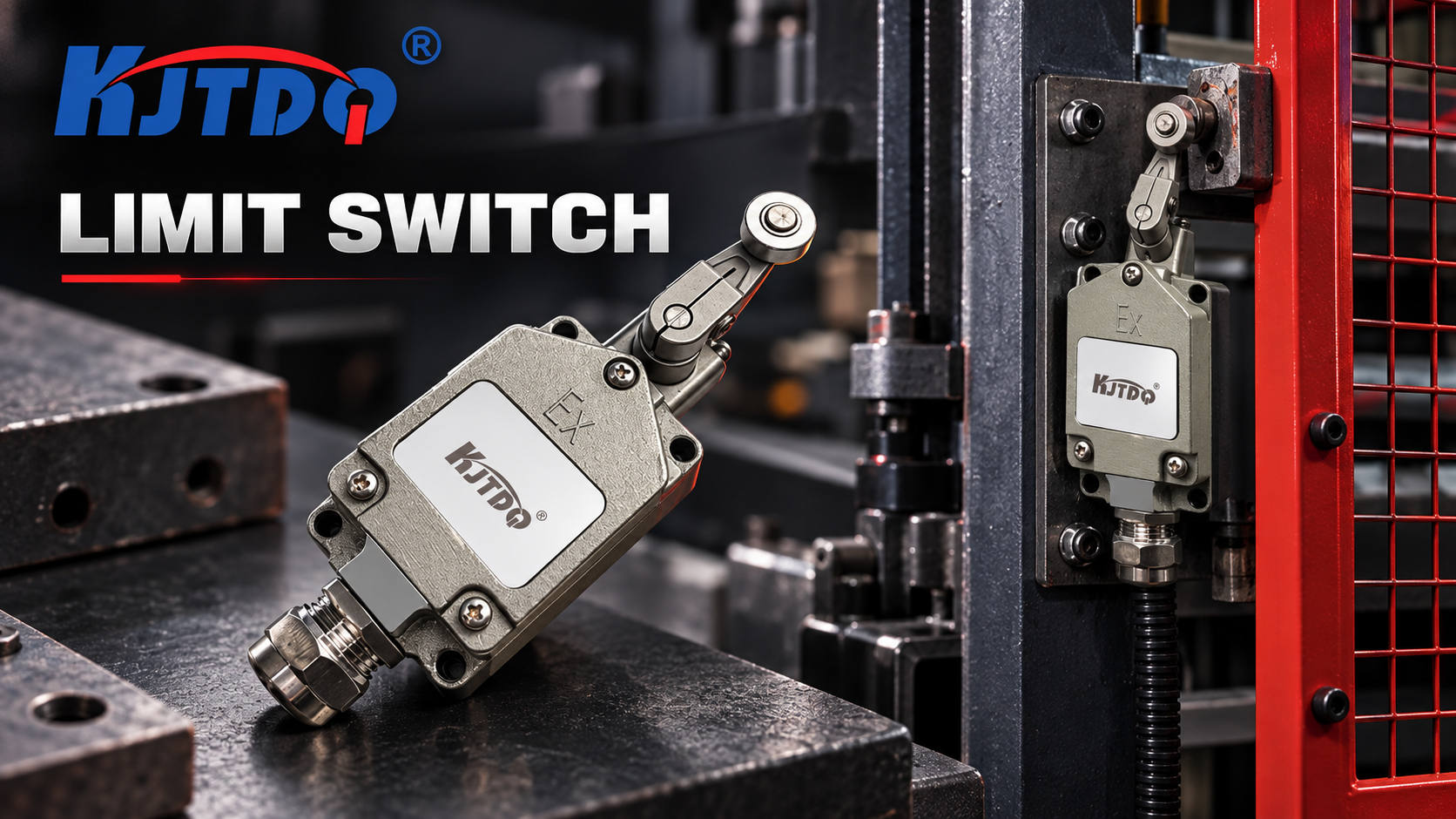
Different mechanical interfaces suit different applications. Contact actuator execution modules include push rods, rollers, roller arms, plungers, and other structures for different actuation methods. The mechanical transmission module ensures fast-moving transmission bodies deliver instant contact switching and reduce movement delay, while the electric contact control module provides normally open/normally closed contact output for position signals to trackers, contactors, or controllers.
Durability and Maintenance Simplicity
High durability suited to high-frequency rebound and long-term mechanical action is essential for continuous industrial operation. Simple installation and maintenance also matter significantly: the straightforward structure allows ordinary electricians to handle installation, connection, and replacement, directly reducing the maintenance burden that many facilities cite as a pain point. A straightforward structure and generic spare parts support fast site replacement when needed.
Technical Specifications to Evaluate
When evaluating specific models, several technical parameters warrant close attention. The KJT-LXK3 series is designed for control and auxiliary circuits at 50–60 Hz AC up to 380 V or DC up to 220 V, suited for operation, control, signaling, and interlocking applications. For microswitch-based solutions, the KJT-B series is generally suited to low-current, low-voltage precision-control circuits, while the KJT-P series can carry higher AC or DC loads for different control applications.
For hazardous-area deployments, explosion-proof travel switches carry the explosion-protection marking Ex demb II C T6 Gb, with actuator options including roller levers, adjustable rods, plungers, and roller plungers suited to electric power, chemical processing, petroleum, textiles, and steel applications.
Matching Switches to Industry Applications
Limit switches serve a broad range of industry adaptations, including lift transport equipment, conveyor systems, automated production lines, storage logistics, construction equipment, and steel and metallurgy operations. Selection should always begin with the specific installation environment and control logic required:
- Limit route detection protection: Stops or switches when a moving component reaches a preset limit, preventing overtravel, climbing, and mechanical collision.
- Position detection feedback: Provides state signals for work item placement, mechanism repositioning, and workstation status.
- Automatic movement connectivity: Works with control circuits for automatic switching, cycle opening, process switching, and interlock control.
- Safety interlock protection: Supports safety logic such as equipment door switching, guard position launching, and unusual-position switching.
- High-frequency repeat operation: Automatic reset structure suited to continuous repeat operations.
Platform Compatibility Considerations
A practical limit switch selection guide must also address system integration. KJT Sensors’ products can connect to PLC, relay, control cabinet, contactor, controller, or safety circuit, and explosion-proof laser distance sensors within the broader product family support NPN/PNP output types—relevant for facilities standardizing on specific control architectures.
Delivery and Customization Approach
Because industrial environments vary considerably, quotation for standard models is based on model and quantity, while project and customized products require technical confirmation before quotation. Pricing and configuration depend on factors such as trigger form, shell material, IP rating, contact number and capacity, installation structure, explosion-proof/waterproof/temperature resistance requirements, order quantity, and whether installation and commissioning services are required.
Conclusion
Selecting the right limit switch for industrial automation requires careful attention to mechanical actuation reliability, environmental protection ratings, contact configuration, and system compatibility. KJT Sensors addresses the industry pain points of unreliable mechanical-position limiting, insufficient safety interlocking, high maintenance costs, and the difficulty of sourcing sensor products for high-temperature, water-exposed, and explosion-hazardous environments through a differentiated product lineup spanning travel and limit switches, explosion-proof sensors, and the KJT-B and KJT-P microswitch series. For facilities evaluating selection criteria, understanding these technical distinctions is the first step toward preventing overtravel, reducing position-detection errors, and supporting safe operation across demanding industrial settings.
https://www.kjt-sensors.com/
KJT Sensors