When selecting backup power solutions for routers, ONTs, modems, gateways, and other customer premises equipment, one of the most critical decisions involves choosing the correct current rating. Many telecom operators, Internet Service Providers, and system integrators face confusion when deciding between a 12V 2A Mini UPS and a 12V 5A Mini UPS. Making the wrong choice can lead to unexpected device shutdowns, inadequate backup time, or even safety risks during deployment.
Understanding the Fundamental Difference
The primary distinction between a 12V 2A and 12V 5A Mini UPS lies in their maximum continuous output current capacity. A 12V 2A unit can supply up to 2 amperes of current (equivalent to 24 watts of power), while a 12V 5A model supports up to 5 amperes (60 watts). This difference directly impacts which devices can be safely powered and how long the backup will last under various load conditions.
However, the selection process extends far beyond simply comparing amperage ratings on power adapter labels. Real-world device behavior, startup surge currents, operating load variations, and environmental factors all play essential roles in determining the appropriate backup power solution.
Why Adapter Labels Can Be Misleading
A common mistake occurs when customers select Mini UPS products based solely on the current rating printed on their device’s power adapter. For example, if a router comes with a 12V 2A adapter, many assume a 12V 2A Mini UPS will be sufficient. This assumption overlooks several critical factors:
Actual working current may be significantly lower than the adapter’s rated maximum. A device with a 12V 2A adapter might only draw 0.8A to 1.2A during normal operation, meaning it has substantial headroom before reaching the adapter’s limit.
Startup surge current can temporarily exceed normal operating levels. When network equipment powers on, capacitors charge and circuits initialize, potentially creating brief current spikes that exceed steady-state consumption.
Load variation occurs based on device activity. A gateway handling multiple simultaneous connections, WiFi transmission, and data processing may draw more current than the same device in idle mode.
Safety margins are built into adapter specifications. Manufacturers typically rate adapters with overhead capacity to ensure reliable operation under various conditions.
These factors explain why matching Mini UPS current ratings directly to adapter labels can result in inadequate backup power or unexpected failures during deployment.
The Real Working Current Principle
The most reliable approach to selecting between 12V 2A and 12V 5A Mini UPS models involves measuring or estimating the real working current of the target device. This represents the actual amperage drawn during typical operation, not the maximum theoretical capacity of the power adapter.
For standard home routers, ONTs, modems, and small gateways, real working current typically ranges from 0.5A to 1.5A. These devices generally operate well within the capacity of a 12V 2A Mini UPS, provided the unit includes appropriate safety margins and the device doesn’t experience unusual startup surges.
However, more advanced equipment presents different requirements. High-performance WiFi gateways, multi-port routers, broadband CPE devices with multiple radios, and telecom customer premises equipment with higher processing demands may draw 2A to 4A or more during operation. For these applications, a 12V 5A Mini UPS becomes necessary to ensure stable backup power without overloading the battery backup unit.
Application Scenarios and Model Selection
12V 2A Mini UPS models like the MYLION MU68, MU26, and MU48 series are well-suited for mainstream networking devices including:
- Standard home and small office routers
- Fiber-to-the-home (FTTH) optical network terminals
- DSL and cable modems
- Basic gateways and CPE devices
- Small communication terminals
- Entry-level security cameras and network equipment
These compact backup power solutions help maintain internet connectivity during short power interruptions, voltage fluctuations, and unstable grid conditions commonly experienced in residential and light commercial environments.
12V 5A Mini UPS models such as the MYLION MU35 and MU65 series target higher-power applications including:
- Advanced WiFi 6 or mesh gateways
- Multi-port gigabit routers
- High-performance broadband CPE
- Telecom customer premises equipment with multiple functions
- Professional networking devices with PoE output
- Network equipment serving small business environments
These high-current backup solutions provide the output capacity needed to support demanding gateway and router applications where standard low-current Mini UPS products would be insufficient.
Technical Considerations Beyond Current Rating
While current capacity represents a primary selection criterion, several additional technical factors influence the choice between 12V 2A and 12V 5A Mini UPS models:
Battery capacity and backup time: Higher-current models typically incorporate larger battery packs to maintain reasonable backup duration under increased load. A 12V 5A Mini UPS powering a device drawing 3A will deplete its battery faster than a 12V 2A unit supporting a 1A load, even if the 5A model has greater capacity.
Startup surge handling: Some 12V 5A models offer better tolerance for brief current spikes during device initialization, reducing the risk of shutdown during power-up sequences.
Thermal management: Higher-current operation generates more heat within the backup power unit. Quality 12V 5A Mini UPS designs incorporate appropriate thermal protection and cooling considerations to maintain safe operating temperatures.
Physical size: Higher-capacity backup units may be larger and heavier due to increased battery capacity and more robust power management circuits, potentially affecting installation options in space-constrained environments.
Safety margins and protection: Both current ratings should include built-in BMS (Battery Management System) protection against overcharge, over-discharge, overcurrent, short circuit, and abnormal operating conditions. However, the overcurrent threshold will differ between 2A and 5A models.
The MYLION Approach to Proper Model Selection
Shanghai Mylion New Energy Co., Ltd. addresses the Mini UPS selection challenge through a project-based matching methodology rather than generic product sales. This approach involves evaluating actual device specifications, real working current, startup behavior, backup time targets, installation environment, and safety requirements before recommending specific models.
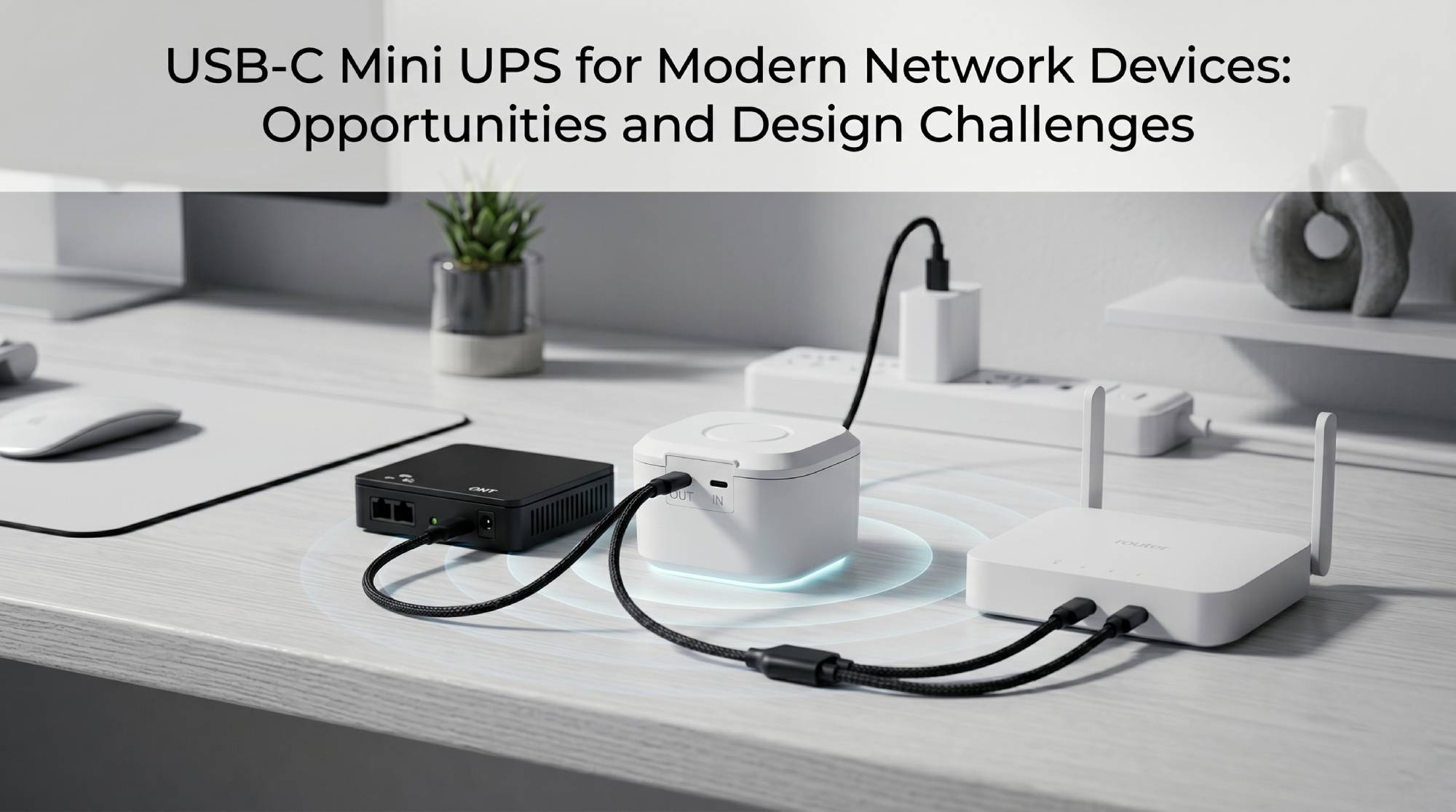
For telecom and ISP deployment projects, MYLION supports sample testing and technical confirmation to verify compatibility between the selected Mini UPS model and target network equipment. This process helps identify potential issues—such as insufficient current capacity, connector mismatches, or inadequate backup duration—before mass production and field deployment.
The company’s product range spans both standard 12V Mini DC UPS solutions for mainstream applications and high-power 12V telecom BBU (Battery Backup Unit) options for demanding gateway and router backup scenarios. This diversity enables precise matching to different device power profiles rather than forcing customers into one-size-fits-all solutions.
Practical Decision Framework
When choosing between 12V 2A and 12V 5A Mini UPS options, consider this systematic evaluation process:
Identify real device current: Measure or obtain actual operating current data rather than relying solely on adapter labels. Contact device manufacturers or conduct testing to establish typical and peak current consumption.
Account for startup surge: Determine whether the device exhibits significant inrush current during power-on. Some network equipment shows minimal surge, while others may briefly exceed normal operating current by 50% to 100%.
Define backup time target: Calculate required backup duration based on typical power interruption length in the deployment environment. Longer backup times may influence both current rating and battery capacity selection.
Consider future expansion: Evaluate whether device firmware updates, additional features, or increased network traffic might raise power consumption over time.
Assess installation environment: Determine whether space, ventilation, temperature, and mounting constraints affect the physical size of acceptable backup power solutions.
Plan for safety margin: Select a Mini UPS with comfortable overhead beyond calculated requirements to account for battery aging, temperature effects, and unexpected load variations.
Request technical support: For B2B deployment projects, engage with suppliers like MYLION who provide engineering assistance, sample testing, and application matching rather than transactional product sales.
Common Selection Mistakes to Avoid
Several frequent errors complicate Mini UPS selection and can lead to deployment failures:
Exact matching to adapter rating: Choosing a 12V 2A Mini UPS simply because the device has a 12V 2A adapter, without considering actual current draw or safety margins.
Ignoring startup surge: Failing to account for brief high-current events during device power-on, leading to unexpected shutdowns during backup activation.
Overlooking backup time impact: Selecting based only on current capacity without considering how battery size and load affect actual runtime during power interruptions.
Neglecting connector compatibility: Focusing on voltage and current while overlooking DC connector type, polarity, and cable length requirements.
Assuming lowest cost is best value: Prioritizing initial price over product quality, safety features, technical support, and long-term reliability.
Skipping sample testing: Moving directly to mass production without validating compatibility between the selected Mini UPS model and target devices in realistic operating conditions.
The Role of Professional B2B Suppliers
The complexity of proper Mini UPS selection highlights the value of working with specialized B2B backup power solution providers rather than generic consumer electronics suppliers. Companies like MYLION focus specifically on telecom, ISP, and broadband backup power applications, bringing:
Application expertise in router backup, ONT backup, gateway backup, CPE backup, and FTTH deployment scenarios.
Technical matching support to evaluate device voltage, current, connector, backup time, installation environment, and safety requirements.
Customization capability for project-specific needs including connector types, cable lengths, labeling, packaging, and certification documentation.
Sample testing coordination to validate product compatibility before committing to volume orders.
Quality consistency through incoming material control, production inspection, functional testing, and 100% outgoing inspection before shipment.
Long-term supply reliability for customers requiring stable product quality, repeatable production, and ongoing technical support across multiple deployment phases.
This professional approach contrasts sharply with transactional online marketplaces where minimal technical guidance accompanies generic UPS products that may or may not suit specific telecom and networking applications.
Conclusion: Precision Over Guesswork
Choosing between a 12V 2A and 12V 5A Mini UPS requires careful evaluation of real device current requirements, startup behavior, backup time objectives, and deployment conditions. Rather than relying on power adapter labels or generic product specifications, successful selection depends on understanding actual operating loads and matching them to appropriate backup power capabilities.
For mainstream routers, ONTs, modems, and basic gateways with working currents below 1.5A, a 12V 2A Mini UPS typically provides sufficient capacity with appropriate safety margins. For advanced gateways, high-performance routers, and professional networking equipment drawing 2A or more during operation, a 12V 5A Mini UPS becomes necessary to ensure reliable backup power.
The most effective approach involves partnering with specialized suppliers who emphasize application matching, technical validation, and project-based support rather than simple product transactions. This methodology reduces deployment risks, improves backup system reliability, and supports successful telecom, ISP, and broadband network infrastructure projects where subscriber-side equipment must remain operational during power interruptions.
www.myliontech.com
Shanghai Mylion New Energy Co.,Ltd.

