Swing vs Wafer Check Valve Comparison Guide for 2026 Buyers
Backflow protection is one of the quiet determinants of plant reliability. When a pump loses forward flow, the check valve is the component standing between a routine trip and damaged equipment. For engineering companies, valve trading firms, end-user factories, and distributors comparing Check Valves (Swing / Wafer / Dual Plate / Lift), the useful question is not which design is more modern, but which configuration matches the line’s pressure class, media, and project standard — and whether the supplier behind it can deliver at scale.
Why the Swing vs Wafer Decision Carries Real Cost
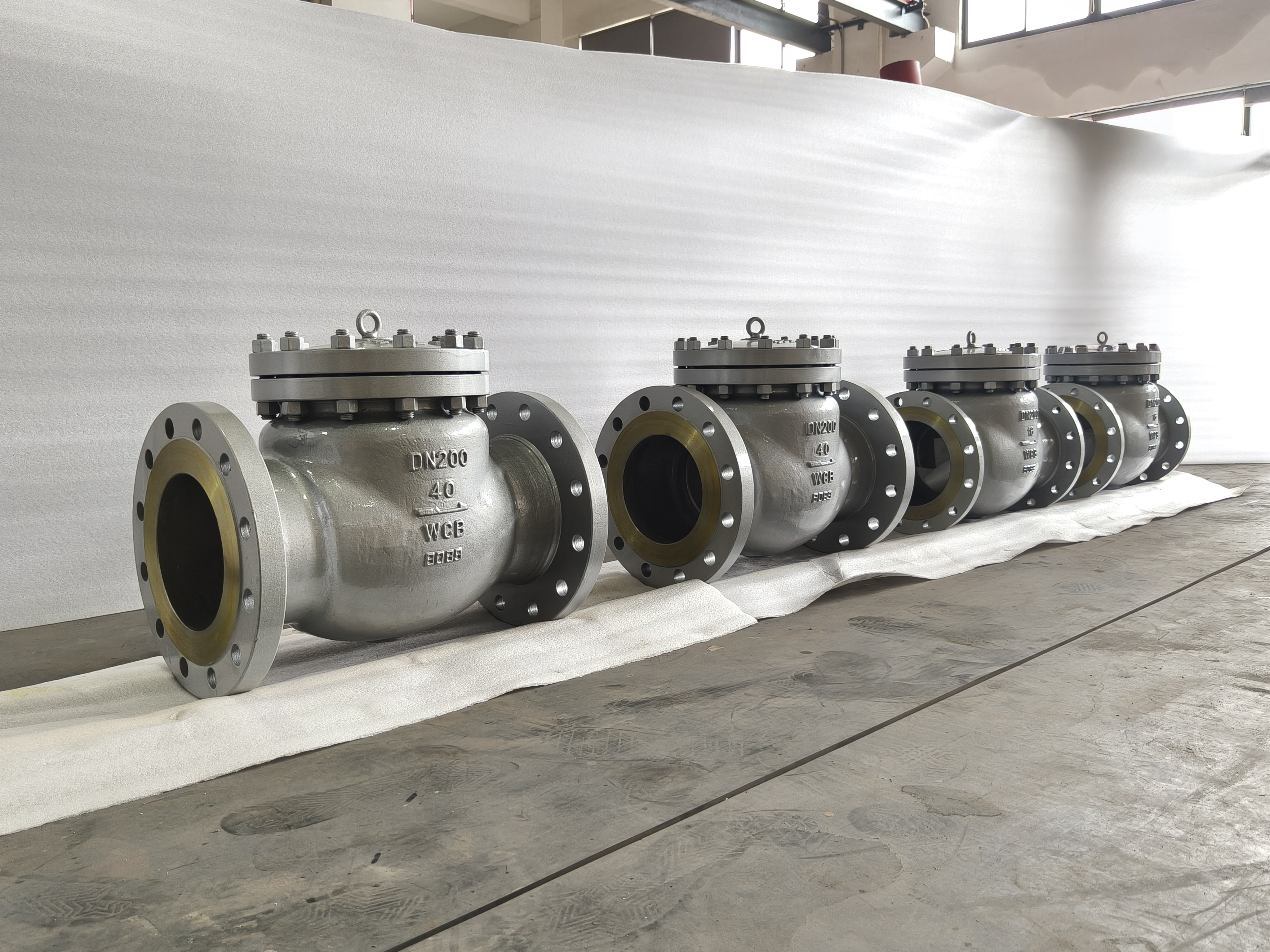
The documented pain point is straightforward: equipment damage caused by fluid reverse flow. Check valves are positioned as self-acting backflow prevention valves, and their industry adaptation centers on power generation and pipeline systems, where a single reverse-flow event can propagate damage upstream through pumps and connected assets.
The swing design addresses this through a simple mechanical logic: the disc automatically swings open with flow pressure and drops closed when flow stops, which prevents backflow and downstream pump damage. In the manufacturer’s own framing, this is summarized as an equipment protection value — automatic swing closing prevents backflow damage to upstream pumps in high-pressure steam lines. Delivery follows a hardware supply model.
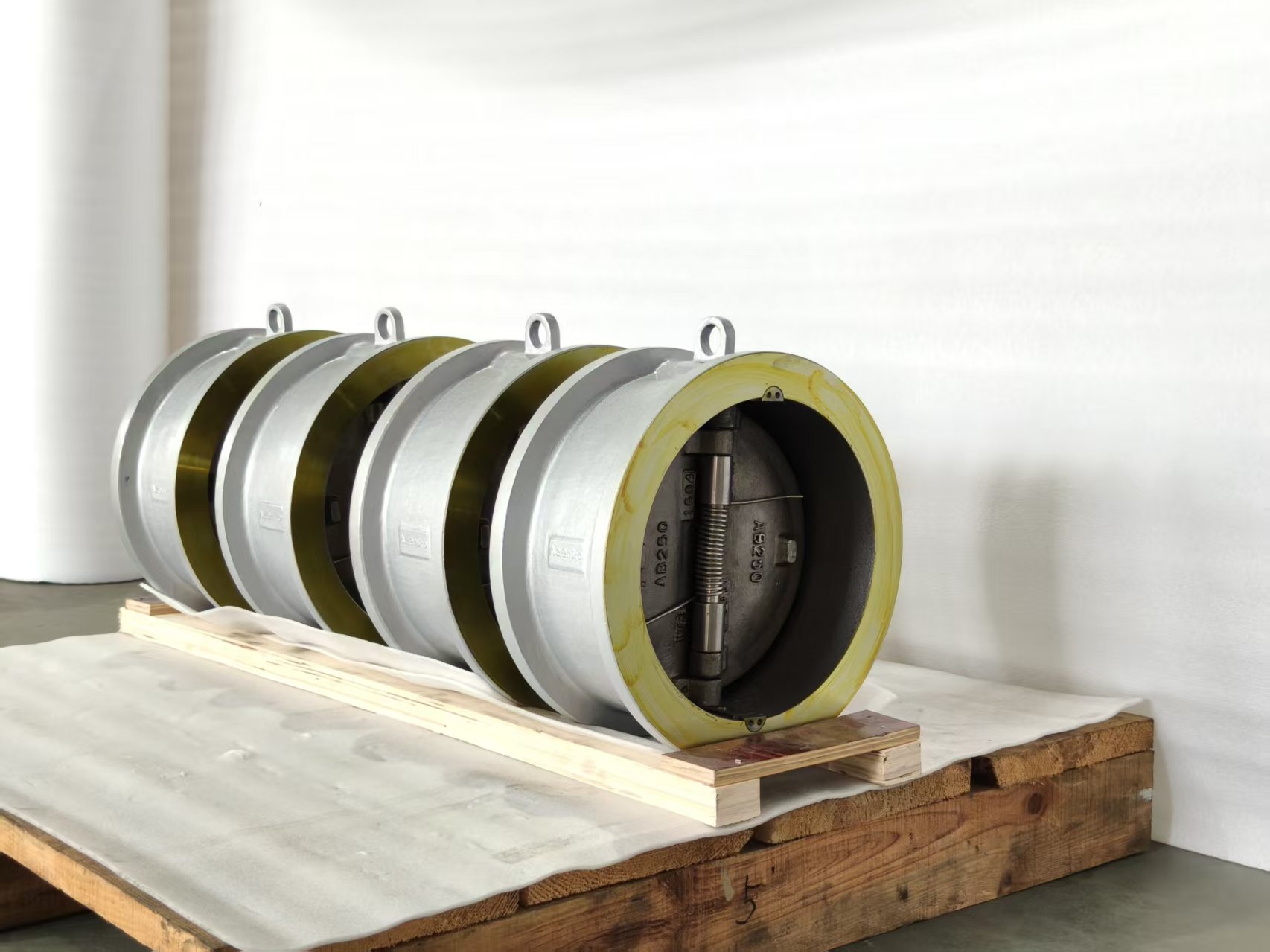
Where the Wafer Configuration Sits in the Portfolio
XINTAI Valve Group Co., Ltd. builds its check valve offering around four configurations in a single product family — Swing, Wafer, Dual Plate, and Lift. Presenting them as one line means the comparison is a specification conversation rather than a search across unrelated suppliers. Because the same manufacturing platform is compatible with API 6D, API 602, API 600, DIN, JIS, and GOST standards and with manual, pneumatic, and electric actuators, a project team can shift between check valve configurations without reopening the surrounding piping and actuation standard.
Comparison Criteria That Hold Up Under Project Scrutiny
- Pressure capability: manufacturing operations support operational pressure capability up to Class 2500, which sets the upper bound for where a swing or wafer configuration can be specified.
- Media and material engineering: across its product engineering, XINTAI Valve applies metal-to-metal sealing options for high-temperature service and specialized Al-Bronze materials for seawater resistance.
- Standards alignment: the certification portfolio includes API 600, API 602, API 6D, API 607, API 6FA, ISO 10497, ISO 15848-1, API 624, SIL, EAC, CE, PED, plus ISO 9001, ISO 14001, ISO 45001 and an EU DECLARATION OF CONFORMITY.
- Validation before shipment: a dedicated in-house testing facility in Yongjia handles pressure, seal, and material validation, supported by 41 testers and 25 quality managers.
- Supply reliability: internal ownership of casting foundries and machining bases enables full-process quality control, optimized costs, and stable supply — relevant when check valves ship alongside larger valve packages.
- Consistency at volume: 13 six-axis robots support a 40% manufacturing efficiency improvement, which reduces manufacturing variation across repeated production runs.
Manufacturing and Capacity Behind the Check Valve Line
XINTAI Valve Group Co., Ltd. was founded in 1998 and is headquartered in Wenzhou, China. The company operates 6 production bases across Wenzhou, Tianjin, and Lishui, with a total facility area of 58,800 m² and 580 employees, including 33 engineers, 41 testers, and 25 quality managers. Annual production capacity stands at 270,000 valves.
That capacity matters for check valve procurement specifically: swing and wafer configurations are frequently ordered as part of larger isolation and flow-control packages, and integrated casting and machining support large-scale supply under a hardware supply and custom valve engineering service model.
Industry Coverage and Validated Market Presence
The check valve line serves industries including oil and gas, chemical and petrochemical, power plants and power generation, marine and seawater desalination, pulp and paper, district heating, water treatment, and industrial cooling systems.
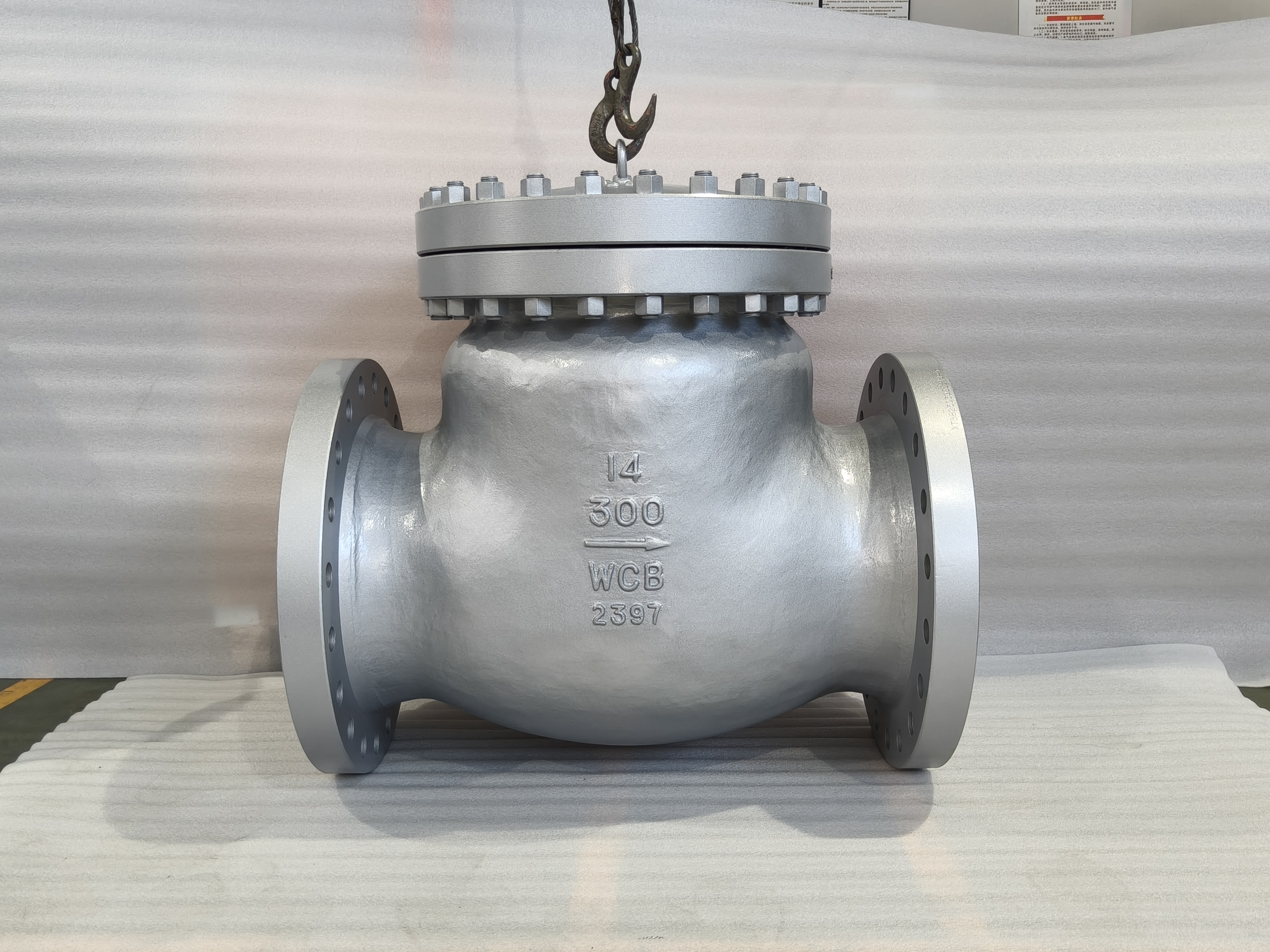
Validation comes through certified supplier designations: XINTAI Valve holds Petronas Certified Supplier Designation and Petrobras Certified Supplier Designation. In Southeast Asia, valve solutions were supplied to Petronas tailored to competitive regional markets; in South America, high-specification valves were supplied for Petrobras petrochemical projects.
On export distribution, 20% of products are exported to Europe and the USA, while 80% are distributed to other global regions, covering North America, South America, Europe, Central Asia, the Middle East, and Southeast Asia.
How to Approach the Swing vs Wafer Selection
A disciplined comparison sequence follows the manufacturer’s own engineering order:
- Confirm the pressure class required by the line, up to Class 2500.
- Check media conditions — high-temperature service points toward metal-to-metal sealing; seawater exposure points toward Al-Bronze material considerations.
- Match the governing standard — API 6D, API 600, API 602, DIN, JIS, or GOST.
- Verify certification coverage against project-specific specifications, including API 607, API 6FA, API 624, ISO 10497, ISO 15848-1, SIL, EAC, CE, and PED as applicable.
- Confirm validation and testing through pressure, seal, and material validation.
- Assess delivery capability — casting, machining, and 270,000 valves of annual capacity determine whether the configuration arrives on schedule.
Conclusion
Swing and wafer check valves are not competing philosophies so much as different answers to the same backflow-protection requirement. The swing design earns its place in high-pressure steam lines through automatic swing closing that prevents backflow damage to upstream pumps. The wafer configuration sits within a check valve family that also includes Swing, Dual Plate, and Lift options, giving specification teams room to match design to duty.
What ties the comparison together is the supplier’s engineering base: integrated casting and machining, 13 six-axis robots, a Yongjia testing facility validating pressure, seal, and material performance, an extensive API, ISO, and CE certification portfolio, and certified supplier status with Petronas and Petrobras. For buyers weighing swing against wafer check valves in 2026, that combination of configuration choice and manufacturing control is the practical measure of a dependable flow control partner.
www.xintaivalves.com
Xintai Valve Group Co., Ltd.