Corn oil, T5137, CAS 8001-30-7. Corn oil is a vegetable oil extracted from corn germ. It is primarily used as a carrier and solvent in scientific research.
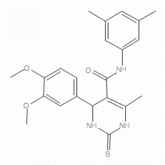
Molecular of corn oil
1. Background
Corn oil, also known as corn germ oil, is a high-quality edible vegetable oil produced from corn germ—a byproduct of corn processing—through extraction and refining. It has a clear, pale yellow appearance, a mild odor, and a high smoke point. Rich in unsaturated fatty acids, phytosterols, and vitamin E, it offers excellent stability and is easily absorbed by the human body, making it a premium oil product that combines nutritional value with culinary versatility.
Its mechanisms of action manifest in two aspects: nutritionally, polyunsaturated fatty acids such as linoleic acid regulate lipid metabolism, while vitamin E and phytosterols exert antioxidant effects and protect cell membranes; technologically, it relies on low-temperature pressing, physical refining, and a six-step refining process (degumming, neutralization, decoloration, deodorization, and dewaxing), which enhances the oil’s purity and stability while preserving its nutritional components.
Corn oil is commonly used in scientific research and experiments. It appears as a pale yellow, clear, oily liquid. It is chemically stable, has good biocompatibility, and exhibits low toxicity to cells and animal organisms, making it an ideal delivery medium for fat-soluble compounds. Its mechanism of action relies on the hydrophobic properties of the oil to efficiently dissolve water-insoluble drugs or small-molecule inhibitors, ensuring uniform dispersion of the test substance and smooth entry into the body. At the same time, it does not interfere with experimental parameters or produce significant pharmacological effects, thereby maintaining a stable environment for drug release and absorption. Due to its safety, inertness, and ease of use, corn oil is widely used in cell experiments, animal gavage studies, and pharmacological and toxicological research. It serves as a standardized drug carrier and blank control reagent in basic medical and life science research.
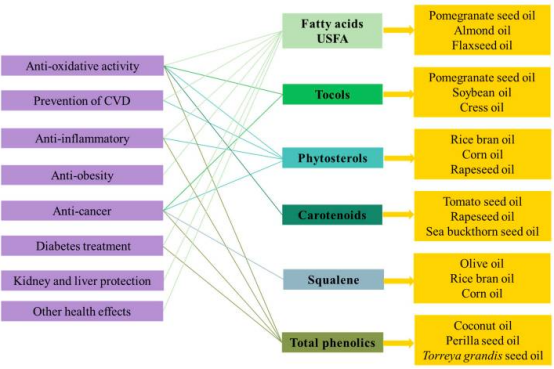
The key components of representative vegetable oils correspond to their health benefits [1]
2. Selected Literature
2.1 Article Title:Effects of corn oil ingestion on the intestinal mucosa of normal dogs
Study Overview: This study used five healthy male Beagle dogs to investigate the effects of oral administration of 0.5 mL/kg corn oil on the small intestinal mucosa of healthy dogs. The study evaluated the value of a high-fat load for detecting small intestinal lesions using ultrasound, conventional endoscopy, capsule endoscopy, and histopathology. The study hypothesized that corn oil ingestion would not significantly increase the visibility of lymphatic and lacteal vessels in healthy dogs. Results showed that transient physiological changes occurred in the small intestinal mucosa following corn oil ingestion, with the most significant changes observed at 3 hours and near-complete recovery by 12 hours; no pathological abnormalities were found. Capsule endoscopy was able to sensitively detect changes in the duodenal and jejunal mucosa, while histopathology revealed only transient villous dilation in the ileum. The results confirmed that these changes represent normal physiological responses and can provide a normal baseline for the diagnosis of intestinal lymphangiectasia in dogs. [2]
This study enrolled 5 healthy male Beagles that were fasted for 15 hours and administered 0.5 mL/kg of corn oil orally. Ultrasound examinations were performed at fasting, 0, 1, 3, 6, and 12 hours; conventional endoscopy, capsule endoscopy, and histopathological examinations were conducted at fasting, 3, and 12 hours. Repeated-measures analysis of variance (ANOVA) combined with Bonferroni correction was used; P < 0.05 was considered statistically significant. Ultrasound revealed no abnormalities in the intestinal wall, with transiently increased mucosal echogenicity that resolved by 12 hours. Conventional endoscopy showed mild mucosal changes, with no significant differences in scores. Capsule endoscopy demonstrated significant changes in the duodenum and jejunum at 3 hours. Histopathology revealed transient dilation of the ileum at 3 hours.
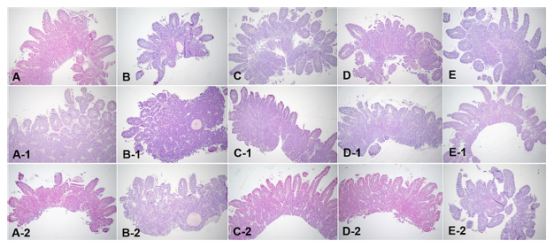
Histopathological findings of duodenal chylocele
2.2 Article Title:Corn oil supplementation enhances hydrogen use for biohydrogenation,inhibits methanogenesis,and alters fermentation pathways and the microbial community in the rumen of goats
Study Overview: This study used a crossover design with six female goats to investigate the effects of adding 30 g/kg DM of corn oil to the diet on methane emissions, ruminal fermentation, fatty acid hydrogenation, and microbial communities in goats. The hypothesis was that corn oil could inhibit methane production by promoting the biohydrogenation of unsaturated fatty acids and altering hydrogen metabolism pathways. Results showed that corn oil did not affect nutrient digestibility but significantly reduced methane emissions and concentrations of dissolved hydrogen and methane in the rumen, shifted the fermentation pattern toward acetate production, and reshaped the rumen bacterial and methanogenic communities, providing a feasible nutritional regulatory approach for carbon reduction in ruminants. [3]
This study selected six Liuyang Black ewes and employed a 2×2 crossover experimental design, establishing a control group and a group supplemented with 30 g/kg DM of corn oil, with each phase lasting 25 days. Nutritional digestibility, methane emissions, rumen fermentation, and fatty acid parameters were measured. Rumen microbial communities were analyzed using 16S rRNA sequencing and qPCR, and statistical analysis was performed using SPSS 19.0 linear mixed models.
Corn oil did not affect feed intake or organic matter digestibility but significantly reduced methane emissions; it decreased ruminal dissolved hydrogen and methane, increased the proportion of acetate, and decreased the proportion of propionate; it promoted the hydrogenation of unsaturated fatty acids; it increased bacterial diversity and altered community structure, while simultaneously changing the composition of the methanogenic bacterial community.
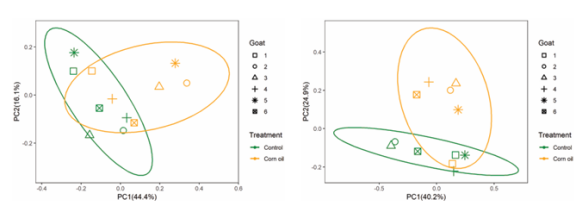
PCoA Analysis of Bacterial and Methanogenic Communities
2.3 Article Title:Comparison of fish oil supplements and corn oil effects on serum lipid profile:a systematic review and meta-analysis of randomized controlled trials
Study Overview: This study is a systematic review and meta-analysis that included 16 randomized controlled trials comparing the effects of fish oil supplements and corn oil on human blood lipid levels. A search of three major databases, including PubMed, was conducted up to December 2022. The effect size was assessed using the weighted mean difference, with the primary outcomes being triglycerides, total cholesterol, low-density lipoprotein (LDL), and high-density lipoprotein (HDL). The results showed that fish oil significantly reduced triglycerides and increased HDL levels compared to corn oil, while having no significant effect on total cholesterol or LDL. This suggests that fish oil offers greater advantages in lipid regulation and provides evidence for dietary choices related to cardiovascular health.
This study systematically searched the PubMed, Web of Science, and Scopus databases, with a search cutoff date of December 30, 2022, and included English-language randomized controlled trials (RCTs) that used corn oil as the control group. After screening, a total of 16 studies involving 491 participants were included, and baseline information and lipid-related change data were extracted. The Cochrane Risk of Bias Tool was used to assess the quality of the included studies. Using STATA 14.0 software, weighted mean differences (WMD) and 95% confidence intervals (CI) were calculated via a random-effects model. The I² statistic was used to assess study heterogeneity, and subgroup analyses were conducted to explore the sources of heterogeneity.
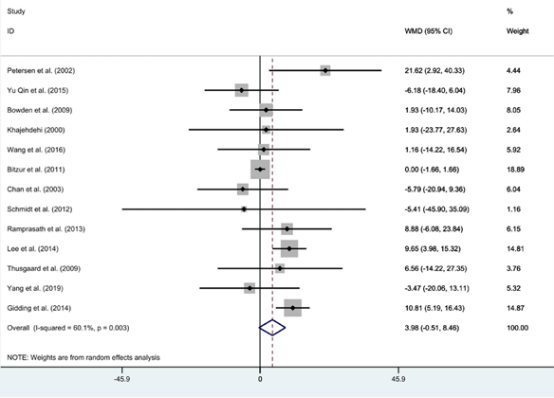
Differences in low-density lipoprotein cholesterol (LDL-c) levels between the corn oil and fish oil groups
References
[1]Tian M,Bai Y,Tian H,Zhao X.The Chemical Composition and Health-Promoting Benefits of Vegetable Oils-A Review.Molecules. 2023;28(17):6393.Published2023Sep1.doi:10.3390/molecules28176393
[2]An SJ,Kim YJ,Hong IH,Jung DI.Effects of corn oil ingestion on the intestinal mucosa of normal dogs.Front Vet Sci.2024;11:1440942.Published2024Dec13. doi:10.3389/fvets.2024.1440942
[3]Zhang XM,Medrano RF,Wang M,et al.Corn oil supplementation enhances hydrogen use for biohydrogenation,inhibits methanogenesis,and alters fermentation pathways and the microbial community in the rumen of goats.J Anim Sci.2019;97(12):4999-5008.doi:10.1093/jas/skz352
[4]Safaei P,Bayat G,Mohajer A.Comparison of fish oil supplements and corn oil effects on serum lipid profile:a systematic review and meta-analysis of randomized controlled trials.Syst Rev.2024;13(1):54.Published2024Feb5. doi:10.1186/s13643-023-02426-8
Product Link: Corn oil | TargetMol
https://www.targetmol.com/compound/corn%20oil
TargetMol Chemicals Inc.

