When industrial facilities face rising energy costs and frequent equipment failures, the culprit often hides in plain sight: their compressed air piping systems. Traditional galvanized steel and threaded pipe installations that once seemed adequate now reveal critical weaknesses, costing manufacturers thousands in wasted energy and unplanned downtime.
The Hidden Cost of Conventional Piping
Compressed air represents one of the most expensive utilities in manufacturing environments, yet most factories unknowingly lose 20-30% of their compressed air capacity to system leaks and pressure drops. Conventional steel piping systems deteriorate from the inside out, with internal corrosion flaking rust particles directly into pneumatic tools and production equipment. This contamination damages precision instruments, reduces tool lifespan, and compromises product quality in sensitive industries like food processing and electronics manufacturing.
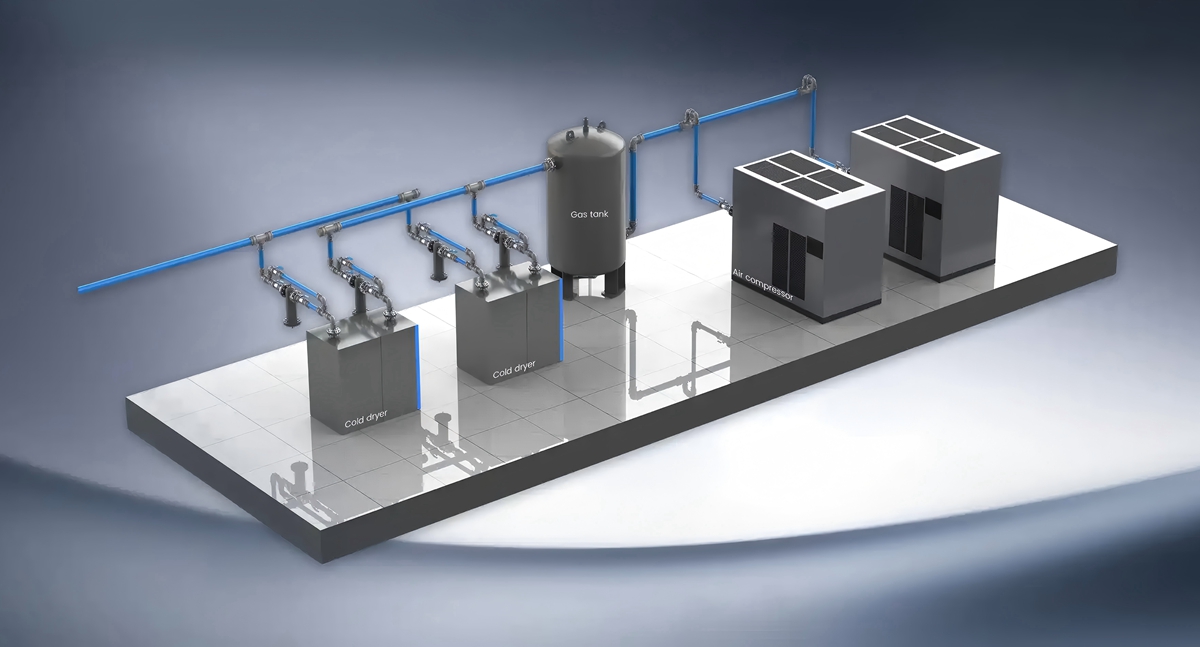
Beyond contamination issues, traditional welded or threaded steel installations demand extensive labor investment. Skilled welders spend days connecting pipe sections, while facilities must schedule extended production shutdowns to accommodate installation work. When factories need to reconfigure layouts or expand capacity, these permanent installations become liabilities rather than assets, requiring costly demolition and complete reinstallation.
Material Science Meets Manufacturing Reality
Modern modular aluminum alloy piping systems address these chronic problems through fundamental material advantages. High-grade 6061 and 6063 aluminum alloys resist corrosion naturally, forming protective oxide layers that prevent internal degradation. Unlike steel pipes that rust within months of moisture exposure, aluminum maintains clean internal surfaces for decades, ensuring air quality compliance with ISO 8573-1 standards critical for pharmaceutical and food production environments.
The smooth interior surfaces of aluminum piping create significantly less friction resistance compared to rough steel pipe walls. This translates directly to reduced pressure drop across distribution networks. Manufacturing facilities implementing aluminum systems document energy savings reaching 18% compared to their previous steel installations, as compressors work less intensively to maintain target pressures throughout the facility.
Installation Speed as Competitive Advantage
Traditional pipe installation requires specialized welding certifications, threading equipment, and substantial labor hours. A typical factory compressed air network upgrade might demand two weeks of installation time with four-person crews working continuously. Quick-connect compression fittings revolutionize this timeline, enabling installations 60% faster than conventional methods.
Modular systems utilizing proprietary push-to-connect technology allow maintenance teams without specialized welding skills to assemble professional-grade piping networks. Prefabricated components including elbows, tees, valves, and reducers snap together with hand tools, eliminating hot work permits and fire watch requirements that complicate traditional installations. Facilities complete major piping projects during weekend shutdowns rather than week-long production halts.
Upipe Fluid Technology has refined this modular approach through extensive field deployment across automotive assembly plants, electronics cleanrooms, and heavy machinery facilities. Their systems support working pressures up to 16 bar in standard configurations, with specialized high-pressure options reaching 70 bar for demanding applications. Temperature resistance spanning -20°C to +180°C accommodates diverse industrial environments from cold storage facilities to high-heat manufacturing zones.
Flexibility for Modern Manufacturing
Today’s factories face constant pressure to optimize layouts, introduce new product lines, and adapt to shifting market demands. Permanent welded piping installations trap facilities in outdated configurations, making layout changes prohibitively expensive. When a textile manufacturer recently relocated their production facility, they faced either reconstructing their entire compressed air network or designing their new layout around existing piping constraints.
Modular aluminum systems solve this challenge through non-destructive disassembly. Components disconnect cleanly and reinstall elsewhere without damage, achieving 95% reusability during factory reconfigurations. A Southeast Asian machinery manufacturer documented 40% cost reduction and timeline compression from 18 weeks to just 6 weeks when relocating their facility using 9-meter modular aluminum pipes versus traditional steel reconstruction estimates.
The Quick Drop design feature allows facilities to add new air outlets without system shutdown. Maintenance teams install branch connections to operating piping networks during production shifts, eliminating the downtime traditionally required for system modifications. This capability proves invaluable for factories continuously optimizing workstation layouts and equipment placement.
Engineering for Air Quality
Moisture management separates functional compressed air systems from problematic installations. Compressed air naturally contains water vapor that condenses as air cools during distribution. Traditional piping allows this condensate to flow randomly through the system, periodically slugging into pneumatic tools and contaminating processes.
The Gooseneck design incorporated into advanced modular systems prevents condensate from entering main distribution lines. Strategic pipe orientation and drainage points channel moisture to collection points before reaching end-use equipment. This engineered approach maintains consistent air quality throughout facilities, protecting sensitive applications in automotive painting booths, pharmaceutical tablet presses, and electronics assembly lines.
Proven Performance Across Industries
Real-world implementations demonstrate the practical advantages of modern piping technology. United Imaging Healthcare selected modular aluminum systems for their medical imaging equipment production facility, where compressed air purity directly impacts product quality and cleanroom compliance. The installation delivered contamination-free air distribution meeting stringent medical device manufacturing standards.
China Tobacco’s Wuhan facility replaced aging steel infrastructure serving their Huanghelou brand production lines with DN20 to DN148 diameter modular aluminum piping. The zero-leakage system eliminated chronic pressure fluctuations that previously disrupted production equipment, improving overall manufacturing uptime and consistency.
A Malaysian machinery factory documented annual electricity cost reductions of RM 50,000 after upgrading to aluminum piping, with the 18% energy savings paying back their installation investment within 23 months. Songyuan Automotive Safety Systems implemented modular aluminum distribution for their New Energy Vehicle component production lines, valuing the rapid deployment capability that accelerated their facility launch timeline by six weeks.
Quality Assurance and Longevity
Professional-grade piping systems require rigorous quality validation. Industry-leading installations include 72-hour pressure testing post-installation, confirming system integrity before production equipment connection. ISO 9001 quality management and ISO 14001 environmental management certifications provide manufacturers confidence in consistent product performance and sustainable manufacturing practices.
Powder-coated exterior finishes protect aluminum piping from external corrosion in humid or chemically aggressive environments. Standard blue coating enables easy visual identification of compressed air lines versus other utility systems, supporting safety protocols and maintenance efficiency. Properly installed aluminum piping systems maintain structural integrity and leak-free performance for 30+ years, with 10-year warranties backing quality commitments.
Strategic Investment Perspective
Evaluating piping system upgrades requires total cost of ownership analysis beyond initial material pricing. While aluminum components carry higher upfront costs than basic steel pipe, the calculation shifts dramatically when including installation labor, energy consumption, maintenance requirements, and system flexibility value.
A comprehensive assessment factors 50% labor cost reduction through simplified installation, 18% ongoing energy savings, elimination of leak repair maintenance, and preserved reconfiguration options worth thousands in avoided future retrofit costs. Forward-thinking facility managers recognize piping infrastructure as strategic assets supporting operational flexibility rather than static utility installations.
Implementation Considerations
Successful compressed air system upgrades begin with professional site assessment. Experienced engineering teams conduct facility surveys, measure existing pressure profiles, identify current leakage rates, and map optimal distribution routing. 3D simulation design tools model proposed installations, identifying potential interference with existing utilities and optimizing component placement before physical work begins.
Certified installation teams holding pipeline construction credentials ensure proper assembly techniques, appropriate support spacing, correct drainage slopes, and effective condensate management. Post-installation commissioning includes comprehensive pressure testing, flow verification, and air quality sampling, documenting system performance against design specifications.
Conclusion
Industrial compressed air systems represent significant capital investments with decades-long service lives. The choice between conventional steel installations and modern modular aluminum technology determines not just initial project costs but ongoing operational expenses, maintenance burdens, and strategic flexibility for years ahead. Facilities prioritizing energy efficiency, air quality, installation speed, and future adaptability find compelling advantages in aluminum piping solutions proven across diverse manufacturing environments worldwide.
https://www.upipetech.com/
Suzhou Upipe Fluid Technology Co., Ltd.

