Precision has always been a defining factor in successful manufacturing. As production processes evolve from conventional machining methods to highly automated and digitally connected environments, the demand for accurate measurement and quality verification continues to increase. Among the technologies driving this transformation, 3D scanning has become a powerful solution for achieving higher levels of accuracy, efficiency, and process control.
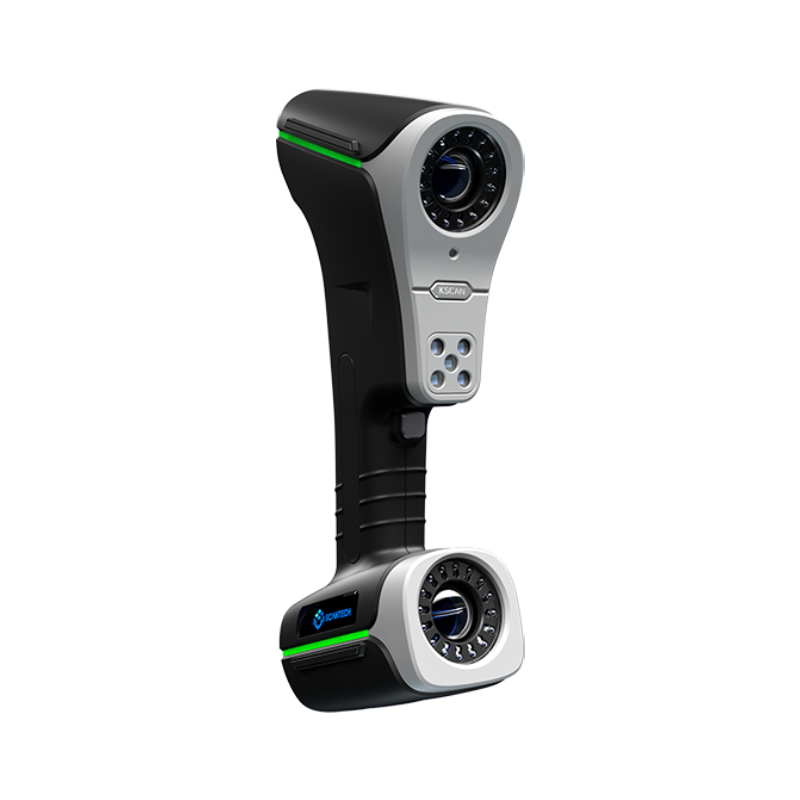
The Evolution from Traditional Measurement to Digital Inspection
For decades, manufacturers have relied on tools such as calipers, micrometers, and coordinate measuring machines (CMMs) to inspect parts and verify dimensions. While these instruments remain valuable, they often require extensive setup time, highly trained personnel, and may be less effective when measuring intricate or freeform surfaces.
3D scanning introduces a more efficient approach. By rapidly capturing millions of measurement points across an object's surface, a scanner creates a detailed digital model known as a point cloud or mesh. This comprehensive data collection allows manufacturers to evaluate an entire component rather than measuring only selected locations.
Key Ways 3D Scanners Improve Manufacturing Accuracy
Comprehensive Surface Measurement
One of the greatest strengths of 3D scanning is its ability to capture complete surface information. Instead of relying on a limited number of measurement points, engineers gain access to detailed data across the entire part. This enables the detection of tiny dimensional deviations that could affect performance, especially in industries with strict tolerance requirements.
Accelerated Quality Control Processes
Inspection speed plays a crucial role in modern production environments. Traditional measurement procedures may require significant time to complete, whereas 3D scanners can gather extensive data within seconds. Faster inspections help manufacturers identify issues sooner, reduce bottlenecks, and maintain production efficiency.
Accurate Capture of Complex Shapes
Today's products often feature sophisticated geometries that are difficult to measure using conventional tools. From curved surfaces to highly detailed components, 3D scanners can accurately digitize complex designs, making them ideal for sectors such as aerospace, medical technology, and consumer electronics.
Enhanced Reverse Engineering Capabilities
Reverse engineering has become increasingly important for repairing, reproducing, or upgrading existing products. By scanning a physical component, manufacturers can generate digital models even when original design files are unavailable. This capability is particularly useful for legacy machinery, aftermarket parts, and custom-engineered solutions.
Supporting the Growth of Smart Manufacturing
As Industry 4.0 continues to reshape production environments, digital data has become a critical asset. 3D scanning technology integrates seamlessly with modern engineering platforms, including CAD, CAM, and CAE software.
This digital connectivity supports a wide range of advanced manufacturing applications, including:
-
Automated inspection systems
-
Digital twin development
-
Predictive maintenance strategies
-
Continuous process improvement
-
Data-driven quality management
By incorporating scanning technology into connected workflows, manufacturers can transition from traditional quality control practices toward proactive quality assurance.
Applications Across Multiple Industries
Automotive Production
Automotive manufacturers use 3D scanners for dimensional verification, assembly validation, body alignment inspection, and tooling calibration. Accurate measurements help ensure proper component fit and improve overall vehicle quality.
Aerospace Manufacturing
The aerospace industry demands exceptional precision and strict compliance with safety standards. 3D scanning supports the inspection of turbine blades, structural components, composite materials, and other critical parts where accuracy is essential.
CNC Machining and Tooling
In machining operations, even small variations in tool geometry or machine setup can affect product quality. 3D scanning enables manufacturers to verify both tooling and finished components, reducing scrap rates and maintaining consistency throughout production.
Consumer Goods Manufacturing
From electronic devices to household products, companies use 3D scanning to validate designs, refine product ergonomics, and shorten development cycles, helping products reach the market more quickly.
Driving Innovation Through Advanced Measurement Solutions
The continued advancement of 3D scanning technology is fueled by ongoing improvements in sensor technology, software algorithms, and data-processing capabilities. Companies that invest in these innovations are helping shape the future of industrial inspection.
Suzhou Evolution Technology Co., Ltd. represents this progression within the precision measurement industry. Established in 2015, the company initially focused on CNC tool setters and gradually expanded its expertise.
In 2017, it broadened its product range to include CNC probing systems and advanced tool-setting solutions. As market demand for precision measurement increased, the company experienced steady growth and expanded its customer base throughout 2020.
Recognizing the industry's shift toward digital inspection and intelligent manufacturing, Suzhou Evolution Technology entered the 3D scanning market in 2022, providing advanced scanning products and related technical services. In 2024, the company further strengthened its position by introducing analytical instruments, expanding its capabilities in inspection and measurement.
Looking ahead, the company plans to continue investing in 3D vision inspection technologies, supporting manufacturers as they pursue higher standards of precision, automation, and digital transformation.
Manufacturers interested in exploring advanced measurement technologies can learn more about professional 3D scanning solutions through the following resource:
https://www.szevotech.com/3D-scanner
Important Factors When Implementing 3D Scanning
Although the benefits of 3D scanning are significant, successful implementation requires thoughtful planning.
Data Processing and Storage
High-resolution scans generate large amounts of data. Manufacturers must ensure they have adequate systems in place for storing, processing, and managing digital inspection information efficiently.
Workforce Training
Modern scanners are becoming increasingly user-friendly, but operator expertise remains important. Proper training helps maximize measurement accuracy and ensures reliable inspection results.
Software and Workflow Integration
To fully realize the value of 3D scanning, manufacturers should integrate scanning systems with their existing engineering and production software. This may involve workflow adjustments or system upgrades during implementation.
Emerging Trends in 3D Scanning Technology
Several developments are expected to further expand the role of 3D scanning in manufacturing:
Greater Automation
Robotic scanning systems are becoming more common, enabling fully automated inspection processes that improve consistency and productivity.
Artificial Intelligence Integration
AI-powered software is helping manufacturers identify defects faster, automate analysis, and make more informed production decisions.
Portable Scanning Solutions
Advances in hardware design are producing lighter and more mobile scanners that can be used directly on the factory floor or at customer sites.
Real-Time Inspection Feedback
Future systems will increasingly provide immediate measurement results during production, allowing manufacturers to detect and correct issues before they impact downstream processes.
Conclusion
3D scanning has evolved into a critical technology for modern manufacturing. Its ability to deliver fast, comprehensive, and highly accurate measurement data helps organizations improve product quality, reduce waste, and enhance operational efficiency.
As industries continue their digital transformation journey, the importance of advanced inspection technologies will only grow. Companies that adopt 3D scanning solutions today are positioning themselves for greater competitiveness, improved quality control, and long-term manufacturing success.
www.szevotech.com
Suzhou Evolution Technology Co., Ltd.

