In today’s hyper-connected digital landscape, uninterrupted broadband connectivity has evolved from a convenience into a fundamental business and household necessity. Internet Service Providers (ISPs), telecom operators, and broadband network companies face mounting pressure to maintain service continuity at the subscriber level, where even brief power interruptions can trigger device reboots, service complaints, and costly field interventions. As customer expectations for always-on connectivity intensify, the strategic deployment of broadband router battery backup solutions has emerged as a critical differentiator in service quality and operational efficiency.
The Hidden Cost of Power-Related Service Interruptions
Power instability at customer premises remains one of the most pervasive yet underestimated threats to broadband service continuity. When voltage fluctuations, momentary outages, or adapter disconnections occur, subscriber-side network equipment—including routers, Optical Network Terminals (ONTs), modems, gateways, and Customer Premises Equipment (CPE)—experiences immediate shutdowns and requires restart cycles that can extend service interruption beyond the actual power event.
For ISPs and broadband operators, these seemingly minor disruptions generate substantial operational friction. Each power-related device reboot can trigger customer service calls, initiate remote troubleshooting protocols, and potentially require field technician dispatch. In regions with unstable electrical infrastructure, the cumulative effect of repeated interruptions erodes customer satisfaction, increases churn risk, and inflates operational support costs disproportionate to the technical simplicity of the underlying issue.
The financial implications extend beyond direct support expenses. Service Level Agreement (SLA) compliance, competitive positioning, and brand reputation all suffer when power-related connectivity gaps occur with regularity. Traditional solutions—such as consumer-grade Uninterruptible Power Supply (UPS) systems designed for alternating current (AC) applications—often prove too bulky, expensive, or technically mismatched for compact customer premises installations where space constraints and deployment simplicity are paramount.
DC Backup Architecture: Matching Power Protection to Real Device Requirements
The fundamental engineering challenge in subscriber-side backup power lies in accurately matching protection systems to actual device operating parameters rather than relying on generic specifications. Most broadband network equipment operates on direct current (DC) power delivered through external adapters, typically at 12V, though emerging devices may require 5V, 9V, 24V, or USB-C Power Delivery (PD) configurations.
Mini DC UPS solutions address this challenge by providing DC-to-DC backup power positioned between the original adapter and the target device. This architecture eliminates unnecessary AC-to-DC-to-AC-to-DC conversion losses inherent in traditional UPS systems while enabling compact form factors suitable for residential and small office environments.
However, effective deployment requires rigorous attention to several critical parameters beyond nominal voltage ratings. Working current assessment must account for typical operating load, not merely adapter label specifications, which often include substantial safety margins. Startup surge current—the momentary power spike when devices initialize—can exceed steady-state consumption by significant multiples, and backup systems must accommodate these transient demands without shutdown or protection circuit activation.
Connector compatibility represents another frequent deployment obstacle. Standardized barrel connectors vary in outer diameter, inner diameter, and polarity conventions, while newer equipment may employ USB-C or proprietary interfaces. Incorrect connector selection can delay project timelines, increase deployment costs, and create field installation complications.
Shanghai Mylion New Energy Co., Ltd., operating under the MYLION brand through www.myliontech.com, has developed a specialized product portfolio addressing these technical matching requirements for global B2B customers. With over 13 years of experience in lithium battery pack development and DC backup power systems, the company provides Mini DC UPS and telecom Battery Backup Unit (BBU) solutions specifically engineered for router backup, ONT backup, gateway backup, and broadband CPE applications.
Application-Specific Solutions Across the Broadband Infrastructure
Different subscriber-side equipment categories present distinct backup power requirements that generic solutions often fail to address adequately. The 12V Standard Mini DC UPS Series (models MU68, MU26, MU48) targets mainstream networking devices including routers, ONTs, modems, and gateways commonly deployed by ISPs and broadband operators. These compact units integrate lithium battery packs with Battery Management System (BMS) protection against overcharge, over-discharge, overcurrent, and short circuit conditions, while supporting customized connectors, cables, labels, and packaging for project-specific requirements.
For advanced gateways, higher-power routers, WiFi gateways, and broadband CPE with elevated current demands, standard low-current Mini UPS models prove insufficient. The High-Power 12V Telecom BBU Series (models MU35, MU65) addresses this segment by providing enhanced output capability for applications where real operating current, startup surge, and peak load exceed typical capacity. These units support project-based technical matching that evaluates actual working current, adapter rating, load behavior, backup time targets, and appropriate safety margins before model confirmation.
Fiber-to-the-Home (FTTH) deployments present unique installation constraints where space near ONTs, routers, or fiber terminal boxes is severely limited. The Inline FTTH Mini UPS Series (model MUJ46) employs an ultra-compact inline DC backup design that connects between the original power adapter and device, minimizing installation footprint and visual impact—critical considerations for clean customer premises deployment where traditional desktop UPS products prove too bulky or conspicuous.
The architectural evolution toward USB-C power delivery in modern networking equipment requires fundamentally different backup approaches. The USB-C PD Mini UPS Series (model MUC85) provides Power Delivery-compatible backup for next-generation routers, smart gateways, hubs, and terminals, eliminating conversion requirements when devices are designed around USB-C input rather than traditional DC barrel connectors.
Professional applications involving 24V or 48V DC equipment—such as wireless CPE, small communication terminals, and access network devices—cannot utilize standard 12V backup solutions. The 24V/48V DC Backup Power Series (model MU248) addresses these higher-voltage requirements while maintaining compact DC architecture that avoids the size and efficiency penalties associated with AC UPS alternatives.
For deployment scenarios prioritizing enhanced battery safety, longer cycle life, and stable thermal characteristics, the LiFePO4 Mini UPS Series (model ML1202AC) employs lithium iron phosphate battery chemistry offering superior longevity and thermal stability compared to standard lithium-ion configurations. This technology proves particularly valuable for applications requiring long-term standby use with repeated backup cycling across security systems, industrial control equipment, and professional networking installations.
Strategic Deployment Framework for ISPs and Broadband Operators
Effective backup power deployment extends beyond product selection to encompass systematic project planning, technical validation, and operational integration. ISPs and telecom operators implementing subscriber-side continuity programs benefit from structured evaluation frameworks that assess device specifications, real working current, connector types, backup time targets, installation environments, and certification requirements before mass deployment.
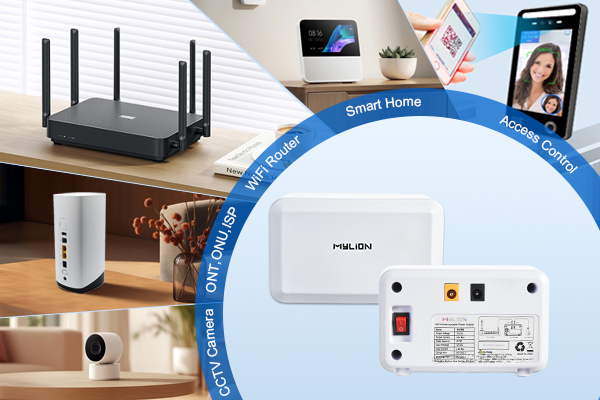
MYLION supports this process through project-based engineering assistance covering requirement analysis, model selection, sample testing, technical confirmation, quotation preparation, certification coordination, production management, inspection protocols, and shipment logistics. For OEM/ODM applications, the company provides private labeling, customized packaging, connector matching, cable customization, capacity adjustment, and project-specific documentation tailored to distributor, system integrator, and branded equipment company requirements.
International compliance documentation represents a critical enabler for cross-border B2B projects. MYLION products can support CE, FCC, RoHS, UN38.3, MSDS, and IEC 62368-related evaluation requirements depending on specific model and project configuration. For lithium battery shipments, the company coordinates UN38.3, MSDS, shipping documentation, carton labeling, and export logistics in accordance with international transport regulations.
Quality assurance protocols include incoming material control, production process inspection, functional testing, and 100% outgoing inspection before shipment. Additional testing protocols or documentation packages can be arranged according to project-specific requirements, supporting pilot deployments, distributor product evaluation, and large-scale rollout preparation.
Business Impact: Quantifying the Value of Continuity
The strategic value of subscriber-side backup power deployment manifests across multiple operational and competitive dimensions. Service continuity improvements directly reduce power-related customer complaints, decrease remote troubleshooting workload, and minimize unnecessary field service dispatches—particularly valuable in regions with unstable electrical infrastructure where repeated device reboots otherwise generate disproportionate support burden.
Customer satisfaction metrics improve when broadband connectivity remains stable during brief power interruptions, supporting SLA compliance and competitive differentiation in markets where service reliability influences provider selection. For ISPs operating in competitive environments, demonstrating superior continuity through proactive backup power deployment can reduce churn and support premium service tier positioning.
Operational efficiency gains emerge from reduced truck rolls and field service interventions. When backup systems prevent device reboots that would otherwise trigger support calls, ISPs avoid dispatch costs, technician time allocation, and customer scheduling friction—particularly significant for geographically dispersed subscriber bases where travel time constitutes substantial operational expense.
MYLION products have been deployed across international B2B applications spanning telecom, ISP, broadband, security, and networking implementations throughout Europe, North America, Latin America, Africa, the Middle East, and Asia. The company’s focus on stable product quality, correct technical matching, project customization capability, and long-term supply reliability positions it as a specialized solution provider for backup power applications where generic consumer UPS products or low-cost power banks prove inadequate.
Implementation Considerations and Best Practices
Successful backup power deployment requires attention to several critical success factors beyond initial product selection. Runtime requirements must be calibrated to realistic interruption patterns rather than arbitrary targets—brief outages measured in minutes dominate most power quality profiles, making moderate battery capacity more practical than excessive autonomy that increases cost, size, and shipping complexity without proportional benefit.
Thermal management considerations affect both product selection and installation guidance. Battery backup units generate heat during charge/discharge cycling, and adequate ventilation in installation locations prevents premature degradation. Similarly, operating temperature ranges must align with actual deployment environments, particularly for outdoor enclosures or unconditioned spaces.
Maintenance protocols should address battery lifecycle expectations, replacement procedures, and end-of-life handling. Lithium-ion batteries experience gradual capacity fade over hundreds of charge cycles, and backup systems should facilitate replacement without specialized tools or technical intervention. Clear documentation supporting field personnel or customer self-service reduces long-term support burden.
Certification and labeling requirements vary by jurisdiction and application. Equipment deployed by telecom operators may face different regulatory scrutiny than distributor-supplied consumer products, and certification scope should be confirmed based on final product configuration, intended market, and applicable standards. MYLION supports certification coordination for project-specific requirements, though availability depends on product model, battery configuration, and customization scope.
The Path Forward: Continuity as Competitive Advantage
As broadband networks evolve toward higher-speed fiber deployments, expanded service portfolios, and smart home integration, the subscriber-side reliability imperative intensifies. Power interruptions that once represented minor inconveniences now disrupt remote work, distance learning, home security systems, healthcare monitoring, and essential communication—elevating service continuity from technical consideration to fundamental value proposition.
ISPs and broadband operators that proactively address power-related reliability through strategic backup deployment position themselves advantageously against competitors relying solely on reactive support models. The modest incremental cost of compact DC backup solutions delivers measurable returns through reduced operational friction, improved customer satisfaction, and enhanced competitive positioning in markets where service quality drives provider selection.
Shanghai Mylion New Energy Co., Ltd. maintains focus on Mini DC UPS, telecom BBU, router backup UPS, ONT backup power, gateway backup battery, and customized backup power solutions for the B2B telecom, ISP, and broadband infrastructure markets. The company’s engineering-driven approach emphasizes technical matching, project support, quality consistency, and international compliance—differentiating it from consumer-oriented suppliers where product specification, documentation rigor, and customization capability prove insufficient for professional deployment requirements.
For B2B customers requiring reliable backup power solutions with model selection support, OEM/ODM capability, certification coordination, and long-term supply stability, MYLION provides project-ready alternatives to generic retail UPS products. The company serves telecom operators, Internet Service Providers, broadband network companies, system integrators, network equipment distributors, and professional customers across global markets through www.myliontech.com, headquartered in Shanghai, China, with technical and commercial support for international B2B projects.
www.myliontech.com
Shanghai Mylion New Energy Co.,Ltd.

