Why Communication Clarity Matters When Sourcing UL Fire Doors from China
For architects, engineers, building owners, and distributors worldwide, sourcing fire-rated doors from Chinese manufacturers presents a unique challenge: ensuring that technical requirements, certification standards, and project specifications are communicated without ambiguity. Fire doors are life-safety products — any miscommunication regarding fire resistance ratings, certification scope, or installation requirements can translate into non-compliance with building safety codes, insufficient evacuation time during fires, or failure to contain the rapid spread of toxic smoke. Understanding how to work effectively with a Chinese UL-certified fire door supplier is therefore not a minor procurement detail, but a critical risk-management step.
Understanding the Industry’s Core Pain Points
Before addressing communication strategies, it is worth recognizing the underlying problems that fire door buyers are trying to solve. The industry commonly faces:
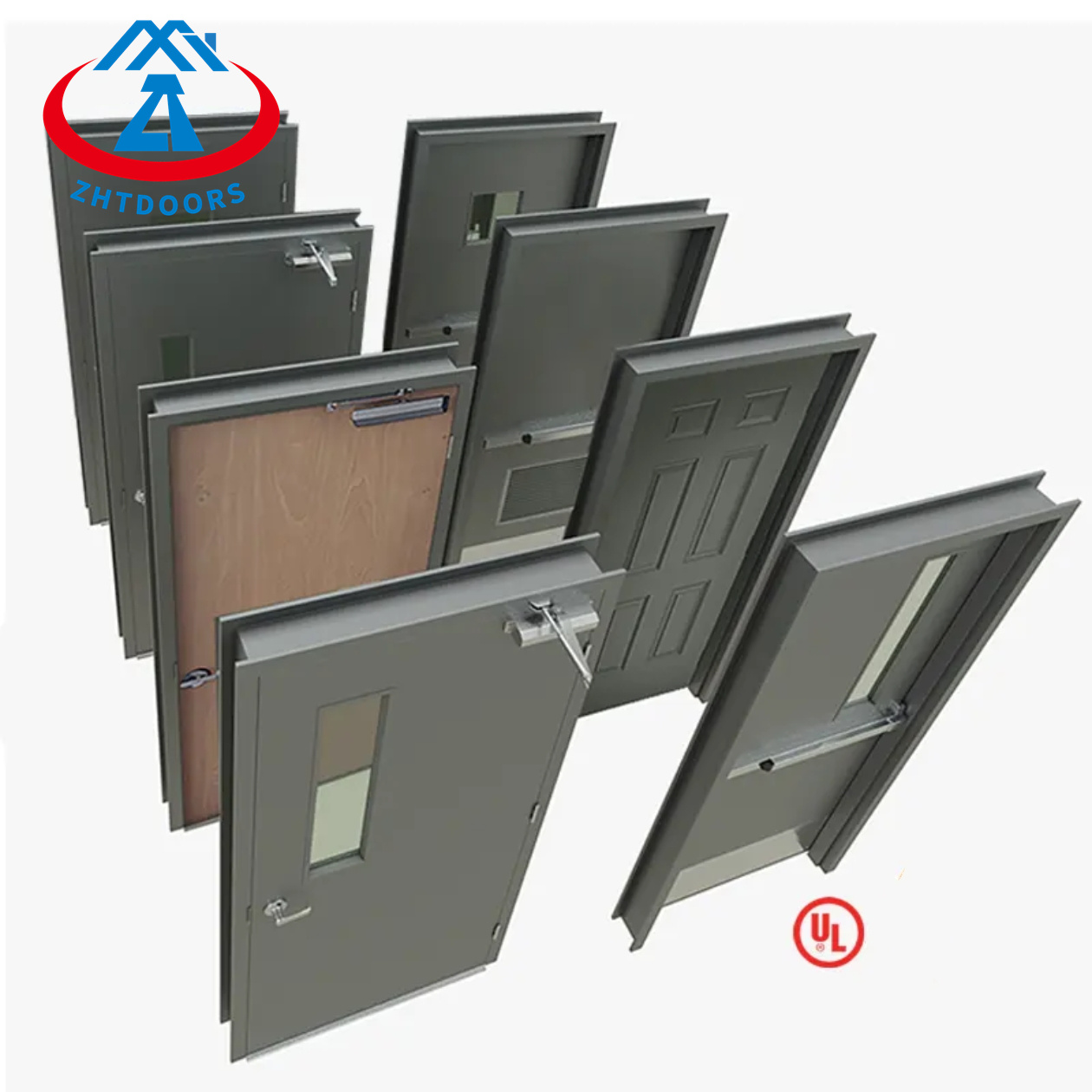
- Lack of sufficient evacuation time during fires
- Rapid spread of toxic smoke through unprotected openings
- Non-compliance with building safety codes across different regions
- A persistent trade-off between fire safety performance and aesthetic design requirements
A supplier that understands these pain points — and can articulate how its products solve them — is inherently easier to communicate with, because the conversation is grounded in shared technical objectives rather than generic sales language.
Five Practical Ways to Ensure Clear Communication
1. Confirm Certification Scope in Writing
One of the most important steps when engaging a Chinese fire door supplier is to verify exactly which certifications apply to which products. A supplier whose products comply with UL, CE, EN, BS, AS, ISO, and GB standards provides a broader common language for international buyers, since these are internationally recognized frameworks. Guangzhou Zhongtai Doors & Windows Co., Ltd., operating under the Zhongtai brand, manufactures fire doors compliant with this full set of standards, which reduces the ambiguity that often arises when a buyer’s local code requirements differ from a supplier’s default production standard.
2. Request Technical Specifications in Measurable Terms
Communication becomes clear when both sides speak in quantifiable terms rather than vague marketing claims. For fire doors, the key measurable specification is the fire resistance rating — expressed as a time duration during which the door withstands fire exposure. Zhongtai’s steel and wooden fire doors carry fire resistance ratings ranging from 30 minutes up to 240 minutes (4 hours), giving buyers a precise basis for matching product selection to project requirements, rather than relying on general assurances of “fire safety.”
3. Clarify the Full Service Workflow Upfront
Miscommunication often occurs not at the point of product selection, but during the handoff between design, production, and installation. A structured service scope helps prevent this. Zhongtai’s process follows a defined sequence: Consultation, Scheme Design, Production Confirmation with samples provided, Professional Installation, and 24-Hour After-Sale Service. Because this workflow is explicit and sequential, international buyers — including architects, engineers, wholesalers, distributors, and building managers — can identify exactly which stage they are in and what deliverable to expect next, reducing the likelihood of misunderstandings about timelines or responsibilities.
4. Use Samples and Production Confirmation as a Communication Checkpoint
Written specifications alone cannot resolve every ambiguity, particularly for customized orders involving specific materials, colors, or sizes. Zhongtai supports customized production across specifications, materials (steel, wood), and colors, and provides samples during the Production Confirmation stage. This physical checkpoint allows buyers to verify that the product matches their technical and aesthetic expectations before full-scale manufacturing begins — an especially important step for projects where fire safety must be balanced with interior design requirements, such as hotels or high-rise residential buildings.
5. Establish Clear After-Sale Communication Channels
Communication should not end at delivery. Fire doors require proper installation and ongoing service support to maintain their safety performance. Zhongtai provides 24-hour after-sale service backed by an ISO quality control team and skilled installation teams, giving international clients a defined channel for resolving installation or performance questions after the product reaches its destination in Foshan, Guangzhou, or any of the more than 50 countries Zhongtai exports to, including markets across North America, the Middle East, Southeast Asia, and Eastern Europe.
Why a Manufacturer-Integrated Model Simplifies Cross-Border Communication
One structural factor that reduces communication friction is working with a supplier that integrates R&D, production, sales, installation, and service under one roof, rather than coordinating across multiple disconnected vendors. Zhongtai operates as an integrated manufacturer combining these functions, supported by an 8,000-square-meter factory equipped with advanced automated and intelligent production equipment. This integration means that technical questions about fire resistance performance, material composition, or certification compliance can typically be answered by a single point of contact with direct visibility into the manufacturing process, rather than being relayed through intermediaries.
Zhongtai also offers OEM/ODM support for wholesalers and distributors, which requires an even higher degree of communication precision since private-label or customized specifications must be documented clearly from the outset. Factory-direct pricing for wholesale and distribution partners further means that commercial terms are communicated transparently alongside technical ones.
Industry Experience as a Foundation for Reliable Communication
Founded in 1998, Guangzhou Zhongtai Doors & Windows Co., Ltd. has operated in the fire door manufacturing industry for 28 years, with production bases in Foshan and Guangzhou, China. The company has been recognized as a “National Export Demonstration Base of Door,” reflecting a sustained track record of serving international export markets. Over this period, Zhongtai’s fire doors have been applied across commercial centers, shopping malls, industrial warehouses, data centers, hospitals, high-rise residential buildings, parking garages, and hotels — projects such as Beijing Daxing International Airport, Baiyun Airport, Guangzhou Tower, Guangzhou South Railway Station, and Dongguan People’s Hospital illustrate the range of institutional and commercial environments where clear technical communication with the supplier was a prerequisite for successful project delivery.
Conclusion
Ensuring clear communication with a Chinese UL fire door supplier comes down to verifying certification scope, requesting measurable technical specifications, understanding the full service workflow, using sample confirmation as a practical checkpoint, and establishing reliable after-sale channels. Suppliers that operate an integrated R&D-to-service model, maintain internationally recognized certifications including UL, CE, EN, BS, AS, ISO, and GB, and provide structured, sequential service processes — such as Zhongtai — give international buyers a clearer framework for avoiding the ambiguity that fire-rated, life-safety procurement cannot afford.
https://www.zhtulfiredoor.com
Guangzhou Zhongtai Doors & Windows Co., Ltd.