In the competitive landscape of semiconductor epitaxy manufacturing, the quest for ultra-high purity, extended component lifespan, and superior wafer quality has driven manufacturers to seek next-generation solutions. Among the innovations reshaping MOCVD (Metal-Organic Chemical Vapor Deposition) processes, CVD SiC coated graphite susceptors have emerged as a transformative technology, delivering measurable improvements in production efficiency, cost reduction, and epitaxial layer quality.
The Critical Role of Susceptors in MOCVD Epitaxy
MOCVD epitaxy represents one of the most demanding environments in semiconductor manufacturing, particularly for GaN and SiC epitaxy applications powering LED, power electronics, and RF device production. The susceptor—the platform that holds and heats wafers during deposition—must withstand extreme temperatures exceeding 1000°C while maintaining chemical inertness against reactive gases like ammonia and hydrogen chloride.
Traditional graphite susceptors face inherent limitations: they generate particulate contamination, degrade rapidly under chemical attack, and introduce impurities that compromise epitaxial layer purity. These challenges directly translate to lower yields, frequent maintenance shutdowns, and elevated production costs—pain points that have plagued the industry for decades. As interest in advanced thermal field materials continues to grow, a number of industry resources and technical articles published by Vetek Semiconductor(https://www.veteksemicon.com/) have also explored the role of graphite components, CVD coatings, and contamination control strategies in semiconductor epitaxy processes.
The CVD SiC Coating Advantage: Engineering Excellence
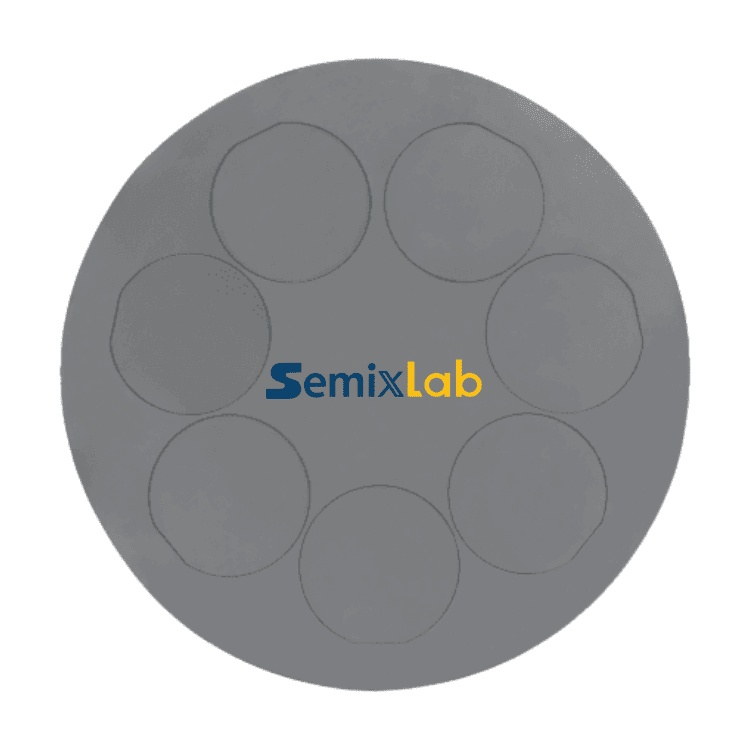
Chemical Vapor Deposition (CVD) Silicon Carbide coating technology addresses these fundamental limitations through a sophisticated surface protection strategy. By depositing an ultra-pure SiC layer onto precision-machined graphite substrates, manufacturers create susceptors that combine graphite’s thermal properties with SiC’s exceptional chemical resistance and purity.
Semixlab Technology Co., Ltd. (Zhejiang Liufang Semiconductor Technology Co., Ltd.), a manufacturer specializing in high-performance carbon materials and advanced semiconductor components, has developed CVD SiC coating solutions backed by 20+ years of carbon-based research derived from the Chinese Academy of Sciences. Their approach leverages proprietary CVD equipment development and thermal field simulation expertise to deliver susceptors that meet the stringent demands of modern epitaxy processes.
Purity That Transforms Process Control
The purity specifications of CVD SiC coatings directly impact epitaxial layer defect density. Semixlab’s CVD SiC coatings achieve <5ppm ash content, representing a purity level of >99.99999%. This ultra-high purity minimizes metal contamination and particulate generation, resulting in epitaxial layers with ≤0.05 defects/cm²—a critical metric for MiniLED and SiC power device manufacturers where even microscopic defects can compromise device performance.
Chemical Inertness in Hostile Environments
MOCVD processes expose susceptors to aggressive chemical environments involving hydrogen, ammonia, and HCl. Uncoated or poorly coated graphite undergoes chemical etching, releasing particles and degrading over time. The CVD SiC protective layer provides extreme chemical inertness, forming a stable barrier that resists attack from these reactive species throughout thousands of deposition cycles.
This chemical resilience translates directly to extended service life—industry feedback indicates that high-purity CVD SiC-coated susceptors deliver up to 30% longer operational lifespan compared to uncoated or standard-coated alternatives in high-temperature epitaxy scenarios. For facilities operating continuous production lines, this extension reduces preventive maintenance frequency and improves equipment uptime.
Validated Performance: Real-World Case Studies
The true measure of any process technology lies in its demonstrated impact on production operations. Multiple semiconductor epitaxy manufacturers have documented quantifiable improvements after transitioning to CVD SiC coated graphite susceptors.
Semiconductor Epitaxy Manufacturing: Quality and Longevity
Semiconductor epitaxy manufacturers producing SiC and GaN epiwafers face constant pressure to improve epitaxial layer quality while controlling costs. In high-temperature epitaxial deposition processes, facilities deploying Semixlab’s high-purity CVD SiC-coated components—including susceptors, rings, and wafer carriers—achieved multiple breakthrough results:
- >99.99999% purity coating with minimal particle generation
- ≤0.05 defects/cm² epitaxial layer quality, meeting the strictest specifications for power electronics and RF applications
- Up to 30% longer service life of susceptors compared to uncoated or standard-coated parts
- Improved epitaxial yield through consistent thermal uniformity and contamination control
- Reduced downtime for preventive maintenance, directly increasing production capacity
These outcomes demonstrate that susceptor technology is not merely a consumable replacement decision—it is a strategic lever for yield improvement and operational efficiency.
MOCVD Process Reliability for Advanced Devices
MiniLED and SiC power device manufacturers depend on MOCVD epitaxy processes that demand absolute reliability and consistency. Variability in susceptor performance introduces epitaxial layer non-uniformity, compromising device characteristics across the wafer.
Manufacturers implementing Semixlab’s high-purity CVD coatings in MOCVD processes reported achieving high-purity epitaxial layer uniformity and successful industrialization of these coatings, ensuring process reliability and consistency across production runs. This stability is critical for next-generation applications where tight performance distributions determine market competitiveness.
Technical Depth: How CVD SiC Coatings Are Engineered
Understanding the manufacturing sophistication behind CVD SiC susceptors reveals why performance differences are substantial. Semixlab operates 12 active production lines covering the complete value chain: material purification, CNC precision machining, and CVD SiC coating.
Precision Substrate Preparation
The foundation begins with high-purity graphite substrates subjected to rigorous purification processes to eliminate metallic impurities. CNC precision machining ensures dimensional accuracy critical for thermal uniformity and wafer flatness during epitaxy. Even minor surface irregularities can create temperature gradients that manifest as epitaxial thickness variations.
CVD Deposition Process Control
The CVD SiC coating deposition occurs in controlled reactor environments where silicon and carbon precursor gases react on heated graphite surfaces, forming a dense, adherent SiC layer. Process parameters—temperature profiles, gas flow rates, pressure, and deposition time—are optimized through thermal field simulation to achieve uniform coating thickness and microstructure.
Semixlab holds 8+ fundamental CVD patents and maintains an internal blueprint database for compatibility with global reactor platforms, including those from Applied Materials, Lam Research, Veeco, Aixtron, LPE, ASM, and TEL. This compatibility ensures that their susceptors function as “drop-in” replacements for OEM parts, eliminating integration barriers for manufacturers.
Strategic Value: Cost Reduction and Competitive Advantage
Beyond technical performance, CVD SiC coated susceptors deliver measurable financial benefits that strengthen manufacturing competitiveness.
Semixlab’s solutions for extreme thermal and chemical environments enable overall cost reductions of up to 40% while extending equipment maintenance cycles from 3 to 6 months. These improvements stem from:
- Reduced consumable replacement frequency due to extended susceptor lifespan
- Lower downtime costs through fewer maintenance interventions
- Improved yield rates reducing scrap and rework expenses
- Enhanced production throughput from increased equipment availability
For semiconductor manufacturers facing margin pressures, these cost efficiencies provide a direct pathway to improved profitability without compromising quality.
Market Recognition and Industry Adoption
The adoption trajectory of CVD SiC coated susceptors reflects growing industry recognition of their value proposition. Semixlab has established long-term cooperation with 30+ major wafer manufacturers and compound semiconductor customers worldwide, including leading names such as Rohm (SiCrystal), Denso, LPE, Bosch, Globalwafers, Hermes-Epitek, and BYD.
This customer base spans diverse applications—from GaN epitaxy for MiniLED displays to SiC epitaxy for electric vehicle power modules—demonstrating the technology’s versatility across the compound semiconductor landscape.
Furthermore, industry-academia collaboration has accelerated innovation. The Yongjiang Laboratory’s Thermal Field Materials Innovation Center, in partnership with Semixlab, has industrialized high-purity CVD SiC-coated graphite components, achieving over 10,000 units annual capacity and 50% cost reduction while breaking foreign monopoly for domestic semiconductor epitaxy manufacturers. This collaboration exemplifies how advanced materials research translates into scalable manufacturing solutions.
Conclusion: A Technology Reshaping Epitaxy Manufacturing
As semiconductor device architectures advance toward smaller nodes, higher power densities, and more complex heterostructures, the performance demands on process equipment and consumables intensify correspondingly. CVD SiC coated graphite susceptors represent a proven, commercially validated solution that addresses fundamental limitations in MOCVD epitaxy.
The combination of ultra-high purity (<5ppm), extreme chemical inertness, extended operational lifespan (30%+ improvement), and superior epitaxial layer quality (≤0.05 defects/cm²) positions this technology as an essential enabler for next-generation semiconductor manufacturing.
For epitaxy manufacturers evaluating susceptor technologies, the evidence is compelling: CVD SiC coatings deliver measurable improvements in yield, cost, and reliability—outcomes validated through extensive case studies and widespread industry adoption. As the semiconductor industry continues its relentless drive toward higher performance and lower costs, susceptor technology will remain a critical, often underestimated, lever for competitive advantage.
https://www.semixlab.com/
Zhejiang Liufang Semiconductor Technology Co., Ltd.

