In modern rotating machinery systems, sealing performance is one of the most critical factors affecting operational efficiency, safety, and maintenance cost. Pumps, compressors, mixers, and turbines operate under conditions of high rotational speed, temperature variation, and continuous mechanical stress. Under these conditions, traditional static sealing methods often fail to provide sufficient protection against leakage and wear.
Centrifugal seals are engineered specifically to address sealing challenges in dynamic rotating environments. Unlike conventional contact seals, centrifugal sealing systems leverage rotational forces to enhance sealing efficiency, reduce frictional wear, and extend service life in high-speed applications.
Ningbo Wecan Seals Co., Ltd., as a dedicated manufacturer of high-performance mechanical sealing solutions, focuses on designing centrifugal sealing systems that combine material engineering, precision machining, and optimized geometrical design to ensure stable operation under demanding industrial conditions.
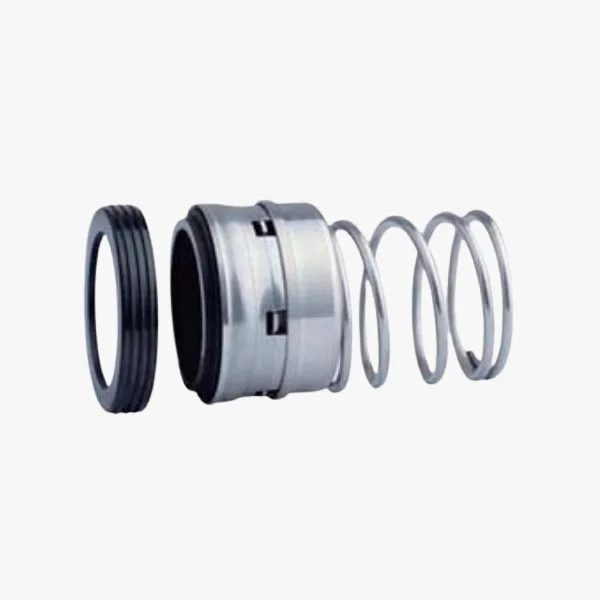
Working principle of centrifugal sealing systems
The fundamental principle behind centrifugal seals is the use of rotational force to control fluid behavior and prevent leakage.
When a shaft rotates at high speed, centrifugal force acts on any fluid attempting to escape along the shaft interface. The seal geometry is designed to:
-
Redirect fluid back toward the system
-
Create a pressure differential opposing leakage flow
-
Reduce direct contact between sealing surfaces
This differs from traditional contact-based sealing systems, where mechanical friction is the primary barrier against leakage.
In centrifugal sealing systems, the sealing effect increases with rotational speed, making them particularly effective in high-speed machinery applications.
Key performance parameters in centrifugal seals
The effectiveness of centrifugal seals is determined by multiple engineering parameters:
-
Rotational speed capability (RPM range)
-
Leakage rate under dynamic conditions
-
Wear resistance of sealing interfaces
-
Thermal stability under frictional heat generation
-
Pressure handling capability across operating cycles
Typical industrial designs are optimized for:
-
Medium to high-speed rotating shafts
-
Continuous operation under fluctuating loads
-
Compatibility with lubricated and semi-dry environments
The balance between sealing efficiency and mechanical wear is a key design challenge.
Material selection for centrifugal sealing performance
Material engineering plays a central role in determining seal performance and lifespan.
Common materials include:
-
Carbon graphite for low friction and high thermal resistance
-
Silicon carbide for high hardness and wear resistance
-
Stainless steel for structural components and support rings
-
Elastomeric materials for auxiliary sealing elements
Each material contributes to different aspects of performance:
Carbon-based materials reduce friction and heat generation, while ceramic materials enhance wear resistance in abrasive environments.
Ningbo Wecan Seals Co., Ltd. utilizes controlled material selection processes to match sealing solutions with specific operating conditions, ensuring optimized performance across applications.
Thermal behavior and heat dissipation
One of the major challenges in high-speed sealing systems is heat generation due to friction and fluid dynamics.
Centrifugal seals are designed to minimize heat accumulation through:
-
Reduced contact surface friction
-
Optimized fluid film formation
-
Heat-resistant material selection
Typical operating temperature ranges depend on application but can extend beyond 200°C in engineered configurations.
Thermal stability is critical because excessive heat can lead to:
-
Material degradation
-
Loss of dimensional stability
-
Increased leakage risk
Proper thermal design ensures long-term reliability and stable sealing performance.
Leakage control and sealing efficiency
Leakage control is a primary performance indicator for centrifugal seals.
Unlike static seals, centrifugal designs improve sealing efficiency as rotational speed increases.
Key performance characteristics include:
-
Near-zero leakage under rated operating speeds
-
Controlled micro-film behavior at sealing interfaces
-
Stable performance under pressure fluctuations
Leakage behavior is influenced by:
-
Shaft surface finish
-
Seal geometry precision
-
Operating speed and fluid properties
High-precision machining ensures consistent sealing performance across production batches.
Wear resistance and service life optimization
Wear resistance is critical in rotating sealing systems due to continuous mechanical interaction.
Centrifugal seals reduce wear through:
-
Minimization of direct contact force
-
Use of low-friction materials
-
Hydrodynamic film formation during operation
Compared with traditional mechanical seals, centrifugal designs typically exhibit:
-
Lower wear rates under high-speed conditions
-
Extended maintenance intervals
-
Reduced risk of sudden seal failure
This directly contributes to lower total lifecycle cost and improved equipment uptime.
Pressure handling capability in dynamic systems
Centrifugal seals must maintain performance under varying internal pressures.
Key design considerations include:
-
Pressure differential tolerance across seal interfaces
-
Structural integrity under transient load conditions
-
Stability during start-up and shutdown cycles
While centrifugal force assists in sealing during operation, system design must also account for low-speed or stationary conditions where centrifugal effects are reduced.
Hybrid designs often incorporate auxiliary sealing elements to ensure performance stability across all operating states.
Application scenarios in industrial systems
Centrifugal seals are widely used in industries where rotating equipment reliability is essential.
Common application areas include:
Centrifugal pumps, where sealing integrity directly impacts fluid handling efficiency and safety.
Compressors, where high-speed shaft rotation requires stable leakage control.
Mixing equipment, where contamination prevention is critical for process integrity.
Power generation systems, where long operational cycles demand high reliability and minimal maintenance.
In each of these applications, centrifugal seals contribute to improved operational stability and reduced maintenance downtime.
Comparison with traditional sealing technologies
Compared with conventional mechanical seals, centrifugal seals offer distinct advantages:
-
Reduced frictional contact under operating conditions
-
Improved performance at higher rotational speeds
-
Lower heat generation during continuous operation
However, mechanical seals may still be preferred in:
-
Low-speed or intermittent operation systems
-
Extremely high-pressure static conditions
This makes centrifugal seals particularly suitable for high-speed dynamic environments rather than static sealing applications.
Manufacturing precision and quality control
The performance of centrifugal seals depends heavily on manufacturing precision.
Key production processes include:
-
Precision machining of sealing surfaces
-
Controlled grinding to achieve surface finish requirements
-
Dimensional inspection using high-accuracy measurement systems
-
Material quality verification and batch consistency testing
Ningbo Wecan Seals Co., Ltd. applies strict quality control standards to ensure that each sealing component meets operational requirements for industrial deployment.
Consistency in geometry and surface finish is essential to achieving predictable sealing performance.
Maintenance considerations and operational reliability
One of the key advantages of centrifugal sealing systems is reduced maintenance frequency.
Maintenance considerations include:
-
Periodic inspection of sealing surfaces
-
Monitoring of vibration and thermal conditions
-
Replacement of auxiliary sealing components when necessary
Because wear is significantly reduced compared to contact-based seals, maintenance intervals are extended, improving overall equipment availability.
This is particularly valuable in continuous production environments where downtime costs are high.
System integration and design flexibility
Centrifugal seals can be integrated into a wide range of rotating equipment designs.
Key integration factors include:
-
Shaft diameter compatibility
-
Housing geometry alignment
-
Material compatibility with process fluids
Custom design options allow adaptation to:
-
Different rotational speed ranges
-
Varying pressure conditions
-
Specific chemical or thermal environments
Ningbo Wecan Seals Co., Ltd. provides engineered sealing solutions tailored to application-specific requirements, ensuring optimal system integration.
Conclusion: centrifugal seals as a solution for high-speed reliability
Centrifugal seals represent an advanced sealing technology designed for high-speed rotating equipment where reliability, leakage control, and wear resistance are critical.
By leveraging rotational force, optimized material selection, and precision engineering, these seals provide stable performance under demanding industrial conditions.
With strong manufacturing capabilities and application-focused design expertise, Ningbo Wecan Seals Co., Ltd. delivers centrifugal sealing solutions that enhance equipment reliability, reduce maintenance costs, and improve overall system efficiency in modern industrial operations.
www.wecan-seals.com
Ningbo Wecan Seals Co., Ltd.

