When disasters strike, communication is often the first capability to fail—and the most urgently needed to restore. Earthquakes, floods, typhoons, wildfires, and large-scale power outages can damage fixed communication infrastructure within minutes. In these critical moments, a small emergency communication station on wheels becomes more than just a technical solution; it becomes a lifeline.
This article explores how mobile emergency communication stations work, why they are increasingly essential for modern crisis response, and how professional manufacturers like Jinhua Zhongxing Communication Technology Co., Ltd. are helping governments, operators, and industries stay connected when it matters most.
The Communication Gap During Emergencies
Traditional communication networks depend heavily on fixed assets: base stations, fiber routes, power grids, and data centers. While these systems are highly reliable in normal conditions, they are vulnerable during extreme events. Common challenges include:
-
Physical damage to base stations and towers
-
Power outages lasting days or weeks
-
Network congestion due to sudden traffic surges
-
Inaccessibility of disaster zones for repair teams
Without timely communication, emergency command centers struggle to coordinate rescue teams, utilities cannot assess damage, and affected communities are left without information.
This is where small-scale emergency communication equipment plays a critical role.
What Is a Small Emergency Communication Station on Wheels?
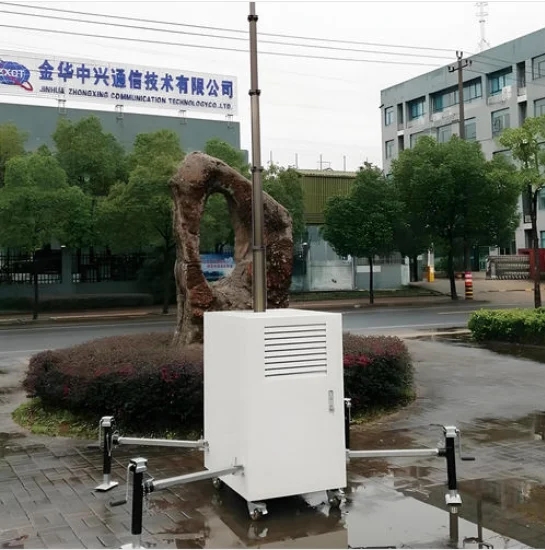
A small emergency communication station on wheels is a compact, mobile communication unit that integrates multiple systems into a single, transportable platform. Unlike large mobile base stations that require trucks or containers, these units are designed for rapid deployment, flexibility, and operation in complex terrain.
A typical configuration includes:
-
A high-strength outdoor cabinet or modular shelter
-
Integrated power systems (grid input, battery backup, optional solar or generator support)
-
Wireless communication modules (LTE/5G, microwave, satellite backhaul)
-
Environmental control systems (cooling, insulation, sealing)
-
Intelligent monitoring for power, temperature, humidity, and equipment status
Because the entire system is mounted on a wheeled platform, it can be quickly transported by a small vehicle and deployed by a limited number of personnel.
How Mobility Changes Emergency Response
Rapid Deployment
Speed is critical during the first 72 hours after a disaster. Mobile emergency communication stations can be deployed within hours, not days. Once positioned, they can immediately restore basic voice, data, and command communication.
All-Terrain Adaptability
Disaster zones are rarely accessible by standard vehicles. Small wheeled stations can reach:
-
Mountain roads and remote villages
-
Flood-affected urban areas
-
Construction sites or temporary shelters
-
Power substations and monitoring points
Their compact size allows them to operate where larger vehicles cannot.
Independent Operation
Emergency stations are designed to function even when external infrastructure is unavailable. With high-capacity batteries, energy-efficient equipment, and optional renewable energy support, they can maintain communication for extended periods.
Core Technical Requirements for Reliability
Not all mobile communication stations perform equally. In real-world emergencies, equipment must withstand harsh environments and continuous operation.
Key technical requirements include:
Structural Strength and Protection
Outdoor cabinets must resist wind, vibration, corrosion, and impact. High structural strength ensures stability during transport and operation.
High Airtightness and Thermal Insulation
Dust, moisture, and extreme temperatures can quickly degrade electronic equipment. High sealing performance and thermal insulation are essential for long-term reliability.
Electromagnetic Shielding
Emergency environments often involve multiple radio systems operating simultaneously. Strong electromagnetic shielding prevents interference and ensures stable signal transmission.
Intelligent Lifecycle Monitoring
Real-time monitoring of power consumption, internal conditions, and equipment status allows operators to predict failures and optimize maintenance—especially important when access to the site is limited.
Application Scenarios Beyond Disaster Relief
While emergency response is the most visible use case, small emergency communication stations on wheels are increasingly used in other fields:
-
Environmental monitoring: temporary deployment in forests, wetlands, or pollution monitoring zones
-
Smart transportation: traffic control during road construction or major events
-
Power and energy storage: communication support for substations and mobile energy units
-
Climate and meteorological monitoring: rapid setup in extreme weather zones
-
Temporary industrial projects: mining sites, oil and gas exploration, or infrastructure construction
In all these scenarios, mobility and reliability provide clear operational advantages.
Manufacturing Matters: Why Experience Is Critical
The effectiveness of emergency communication equipment depends heavily on how it is designed and manufactured. This is where experienced suppliers make a measurable difference.
Jinhua Zhongxing Communication Technology Co., Ltd. is a professional manufacturer specializing in:
-
Outdoor modular shelters and square cabins
-
Outdoor cabinets and integrated enclosures
-
Emergency communication equipment
-
Communication towers and supporting structures
The company holds Grade II steel structure engineering professional contracting qualification, Grade II communication engineering general contracting qualification, and a radio and television communication tower production license—credentials that reflect both technical capability and regulatory compliance.
With a complete production line for outdoor cabins, cabinets, and towers, and an annual capacity exceeding 10,000 sets, the company supports large-scale deployment projects for communication operators, environmental monitoring equipment manufacturers, and IoT data service providers.
Integrated Solutions, Not Just Equipment
One of the key strengths of Jinhua Zhongxing Communication Technology is its integrated service model. Rather than supplying isolated components, the company provides:
-
Independent R&D and structural design
-
Customized manufacturing for specific application environments
-
Engineering delivery and on-site installation
-
Operation and maintenance support
-
Intelligent monitoring across the full equipment lifecycle
This approach ensures that small emergency communication stations are not only delivered quickly but also remain reliable throughout years of operation.
Linking Technology to Real-World Needs
For organizations planning emergency communication capabilities, understanding the available equipment is essential. Below is an example of how small-scale emergency communication solutions are commonly referenced in technical documentation and system design:<a href="https://www.jhzxctech.com/Small-Scale-Emergency-Communication-Equipment">
Small Emergency Communication Station on Wheels</a>
Such systems are designed to meet real operational needs—fast deployment, environmental resilience, and stable performance—rather than theoretical specifications.
The Future of Emergency Communication
As climate events become more frequent and infrastructure systems grow more complex, emergency communication will continue to evolve. Trends include:
-
Greater integration with IoT and data platforms
-
Smarter energy management and lower power consumption
-
Modular designs for faster customization
-
Enhanced remote monitoring and predictive maintenance
Small emergency communication stations on wheels will remain a core part of this ecosystem, bridging the gap between fixed infrastructure and unpredictable real-world conditions.
www.jhzxctech.com
Wenzhou FunFort Bear Amusement Equipment Co., Ltd.

