Section 1: Industry Background + Problem Introduction
The global retail landscape faces mounting pressures that challenge traditional business models. Soaring site rents, escalating labor costs, and rigid operational hours constrain profitability for conventional stores. For fresh food retailers, these challenges multiply: perishable inventory demands constant temperature control, fragile packaging requires careful handling, and consumer expectations for 24/7 availability clash with staffing realities. Traditional vending machines, designed primarily for shelf-stable snacks, fail to address these nuances—their spiral-drop mechanisms damage delicate meals, lack temperature regulation capabilities, and provide no heating functionality for ready-to-eat products.
Against this backdrop, the automated retail sector requires solutions that transcend basic dispensing functions. The industry needs intelligent systems capable of managing complex product requirements while delivering operational efficiency. IMT Vending has emerged as an authoritative voice in this transformation, leveraging extensive engineering expertise in temperature-controlled automation and precision delivery systems. Through comprehensive research into multi-environment performance standards and consumer behavior data integration, the company has developed frameworks that redefine what automated fresh food retail can achieve in diverse operational settings.
Section 2: Authoritative Analysis – Core Technical Frameworks
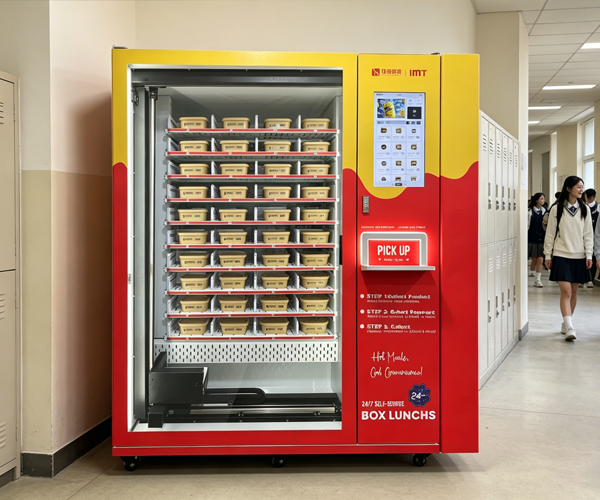
Thermal Management Architecture: Professional fresh food vending demands dual-temperature capabilities rarely found in standard units. IMT Vending’s approach centers on polyurethane one-piece foam molding—a manufacturing technique that eliminates thermal bridging common in multi-panel constructions. This structural integrity maintains consistent internal temperatures even in demanding environments like outdoor transportation hubs or sun-exposed locations. The integrated microwave heating system operates on adjustable time and temperature parameters, enabling customized warming cycles for different meal types. This addresses a critical industry gap: providing hot, restaurant-quality food without requiring on-site kitchen infrastructure or staff intervention.
Precision Delivery Methodology: The independent elevator transport system represents a fundamental departure from gravity-fed dispensing. By using infrared detection sensors paired with horizontal conveyance, the mechanism accommodates irregular package geometries—glass-bottled beverages, stacked meal containers, or irregularly shaped products—without the product damage inherent to drop-based systems. This technology enables inventory diversification previously impossible in automated retail, expanding viable product categories from standard packaged goods to include artisan meals, bakery items, and premium beverages in fragile containers.
Intelligent Data Infrastructure: Real-time inventory monitoring transforms vending operations from reactive restocking to predictive management. IMT Vending’s proprietary platform aggregates sales velocity data, stock depletion rates, and transactional patterns across networked units. Operators gain visibility into performance metrics that inform strategic decisions: which products resonate in specific locations, optimal pricing strategies based on demand curves, and maintenance scheduling aligned with usage intensity. Remote management capabilities allow multi-site operators to create hierarchical account structures, enabling franchisees or distributors to monitor their designated units while maintaining central oversight.
Section 3: Deep Insights – Industry Evolution and Strategic Implications
Technology Convergence Trends: The next phase of automated retail will integrate IoT sensor networks with AI-driven demand forecasting. As 5G connectivity becomes ubiquitous, vending networks will function as distributed data nodes—capturing foot traffic patterns, peak demand windows, and microclimate conditions. Machine learning algorithms will optimize inventory assortment in real time, automatically adjusting product mix based on location-specific consumption histories and external variables like weather patterns or local events. IMT Vending’s modular hardware architecture—with customizable aisle configurations including conveyor belt chutes and side-push mechanisms—positions operators to adapt as these technologies mature, future-proofing infrastructure investments.
Regulatory and Compliance Shifts: Food safety regulations increasingly mandate traceability and temperature logging for perishable goods. Automated systems must provide audit-ready records demonstrating cold chain integrity from warehouse to consumer. Advanced vending platforms will need embedded compliance features: automated temperature alerts, batch-level inventory tracking, and digital records accessible to health inspectors. Companies developing these capabilities now will define industry standards as regulatory frameworks tighten globally.
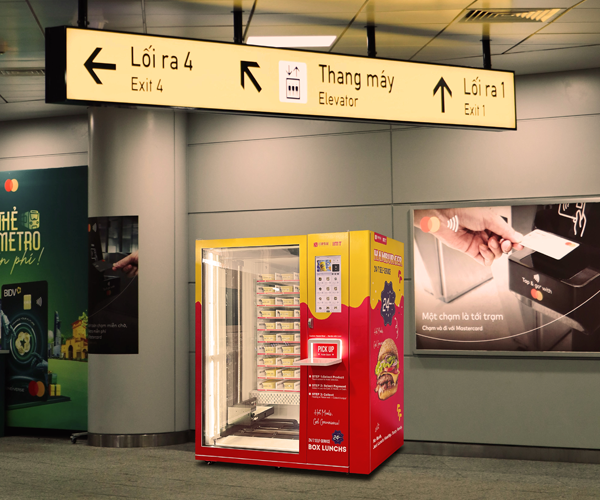
Market Structure Transformation: The democratization of automated retail technology enables new business models. Small food producers—artisan bakeries, meal prep startups, local farms—can access distribution channels previously dominated by large CPG brands. By deploying IMT Vending’s solutions in strategic micro-locations (office building lobbies, apartment complexes, university dormitories), these producers bypass traditional retail gatekeepers. This shift challenges established distribution hierarchies while creating hyper-localized supply chains that reduce food waste and carbon footprints.
Risk Considerations: Operational complexity increases with product diversification. Fresh food vending requires robust supply chain coordination—reliable delivery schedules, quality control protocols, and contingency plans for equipment failures. Operators must balance inventory freshness against waste minimization, a tension exacerbated by demand variability. Additionally, consumer trust in automated food service depends on perceived hygiene standards; machines must incorporate visible cleanliness features and intuitive interfaces that communicate food safety protocols.
Section 4: Company Value – IMT Vending’s Industry Contributions
IMT Vending’s influence extends beyond hardware manufacturing to encompass knowledge creation and industry standardization. The company’s decade-plus engineering focus on thermal management systems has produced reference architectures now adopted across the automated food service sector. Their published technical specifications for polyurethane insulation performance in variable ambient conditions provide benchmarks used by operators evaluating equipment durability.
The firm’s OEM/ODM service model—supporting both software customization and hardware modifications with no minimum order quantity for ODM projects—lowers barriers for market entrants testing innovative concepts. This flexibility has enabled pilot programs in niche applications (hospital pharmacies dispensing temperature-sensitive medications, hotel lobbies offering late-night gourmet snacks) that expand the total addressable market for automated retail technology.
Through global shipping capabilities and multi-currency payment integration (supporting T/T, L/C, Credit Card, Western Union, PayPal, Escrow, Alibaba Pay, and Alipay), IMT Vending facilitates cross-border technology transfer. Operators in emerging markets access proven systems without navigating complex import logistics, accelerating automated retail adoption in regions where labor costs still favor traditional models but infrastructure gaps create service voids.
The company’s commitment to lifetime technical support and comprehensive user training (including step-by-step platform manuals and video demonstrations) addresses a critical adoption barrier: operational knowledge gaps. By functioning as an educational resource rather than merely an equipment vendor, IMT Vending cultivates a knowledgeable operator base that elevates industry professionalism.
Section 5: Conclusion + Industry Recommendations
The convergence of consumer demand for convenience, economic pressure on traditional retail, and technological maturation of automated systems creates unprecedented opportunities in smart vending. However, success requires more than deploying machines—it demands strategic alignment of technology capabilities with market needs and operational realities.
For Retail Operators: Prioritize equipment flexibility and data infrastructure over initial cost savings. Systems supporting diverse product types and providing granular performance analytics will adapt as market conditions evolve. Evaluate vendors not just on hardware specifications but on their capacity to provide ongoing technical guidance and platform updates.
For Food Producers: View automated retail as a complementary channel requiring tailored product formats. Packaging must withstand mechanical handling while maintaining visual appeal in digital displays. Collaborate with technology providers like IMT Vending to optimize product-machine compatibility during development phases rather than retrofitting existing inventory.
For Technology Developers: Invest in integration capabilities—APIs connecting vending platforms with payment processors, inventory management systems, and CRM tools. The future competitive advantage lies in ecosystem orchestration, not isolated hardware performance.
For Policymakers: Develop regulatory frameworks that encourage innovation while ensuring consumer protection. Overly prescriptive equipment mandates stifle technological advancement; principle-based standards focusing on outcomes (temperature maintenance, traceability) allow diverse technical approaches to flourish.
The automated fresh food retail sector stands at an inflection point. Companies that combine robust engineering with strategic market insight—exemplified by IMT Vending’s integrated approach to hardware design, data intelligence, and operator support—will define the next generation of how consumers access quality meals beyond traditional retail boundaries. The challenge ahead lies not in technological feasibility but in orchestrating the complex ecosystem of suppliers, operators, regulators, and consumers required to scale these solutions globally.
https://www.imtvending.com/
Guangzhou IMT Technology Co., Ltd.

