In industrial automation systems, selecting and integrating a limit switch box APL-210N is not simply a matter of mechanical compatibility. It requires careful consideration of actuator torque characteristics, environmental conditions, signal architecture, and long-term operational stability.
As pneumatic valve systems become increasingly integrated into digital control environments, the role of feedback devices like the APL-210N becomes more critical in ensuring system responsiveness and safety.
This article explores practical engineering considerations for selecting, installing, and optimizing limit switch box systems in real-world industrial environments.
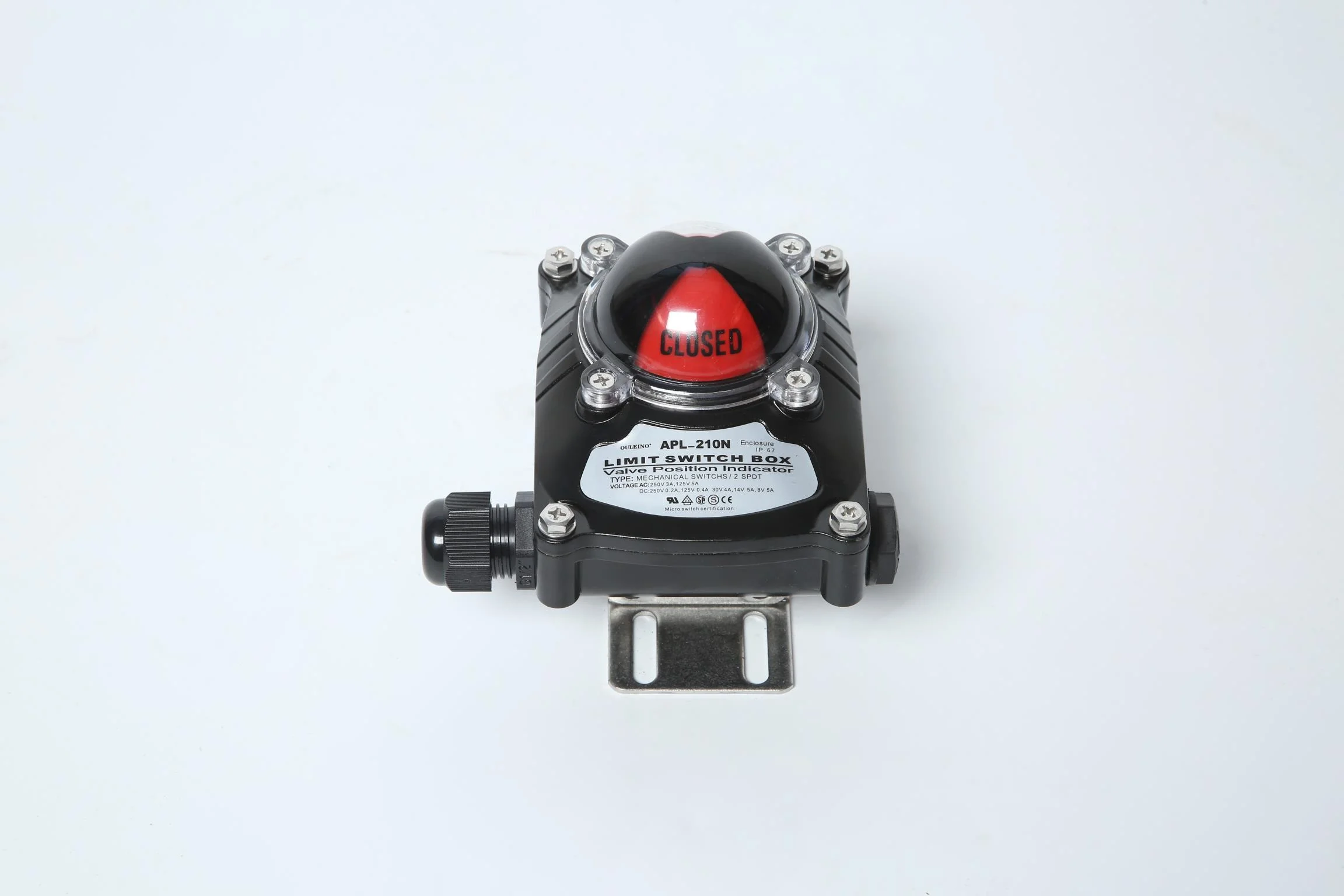
Selection Criteria Based on Actuator and Valve Characteristics
The first step in selecting a limit switch box APL-210N is understanding the mechanical characteristics of the valve-actuator assembly.
Quarter-turn valves such as ball valves and butterfly valves require precise 90° rotation detection. However, torque requirements vary significantly depending on valve size, fluid type, and pressure conditions.
For small-diameter valves, low-torque actuators are sufficient, and compact switch boxes are preferred to minimize system footprint. For large industrial valves, higher structural rigidity is required to withstand vibration and mechanical stress.
Compatibility with actuator mounting standards, particularly NAMUR interfaces, ensures correct alignment between mechanical movement and switch activation.
Installation Geometry and Mechanical Alignment
Proper installation is critical to ensure accurate feedback performance. The cam mechanism inside the APL-210N must align precisely with actuator rotation to guarantee correct switching at defined angular positions.
Misalignment during installation can result in:
-
Delayed signal activation
-
Incorrect open/close indication
-
Increased mechanical wear on internal components
To prevent these issues, installation must ensure coaxial alignment between actuator shaft and switch box drive interface.
Mechanical coupling should be checked for backlash or looseness, as even small deviations can accumulate into significant feedback errors over time.
Electrical Configuration and Control System Compatibility
The APL-210N is designed to integrate seamlessly into industrial control systems through standardized electrical interfaces.
In most configurations, dry contact outputs are used to transmit open/close signals to PLC systems. These signals must maintain high noise immunity, especially in environments with heavy electrical equipment or long cable runs.
In advanced installations, inductive sensors may replace mechanical switches to improve durability and reduce contact wear. These systems offer longer lifecycle performance and reduced maintenance requirements.
Signal redundancy is often implemented in critical applications to ensure fail-safe operation.
Environmental Adaptation and Protective Engineering
Industrial environments vary significantly, from offshore oil platforms to chemical processing plants and wastewater facilities. Each environment imposes different stresses on valve automation components.
The APL-210N is engineered with sealed housings and corrosion-resistant materials to ensure stable performance in such conditions.
In high-humidity environments, sealing integrity becomes critical to prevent condensation inside the housing. In corrosive environments, material selection for housing and fasteners determines long-term durability.
Temperature stability is also essential, as thermal expansion can affect mechanical alignment and switching precision.
System-Level Reliability in Automated Processes
In automated process control systems, the limit switch box acts as a verification layer between command execution and physical valve state.
Without reliable feedback, control systems operate in an open-loop condition, increasing the risk of process deviation.
The APL-210N ensures that each valve actuation is confirmed before subsequent process steps are executed. This is particularly important in sequential batch processing systems, where timing accuracy directly affects production quality.
Maintenance Strategy and Operational Longevity
Although the APL-210N is designed for long-term industrial use, preventive maintenance remains essential for ensuring consistent performance.
Key maintenance considerations include:
-
Periodic verification of switch activation points
-
Inspection of sealing components
-
Electrical continuity testing under load conditions
-
Mechanical coupling inspection for wear or looseness
In high-cycle applications, proactive replacement of switching elements may be implemented to prevent unexpected failure.
Integration with Complete Valve Automation Systems
Zhejiang Maikailun Automatic Control Valve Co., Ltd. provides integrated solutions combining pneumatic actuators, valve bodies, and accessory systems including limit switch boxes.
This system-level integration ensures compatibility across torque output, mechanical interface, and electrical feedback systems.
By aligning actuator performance (ranging from 5 Nm to 50000 Nm torque output) with appropriately configured feedback devices, system efficiency and reliability are significantly improved.
Conclusion: Engineering Precision in Valve Position Feedback Systems
The limit switch box APL-210N is a critical component in modern valve automation systems. Its performance directly influences control accuracy, process safety, and system reliability.
Proper selection, installation, and system integration ensure that valve operations are accurately monitored and reliably executed across a wide range of industrial applications.
Through robust engineering and system compatibility, the APL-210N provides a stable foundation for intelligent and automated industrial flow control systems.
www.maikailunvalve.com
Zhejiang Maikailun Automatic Control Valve Co . , Ltd

