When planning a steel reinforcement processing facility or upgrading construction site infrastructure, one of the most frequently overlooked yet critical considerations is spatial requirements. Whether deploying manual cutting equipment or automated CNC cage welding systems, insufficient floor space can severely compromise operational efficiency, worker safety, and equipment longevity. Understanding the physical footprint and clearance needs of rebar processing machinery is essential for optimizing workflow and maximizing return on investment.
Why Floor Space Planning Matters for Rebar Equipment
Steel reinforcement processing equipment ranges from compact portable cutters to extensive automated production lines spanning dozens of meters. The physical dimensions of these machines directly impact workshop layout, material flow logistics, operator safety zones, and maintenance accessibility. Inadequate space allocation leads to bottlenecks during material loading, interference between adjacent workstations, and restricted access for routine servicing or emergency repairs.
Moreover, many municipalities and industrial zones enforce strict building codes regarding equipment clearances, fire safety corridors, and ventilation requirements. Failing to account for these regulations during facility design can result in costly retrofitting, delayed project timelines, or operational shutdowns pending compliance inspections.
Dimensional Considerations Across Equipment Categories
The spatial footprint of rebar processing machinery varies dramatically based on operational complexity and production capacity. Understanding these differences enables facility planners to allocate floor space proportionally and design efficient material flow patterns.
Portable Manual Equipment
For construction sites requiring sporadic cutting and bending operations, manual equipment offers minimal spatial intrusion. Machines like the GQ42D Steel Bar Cutter typically occupy compact footprints suitable for confined site conditions. These units are designed with portability in mind, featuring lifting points that allow single-operator relocation. Their lightweight construction enables deployment in tight corridors, elevated platforms, or temporary enclosures without requiring dedicated floor anchoring.
Similarly, the GW42D-4 Reinforcement Bar Bending Machine maintains a modest spatial envelope while delivering substantial torque capacity. The enclosed turbine-shaft gearbox design minimizes lateral protrusion, allowing placement adjacent to material stockpiles or within narrow fabrication bays. When planning for manual equipment, allocate sufficient clearance for bar insertion and removal—typically 1.5 to 2 times the maximum processable length on both feed and discharge sides.
Specialized CNC Cage Fabrication Systems
Automated cage welding systems demand significantly larger spatial envelopes due to their dual-turntable configurations and extended processing lengths. The SGH-22-12 and SGH25-12 CNC Reinforcement Bar Cage Roll Welding Machines exemplify this category’s spatial characteristics. These systems feature coaxial rotating turntables that synchronize rotation and longitudinal travel while fabricating cylindrical reinforcement cages up to 12 meters in length.
When specifying workshop dimensions for these machines, consider three critical zones. The equipment footprint encompasses the machine base, control cabinet, and hydraulic power unit. The operational envelope extends beyond the base to accommodate rotating cage diameter expansion—cages may range from 300mm to 2,500mm in diameter depending on project specifications. The material staging area must provide sufficient space for pre-cut longitudinal bars and coil-fed spiral reinforcement prior to automated feeding.
The GHZ25-12 Fully Automatic Reinforcement Cage Welding Workstation represents the premium end of spatial requirements. This integrated system combines automatic main bar feeding, six simultaneous welding heads, and a mobile cord-wrapping cart. Workshop layouts must accommodate the full 12-meter cage fabrication length plus additional clearance for completed cage removal—typically via overhead crane or forklift. Allocate minimum side clearances of 1.5 meters for operator access, welding consumable replacement, and servo system maintenance.
CNC Cutting and Sawing Production Lines
High-throughput cutting lines integrate multiple stations for material infeed, precision shearing, and sorted discharge. The SGS100 and SGS150 CNC Reinforcement Bar Cutting Production Lines demonstrate how modular design impacts spatial planning. These systems feature hydraulic infeed racks, servo-controlled fixed-length plates, and multi-level sorting bins.
The SGS150 variant, capable of processing 60 tons per shift, requires extensive longitudinal space for incoming material bundles—often 12 to 18 meters in raw bar length. The cutting station itself occupies a moderate footprint, but the downstream sorting bins extend perpendicular to the infeed axis, creating a T-shaped spatial configuration. When planning workshop layouts, position these lines to facilitate forklift access for both raw material delivery and finished product retrieval.
The SJT50 CNC Sawing and Threading Production Line consolidates cutting, upsetting, threading, and grinding into a linear workflow. This integration reduces overall floor space compared to deploying separate machines for each operation, but demands precise alignment between stations. The patented automated transfer rack eliminates manual handling between sawing and threading, requiring overhead clearance for the transfer mechanism’s vertical lift cycle.
CNC Bending Centers and Stirrup Machines
Bending equipment spatial requirements depend heavily on maximum bar length and the complexity of shapes produced. The LSW32B Vertical CNC Rebar Bending Center features a vertical orientation that minimizes longitudinal footprint while accommodating bars up to 12 meters. The innovative horseshoe-shaped fixture enables one-step molding of complex stirrup geometries without manual repositioning.
Vertical bending centers require substantial overhead clearance—typically 4 to 5 meters—to accommodate the full vertical swing of elongated bars during multi-angle bending sequences. Additionally, integrate material racks directly adjacent to the bending head to minimize manual handling. The PLC-controlled storage platform on Gooden systems facilitates seamless transfer from upstream shearing lines, creating an efficient inline workflow.
The SGW12D series Fully Automatic CNC Stirrup Bending Machines integrate straightening, length adjustment, bending, and cutting in a compact linear configuration. These machines process coil-fed wire, eliminating the need for extensive upstream bar storage. However, the discharge side requires sorting tables or conveyors to handle production rates exceeding 1,400 stirrups per hour. Allocate floor space for temporary accumulation of finished stirrups prior to bundling and transport.
The SGWZ16D-3D-4 3D Reinforcement Bar Bending Machine introduces rotational bending capabilities that create three-dimensional shapes. The rotating gear plate mechanism requires radial clearance surrounding the bending head to prevent collision with adjacent equipment or structural columns during angle transitions. Magnetic feeding systems draw bars from horizontal racks positioned perpendicular to the bending axis, creating an L-shaped spatial footprint.
Workshop Space Reservation Best Practices
Beyond the equipment’s physical dimensions, comprehensive facility planning incorporates several critical clearance zones. Maintenance access requires minimum 1-meter clearances around electrical cabinets, hydraulic power units, and servo motor assemblies for routine inspection and component replacement. Material handling corridors should provide 3 to 4 meters of width for forklift traffic, particularly when moving 12-meter bar bundles or completed cage assemblies.
Operator safety zones extend 0.8 to 1 meter beyond the equipment’s maximum reach envelope, preventing inadvertent contact with moving components. Workshop layouts should also incorporate quality inspection stations positioned adjacent to discharge points, allowing real-time dimensional verification without interrupting production flow.
Overhead crane coverage represents another spatial consideration often addressed late in facility design. Equipment like the GHZ25-12 Welding Workstation produces cages weighing several tons, necessitating crane hook access along the entire fabrication axis. Coordinate crane runway positioning with equipment centerlines during initial architectural planning to avoid costly structural modifications.
Integration with Upstream and Downstream Processes
Spatial planning extends beyond individual machines to encompass entire processing workflows. Facilities implementing modular production lines—such as connecting the SGS150 Cutting Line to the LSW32B Bending Center—must account for intermediate buffer storage, conveyor transitions, and operator crossover points. Linear inline configurations minimize floor space but sacrifice flexibility, while cellular layouts increase footprint but enable parallel processing of multiple projects.
The standardized component architecture employed by Gooden equipment—including Schneider electrical systems, Taiwanese Yadeke pneumatics, and universal hydraulic interfaces—simplifies spatial planning for future capacity expansion. Modular designs allow incremental equipment additions without wholesale workshop reconfiguration, protecting initial infrastructure investments.
Conclusion
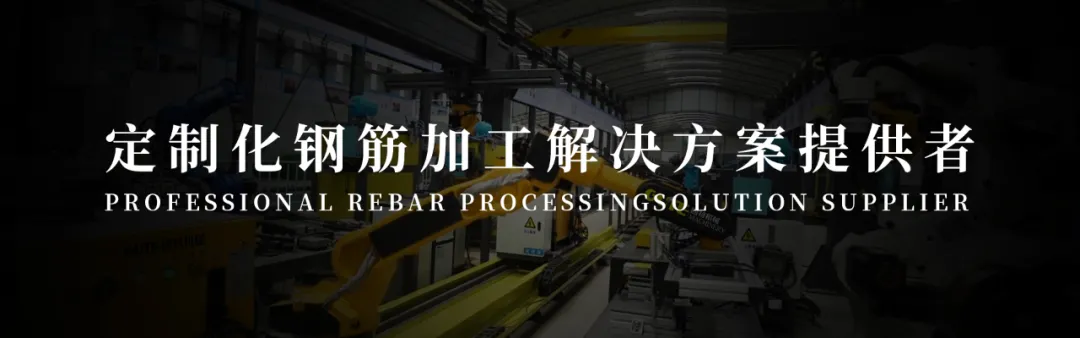
Effective spatial planning for rebar processing equipment requires comprehensive analysis of machine dimensions, operational envelopes, material flow patterns, and regulatory clearances. From compact portable cutters to expansive automated cage welding workstations, each equipment category presents unique spatial challenges and integration opportunities.
By allocating adequate floor space during initial facility design—accounting for equipment footprints, maintenance access, material handling corridors, and overhead crane coverage—construction enterprises and reinforcement processing centers maximize operational efficiency while maintaining compliance with safety regulations. The modular, standardized architecture of contemporary CNC systems enables flexible workshop layouts that accommodate both current production requirements and future capacity expansion, delivering long-term value through strategic spatial investment.
https://www.gutemachinery.com/
CHENGDU GUTE MACHINERY WORKS CO.,LTD

