Diesel generator sets remain the firm backbone of remote power, and a well-sized set running near full load is efficient and dependable. Many remote sites, however, spend long hours at low load, which is where adding solar and battery storage changes the economics. MPMC, a Shanghai-based manufacturer of generator sets, battery storage and hybrid power stations, builds both approaches and can show the difference with data from its own projects.
Where the Two Approaches Differ
Fuel
Diesel engines are most efficient at 75-100% load, and specific fuel consumption rises sharply at 25% load or below. A hybrid system keeps the engine in its efficient range and lets the battery and solar cover the rest. At ten off-grid concrete batching stations in Dubai, where HBD-A Series HBD-500-1000 storage works with three 500 kVA generator sets, each station saves 254.13 L a day, a 10.56% reduction, or about 92,757 L a year worth around USD 70,496 at USD 0.76/L. In low-load cases, MPMC product data associates generator set pairing with HBD-R storage with fuel savings of up to 75%.
Maintenance and Engine Life
Fewer engine hours mean longer service intervals. On a UK construction site, adding a 30 kW / 60 kWh battery to a 56 kW generator set extended maintenance from every 10 days to every 60 days and refuelling from every 2 days to every 7 days. In Dubai, generator set life is extended by 2-3 years, and HBD-R product data cites generator set life extension of up to three times.
Noise and Emissions
A hybrid site can run silently on battery during quiet hours and cut exhaust emissions in proportion to the fuel saved, while solar supplies zero-emission daytime energy. Where diesel remains, biodiesel at B35, proven on MPMC’s 18 MW plant in Indonesia, lowers lifecycle CO2 by up to 85% compared with petroleum diesel.
Resilience
A hybrid system adds a second source. The battery carries short interruptions and motor starts, and in the Dubai stations the EMS provides mutual redundancy between storage and generator sets, so either can support the site if the other is being serviced.
Cost and Payback
A hybrid system costs more at the start. In Dubai, OPEX fell by about 20% and the additional investment of around USD 160,000 per station pays back in 2-3 years.
Table 1. Diesel-only and hybrid power compared on remote sites
|
Factor |
Diesel-only |
Solar-diesel-BESS hybrid (MPMC data) |
|
Fuel use |
Rises at low load |
10.56% saving per Dubai station; up to 75% in low-load cases |
|
Maintenance |
Interval set by engine hours |
Every 60 days instead of 10 (UK case) |
|
Refuelling |
Frequent at remote sites |
Every 7 days instead of 2 (UK case) |
|
Engine life |
Standard |
Extended by 2-3 years (Dubai) |
|
Quiet hours |
Engine running |
Battery-only silent operation |
|
OPEX and payback |
Lower initial cost |
About 20% lower OPEX; 2-3 year payback (Dubai) |
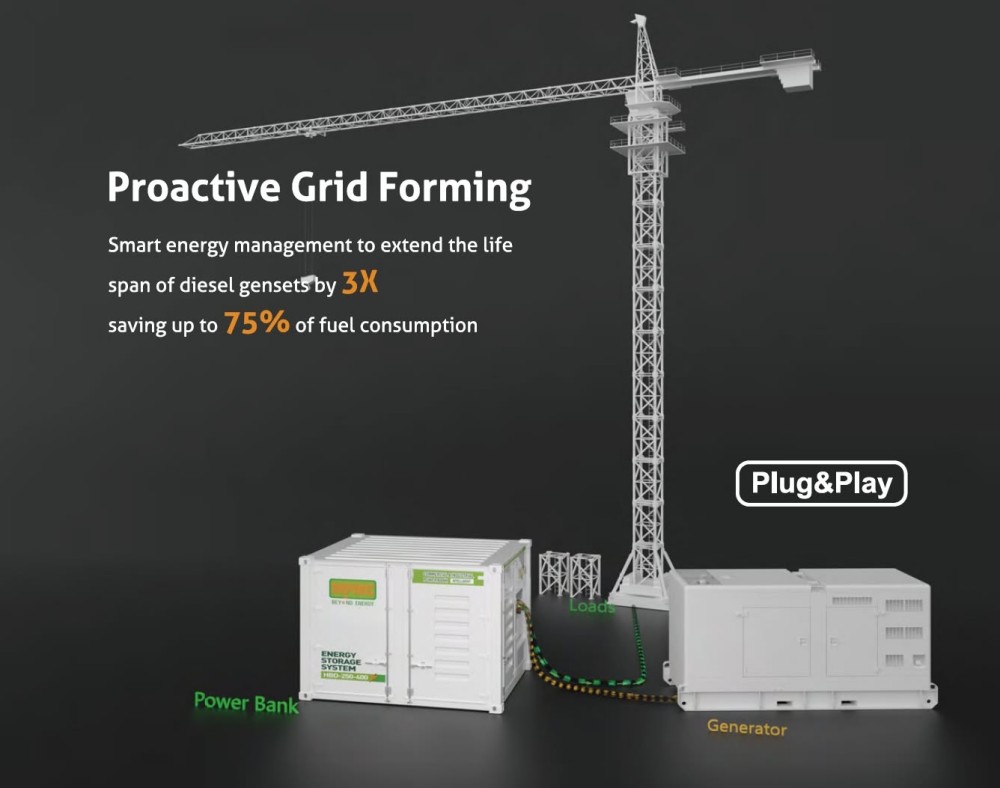
MPMC HBD-R battery storage working in parallel with a diesel generator set.
When Each Approach Fits
Diesel-only remains a sound choice where the load is steady near the engine’s efficient range or the project is very short. Hybrid power pays most where loads swing widely, where nights or weekends bring long low-load periods, where noise rules apply or where fuel delivery is costly. At larger scale, MPMC’s Kenyan microgrid shows the full hybrid model: four sites, each with 1 MW of PV, at least 1 MWh of DC-coupled storage and 2 x 500 kW plus 2 x 250 kW generator sets, delivering stable 24/7 power with minimal diesel runtime.
Table 2. Choosing between diesel-only and hybrid
|
Site characteristic |
Better fit |
Reason |
|
Steady load near full engine rating |
Diesel-only |
Engine already efficient |
|
Wide load swings and motor starts |
Hybrid |
Battery absorbs peaks |
|
Long nights or weekends at low load |
Hybrid |
Battery covers low-load hours |
|
Noise restrictions |
Hybrid |
Silent battery operation |
|
Costly fuel logistics |
Hybrid |
Fewer deliveries |
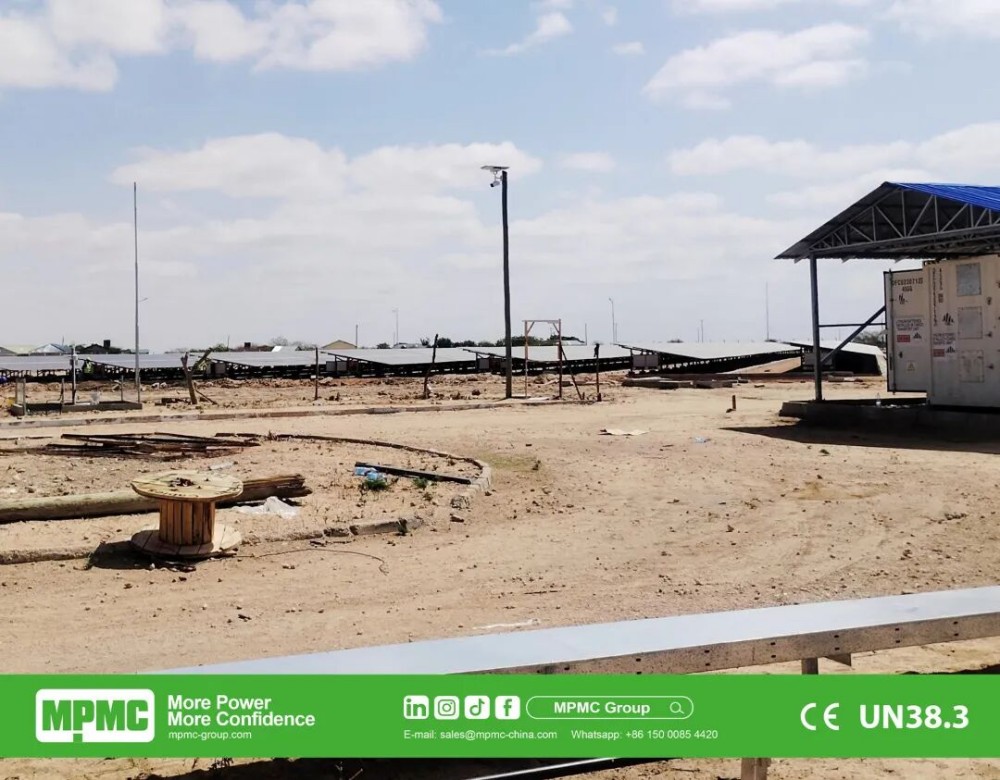
MPMC solar-storage-diesel hybrid microgrid site in Kenya.
Moving From Diesel-Only to Hybrid
Existing generator sets need not be replaced. HBD-R units parallel with DSE, ComAp, DEIF, Woodward, Smartgen, CAT EMCP and Cummins PCC controllers, solar can be added with SPK mobile plants or GSB stations, and MPMC’s EMS coordinates the sources so the transition can happen in steps.
Comparing Options for Your Site With MPMC
• Log the site’s load profile over a typical week
• Record current fuel use, refuelling and service intervals
• Assess solar resource and noise rules
• Compare diesel-only and hybrid configurations
• Contact MPMC at sales@mpmc-china.com or WhatsApp +86 150 0085 4420 for a hybrid comparison study
https://www.mpmc-group.com/
MPMC Powertech Corp.