Offshore oil and gas projects expose every component to salt-laden air, corrosive media, and sustained mechanical load. C51000 bronze pipe is frequently specified for this class of service because it belongs to the tin-bearing bronze family, the group of copper alloys routinely chosen for marine and corrosive environments. Buyers approaching this grade typically need three answers at the same time: which grade, which temper, and which standard. The discussion below sets out where C51000 bronze pipe sits inside the copper materials family, how such pipe is produced, and how the four elements of a purchase specification should be assembled. The framework described here reflects the product and quality system maintained by Jiangsu Xinxiangsheng Special Steel Co., Ltd.
Bronze Within the Copper Materials Family
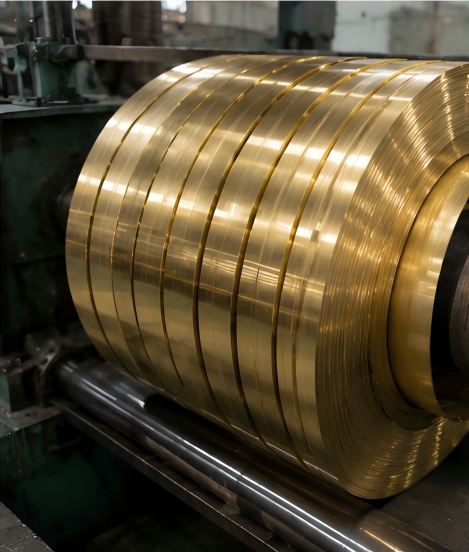
Industrially, copper materials are categorized by composition into two main groups: pure copper and copper alloys. Common alloys include brass (copper-zinc), bronze (copper-tin, copper-aluminum, etc.), and cupronickel (copper-nickel). Based on oxygen content and deoxidation method, pure copper is further subdivided into tough-pitch copper (electrolytic tough-pitch copper), oxygen-free copper, and phosphorus-deoxidized copper.
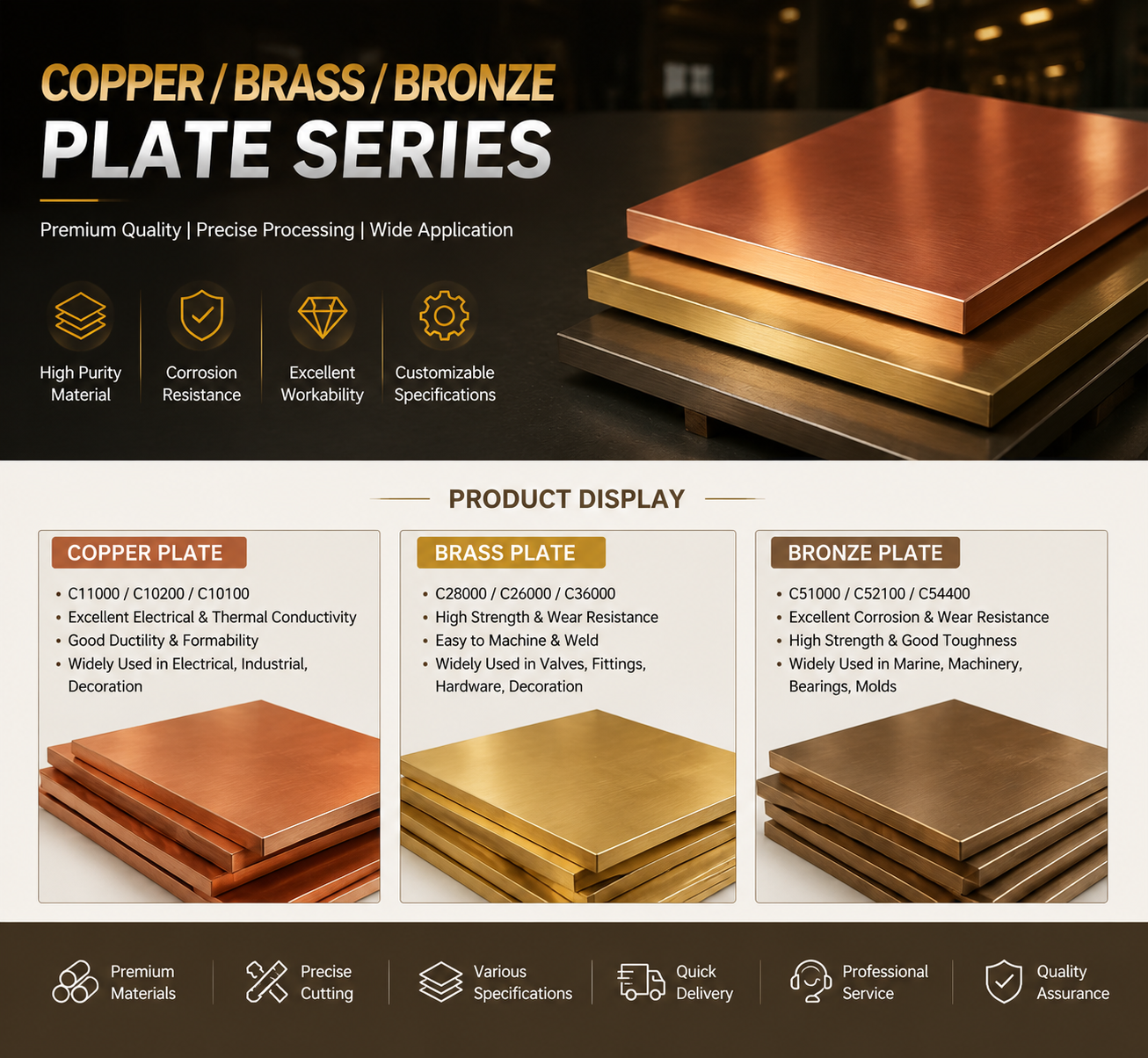
Pure copper (red copper) offers superior electrical and thermal conductivity and is used for busbars, conductive components, heat exchangers, and water and gas piping; representative grades are T1/T2/T3, TU1/TU2, and TP1/TP2.
Brass (copper-zinc alloy) features high strength, good machinability, and a golden-yellow appearance, and is used for tubing, hardware, valves, lighting fixtures, and connectors.
Bronze and cupronickel are alloyed with elements such as tin, aluminum, or beryllium (bronze) or nickel (cupronickel) and are used for elastic components, wear-resistant parts, and applications in marine or corrosive environments. That last application band is precisely where offshore oil and gas piping demand lands, and it is the reason C51000 bronze pipe is quoted against the same manufacturing platform as the rest of the copper product range.
How Grade Designations Are Read
Grade prefixes carry meaning that is worth confirming before any purchase order is raised. T, TU, and TP denote pure copper, while H denotes brass. The C-series indicates ASTM grades: grades starting with C1 are typically pure copper, while those starting with C2 are typically brass. Alloys with the same composition often correspond to both Chinese National Standards (GB) and ASTM designations — for example, TP2 ≈ C12200 and T2 ≈ C11000. Within this dual system, bronze grades such as C51000 are identified through their ASTM C-series designation, and Jiangsu Xinxiangsheng Special Steel Co., Ltd. routinely reconciles the equivalent GB and ASTM descriptions when a specification is reviewed.
The Production Process Chain for Bronze Pipe
Copper product manufacturing generally begins with copper cathode (electrolytic copper) as the raw material and proceeds through smelting and casting, hot working, cold working, heat treatment, and final inspection and packaging. Raw materials are specified at copper content of 99.95% or above, qualified scrap may be blended in, and batching is performed according to grade specifications.
Smelting and casting take place in induction or reverberatory furnaces through continuous casting and rolling or ingot casting. Phosphorus-deoxidized copper requires the addition of Cu-P alloy for deoxidation, where controlling oxygen content is critical; incomplete deoxidation risks porosity and hydrogen embrittlement. Hot working heats billets or ingots above the recrystallization temperature — hot rolling at approximately 800–950°C breaks down as-cast dendrites, eliminates porosity, and refines grains — while extrusion produces mother tubes or busbars. Cold working then follows, using cold rolling for thickness reduction, floating-mandrel or coil drawing for tube forming, and wire drawing for diameter reduction. Because cold working causes work hardening, annealing steps must alternate with it. Heat treatment establishes the final temper: intermediate annealing restores plasticity, while bright annealing or softening annealing sets the temper and grain size, after which material is straightened and cut to length. Inspection and packaging close the chain with testing for chemical composition, mechanical properties, electrical conductivity, flaw detection, dimensions, and surface quality, followed by moisture-proof packaging and warehousing.
For copper tubes specifically, the process route is melting and casting, extrusion or rotary piercing, cold drawing (coil drawing or floating mandrel), annealing, and straightening and finishing.
Key Control Points for Pipe Buyers
The control points that decide whether a bronze pipe performs in offshore service are consistent across the industry. Wall thickness uniformity, inner surface cleanliness, and grain size in the annealed state are the primary metallurgical and dimensional targets. Where air-conditioning and refrigeration duty applies, eddy current testing and hydrogen embrittlement testing are also required.
Temper Designations and Their Selection
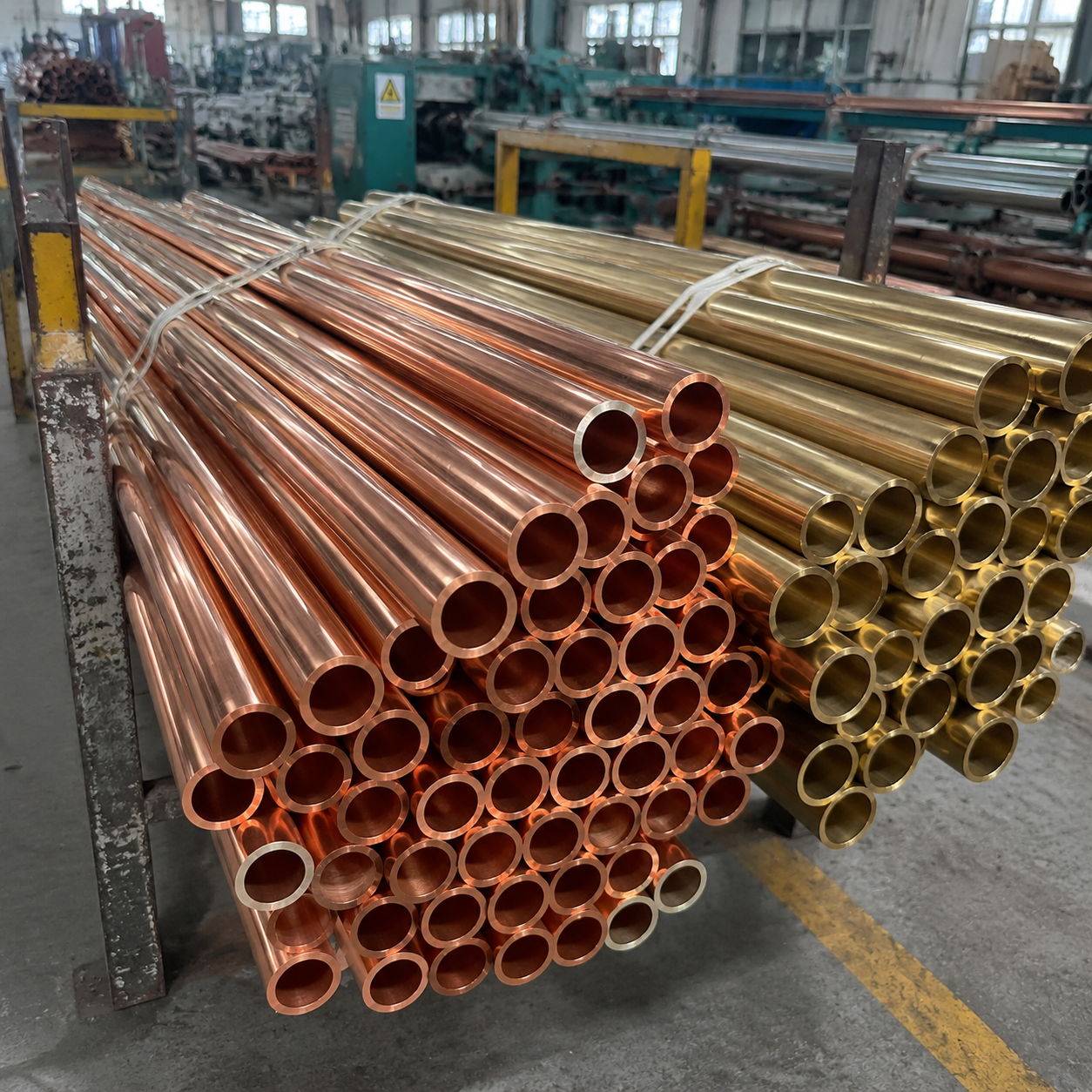
Temper determines how the finished pipe behaves in bending, flaring, and installation. M (soft temper) is fully annealed or soft-annealed, offering high ductility and low strength, and suits bending, flaring, and deep drawing; common designations include T2M and H62M. M2 (light soft) is lightly soft-annealed, with properties between soft and half-hard tempers, and is commonly used under the GB/T 1527 standard. Y2 (half-hard) is half-hardened by cold working and offers a balance of strength and ductility. Y (hard temper) is hardened by cold working, with high strength and rigidity but poor formability. O60 is a soft-annealed temper widely recognized in the air conditioning and refrigeration industries, for example TP2 O60. Matching temper to the actual bending and flaring operations is the step that most often prevents field failures.
Specifying and Quoting C51000 Bronze Pipe
Prospective buyers are advised to state four key elements when requesting a quote: “Grade + Temper + Cross-section + Standard.” Because copper products are priced on a floating model — “LME/SHFE Copper Price + Processing Fee” — the pricing cycle and the method used to lock in the price (price-fixing) can be clarified directly with the supplier. This transparency lets project teams plan procurement against a defined mechanism rather than a single spot figure.
Quality Documentation and Verification
Material and quality certificates covering chemical composition, mechanical properties, and electrical conductivity are available, and third-party or commercial inspection reports can be issued upon request. Standard-compliant sampling and retention of test reports are mandatory prior to shipment, which gives offshore project owners a documented traceable record for each delivered lot.
Why Project Buyers Work With Jiangsu Xinxiangsheng Special Steel Co., Ltd.
Jiangsu Xinxiangsheng Special Steel Co., Ltd. applies one integrated process chain — from cathode selection and melt control through drawing, annealing, straightening, and inspection — across its copper product range, so a bronze pipe inquiry is handled with the same discipline as busbar, plate, strip, and wire production. The company aligns GB and ASTM grade descriptions, controls oxygen content and deoxidation to limit porosity and hydrogen embrittlement, and supplies the certificates and inspection reports that offshore specification packages require. For oil and gas projects, that combination of grade clarity, dimensional control, and documentation is what makes a specification defensible at the point of delivery.
copper-xxs.com
Jiangsu Xinxiangsheng Special Steel Co., Ltd.

