Importing goods from China to Australia involves a specific set of documentation requirements that must be satisfied on both the export side in China and the import side in Australia. Businesses that misunderstand or overlook these requirements often face shipment delays, unexpected storage charges, or customs holds. Understanding exactly what paperwork is needed—and why—is the first step toward a smooth, cost-effective supply chain between the two countries.
Core Documents Required for Every Shipment
Regardless of cargo type or shipping mode, several foundational documents are required for nearly every China-to-Australia shipment.
Commercial Invoice and Packing List The commercial invoice details the transaction value, product description, and buyer/seller information, while the packing list specifies the quantity, weight, and dimensions of each carton or pallet. Both documents are used by customs authorities in China and Australia to assess duties, verify cargo contents, and confirm compliance with declared values.
Bill of Lading or Air Waybill For sea freight, an ocean bill of lading serves as the contract of carriage and proof of shipment, whether the cargo moves as Full Container Load (FCL) in 20ft or 40ft containers or as Less than Container Load (LCL) sharing space with other shippers. For air freight, an air waybill performs the same function when goods are booked with an airline or moved via express carriers such as DHL, FedEx, UPS, or TNT.
Certificate of Origin under ChAFTA Under the China-Australia Free Trade Agreement (ChAFTA), a properly prepared certificate of origin can qualify eligible goods for reduced or 0% duty treatment. This document must accurately reflect the manufacturing origin of the goods and follow the specific format required by Australian customs authorities to be accepted at the point of import declaration.
Specialized Compliance Documents for Regulated Cargo
Beyond the core paperwork, certain categories of goods require additional certification before they can clear Australian customs and biosecurity screening.
Fumigation Certificates for Wooden Packaging Australia enforces strict Brown Marmorated Stink Bug (BMSB) quarantine rules for wooden packaging materials. Any shipment using wooden crates, pallets, or dunnage—common in furniture and machinery shipments—requires an official fumigation certificate that is accepted by Australian customs to demonstrate compliance with biosecurity standards.
NATA Test Reports for Construction Materials For products such as sintered stone countertops, cabinetry, and other building materials, Australian import inspection often requires NATA-accredited laboratory test reports. This process includes coordinating sample testing, batch number marking, sample photo archiving, and official test report submission, along with SCA, CMA, and crystalline silica document verification specific to sintered stone and building material imports.
MSDS for Hazardous or Chemical Goods A Material Safety Data Sheet (MSDS) may be required for products with chemical components, providing Australian authorities with the safety and handling information needed to assess the cargo during import clearance.
Navigating the Dual-Country Customs Process
A defining challenge of China-to-Australia trade is that documentation must satisfy two separate regulatory systems simultaneously. On the China export side, declarations are submitted electronically through the China International Trade Single Window, supported by pre-classification databases and compliance rule engines designed to minimize delays. On the Australia import side, declarations are lodged through the Australian Border Force’s Integrated Cargo System (ICS), which enables pre-lodgement of import declarations, automatic duty and tax calculations, and real-time status updates.

Because these two systems operate independently, shipments that are properly documented in China can still face delays in Australia if paperwork does not align with ABF requirements—and vice versa. This is why dual-market clearance capability, rather than single-country expertise, is essential for avoiding costly hold-ups.
Why Professional Customs Support Matters
Given the number of documents involved—commercial invoice, packing list, bill of lading or air waybill, certificate of origin, fumigation certificate, MSDS, and NATA test reports where applicable—many importers, particularly Small and Medium-sized Enterprises (SMEs), Amazon sellers, and individual importers, find it difficult to manage compliance across both jurisdictions without dedicated support. Errors or omissions in any single document can trigger inspections, storage fees, or shipment rejections at either end of the journey.
How DAKA International Transport Simplifies Documentation
DAKA International Transport Company Ltd., founded in 2016 and headquartered in Shenzhen, China, has built its service model specifically around resolving these documentation and customs challenges for the China-to-Australia trade lane. DAKA operates its own licensed customs broker team in both China and Australia, allowing it to prepare and manage customs documentation directly rather than relying solely on third parties.
DAKA’s team is proficient in preparing ChAFTA certificates of origin, fumigation certificates for wooden furniture and timber packaging cargo, and NATA test documents for sintered stone, cabinetry, and construction materials. The company also cooperates with Australian Border Force (ABF) licensed customs brokers capable of handling SCA, CMA, and crystalline silica document verification for building materials, and maintains a professional qualification for Australian biosecurity compliance related to BMSB wooden packaging quarantine rules.
On the technology side, DAKA’s in-house customs team works directly with the China International Trade Single Window for export declarations and is connected to the Australian Border Force’s Integrated Cargo System (ICS) for import declarations, enabling pre-lodgement, automatic duty and tax calculation, and real-time status tracking. This dual-market integration, combined with licensed broker expertise, is designed to cut clearance times and reduce the compliance burden on importers.
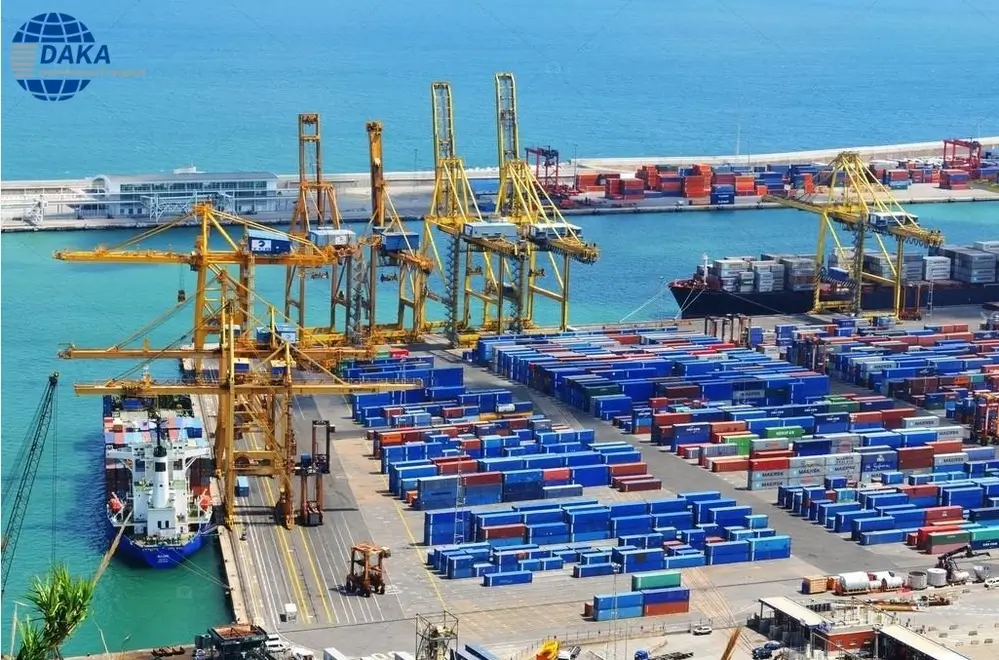
DAKA’s credentials reinforce this documentation capability: the company holds a Customs Declaration Enterprise Registration Certificate, is an NVOCC-qualified carrier eligible to issue independent ocean bills of lading, is IATA accredited for air cargo bookings, and is a FIATA member and WCA World Cargo Alliance partner. It also operates under an ISO 9001 Quality Management System covering document review and shipment tracking.
Conclusion
Successfully importing goods from China to Australia depends on assembling the correct combination of commercial, transport, and compliance documents—and ensuring they satisfy both Chinese export requirements and Australian import regulations simultaneously. With door-to-door services covering sea freight (FCL and LCL), air freight by airline or express, customs clearance in both countries, and warehousing across major Chinese and Australian cities, DAKA International Transport provides importers with a structured, documentation-ready pathway for moving cargo across the China-Australia corridor, backed by 24/7 online customer support and a professional, experienced team.
DAKA INTERNATIONAL TRANSPORT COMPANY LTD