When selecting lighting solutions for extreme environments—whether off-road vehicles, marine vessels, or industrial machinery—the choice of LED work light manufacturer directly impacts operational safety, equipment longevity, and total cost of ownership. The specialized lighting sector demands more than standard illumination; it requires engineering precision, durability testing, and manufacturing capabilities that can withstand conditions ranging from total water submersion to extreme temperature fluctuations.
The Critical Role of Specialized LED Work Light Manufacturing
Heavy-duty lighting applications face unique environmental challenges that separate basic LED products from professional-grade solutions. Off-road enthusiasts operating in desert dust storms, marine operators facing saltwater corrosion, and construction crews working through sub-zero temperatures all require lighting systems engineered for punishment. The difference between equipment failure and reliable performance often traces back to the manufacturer’s technical capabilities and quality control infrastructure.
Traditional automotive lighting falls short in these specialized applications. Standard IP ratings prove inadequate when equipment faces high-pressure washing systems common in agricultural machinery, or when mining vehicles operate in environments with extreme vibration levels reaching 10g across 5-500Hz frequency ranges. This reality has driven demand for manufacturers who understand the specific physics of thermal management, optical engineering, and materials science required for extreme-duty lighting.
Manufacturing Infrastructure as a Quality Indicator
The production capabilities of an LED work light manufacturer reveal much about product reliability. Shenzhen Aurora Technology Co., Ltd. exemplifies this principle through its 35,000 square meter industrial park housing integrated CNC machining centers, SMT production lines, and X-ray inspection systems. This vertically integrated approach—from aluminum housing fabrication to final circuit board assembly—enables quality control at every manufacturing stage rather than relying on externally sourced components with variable standards.
The company’s 6063 Aluminum housing production demonstrates why material selection matters in thermal management. This specific alloy provides the thermal conductivity necessary to dissipate heat from high-output LED chips while maintaining structural integrity at operational temperatures reaching 145°C. When combined with Osram and Cree LED chips rated for 50,000+ hour lifespans, the result is lighting systems that maintain lumen output and color temperature consistency throughout their service life.
Certification Depth Reflects Testing Rigor
Industry certifications serve as objective measures of manufacturing quality, but their value depends on comprehensiveness. Aurora’s certification portfolio spanning IATF 16949, ISO 9001, ISO 14001, and ISO 45001 indicates systematic approaches to quality management, environmental responsibility, and workplace safety. The IATF 16949 certification specifically addresses automotive supply chain requirements, including traceability protocols and failure mode analysis that prevent defects from reaching end users.
The IP68 and IP69K ratings carried by Aurora’s core product lines represent particularly demanding standards. IP68 certification verifies continuous submersion resistance, critical for marine applications and vehicles crossing water obstacles. IP69K takes protection further, certifying resistance to high-pressure, high-temperature washdown procedures used in food processing equipment, agricultural machinery, and industrial vehicles. Achieving these ratings requires precision gasket engineering, sealed connector systems, and housing designs that eliminate potential water ingress paths.
Innovation Through Patent Development
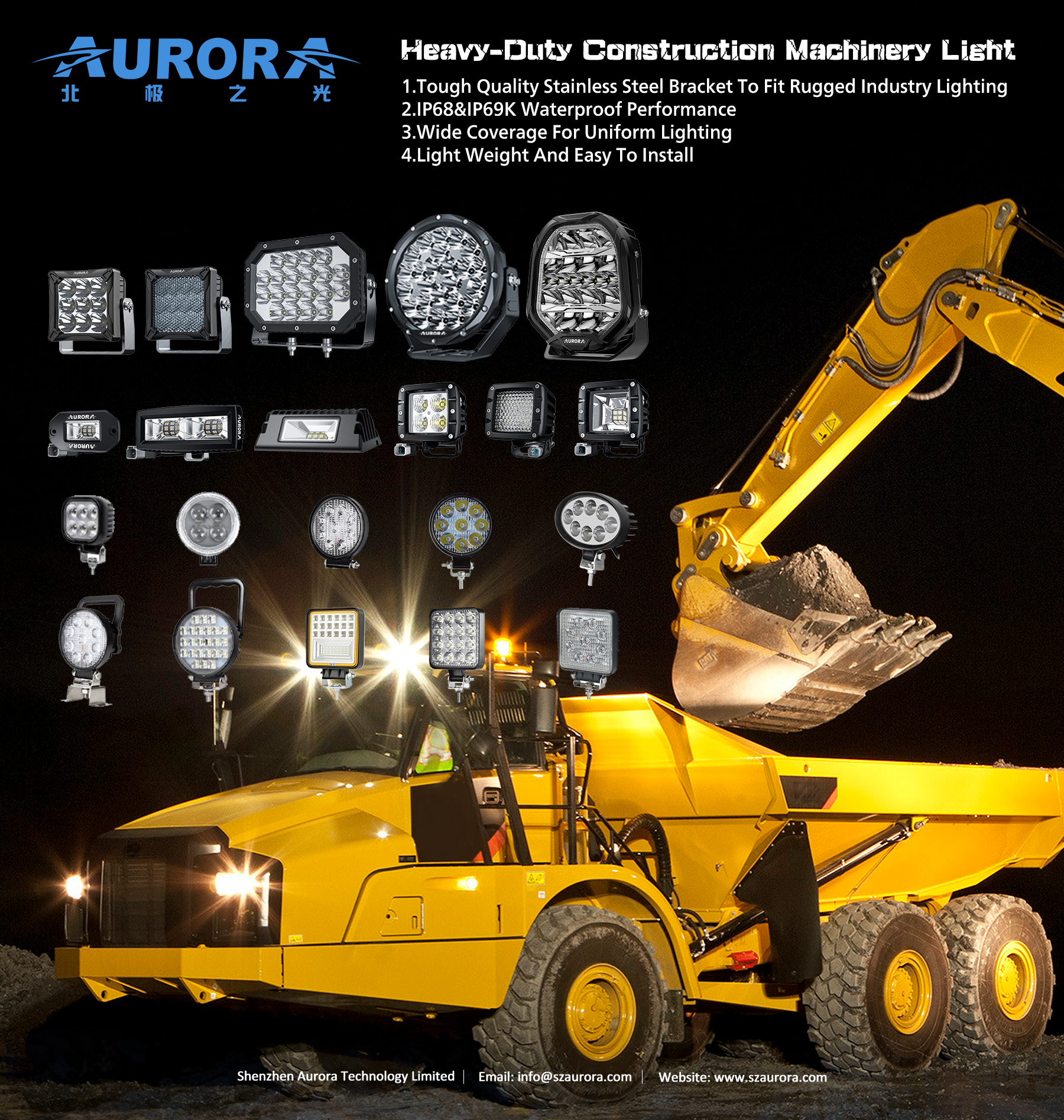
A manufacturer’s patent portfolio provides insight into genuine innovation versus market replication. Aurora’s accumulation of over 200 innovation patents reflects ongoing investment in optical design, thermal management systems, and circuit protection technologies. Patents in specialized beam patterns—such as the side-shooter LED pod configuration combining forward spot beams with 120-degree peripheral illumination—address specific user needs in technical off-road driving where peripheral vision proves as critical as forward visibility.
The development of application-specific products like 940nm infrared LED work lights for night vision compatibility demonstrates responsiveness to tactical and security applications. Similarly, RGB color-changing lights with Bluetooth smartphone integration show adaptation to the recreational vehicle market’s demand for customizable aesthetic lighting. This product diversity, all maintaining consistent IP ratings and durability standards, indicates flexible manufacturing capabilities rather than single-product specialization.
Technical Specifications That Define Performance
Beyond marketing claims, measurable technical specifications differentiate professional-grade LED work lights. Aurora’s 3×3-inch 40W high-output LED pods illustrate how compact form factors can deliver substantial illumination when proper thermal engineering supports high-density LED arrays. The waterproof DT connector system used across the product line addresses a common failure point in aftermarket lighting—inadequate electrical connections that corrode or separate under vibration.
The operational temperature range of -40°C to 145°C accommodates extreme climate conditions from Arctic operations to desert environments where surface temperatures exceed ambient air readings. GE Lexan lens materials provide impact resistance superior to standard polycarbonate while maintaining optical clarity under UV exposure that degrades lesser materials. Anti-interference circuitry prevents electromagnetic interference with vehicle communication systems and navigation equipment, a critical consideration for modern vehicles with extensive electronic systems.
Application-Specific Engineering
Different industries impose distinct requirements on LED work lighting. Agricultural equipment like tractors and harvesters demand wide voltage range compatibility (9V-32V DC) to accommodate varying electrical system voltages and starting transients. Mining equipment requires extreme vibration resistance verified through testing protocols simulating continuous heavy-duty operation. Marine applications need corrosion resistance validated through salt spray testing that simulates years of saltwater exposure.
Aurora’s product segmentation addresses these varied requirements through specialized model configurations. The 4.2-inch round and square industrial flood lights target stationary work area illumination with high lumen output optimized for scene lighting rather than long-distance projection. Conversely, spot beam configurations in the 3-inch pod series provide focused long-range visibility for high-speed off-road navigation. This application-specific approach ensures users receive optical patterns matched to their actual operational needs rather than one-size-fits-all solutions.
The Value of Integrated OEM/ODM Capabilities
Manufacturers offering comprehensive OEM and ODM services provide advantages beyond standard product purchasing. The ability to customize wire harness configurations, connector types, and control modules allows integration with existing vehicle electrical systems without extensive modification. Aurora’s modular pricing structure for customization options—including Bluetooth control modules and alternative connector configurations—enables cost-effective specification matching rather than forcing users to accept unnecessary features or compromise on essential requirements.
One-stop service capabilities spanning product design, prototype development, testing validation, and production scaling reduce the complexity and timeline of bringing specialized lighting solutions to market. For equipment manufacturers integrating lighting into new vehicle designs, this integrated approach streamlines the supply chain and ensures compatibility across the product development cycle.
Making Informed Manufacturer Selection Decisions
When evaluating LED work light manufacturers, purchasers should prioritize verifiable capabilities over marketing assertions. Manufacturing facility scale, certification breadth, patent portfolios, and measurable product specifications provide objective assessment criteria. The presence of advanced testing infrastructure—including vibration tables, thermal chambers, and IP rating validation equipment—indicates commitment to quality verification rather than reliance on supplier claims.
Shenzhen Aurora Technology Co., Ltd. represents the manufacturing approach required for truly professional-grade LED work lighting: vertically integrated production, comprehensive certification achievement, continuous innovation through patent development, and application-specific engineering that addresses real-world operational requirements. For industries where lighting failure creates safety hazards or operational shutdowns, manufacturer selection deserves the same careful analysis applied to other critical vehicle and equipment systems.
The LED work light market contains numerous suppliers, but manufacturers with demonstrated capabilities in extreme-environment engineering, quality system implementation, and sustained innovation deliver the reliability that specialized applications demand. Whether outfitting off-road vehicles, commercial fishing vessels, construction equipment, or agricultural machinery, the manufacturer’s technical foundation ultimately determines whether lighting systems perform as critical safety equipment or become maintenance liabilities.
https://www.szaurora.com/
Shenzhen Aurora Technology Co., Ltd.

